Nissan NX7 PHEV Starts at 129,900 Yuan With a Claimed 320 km Electric Range
Electric Vehicles Blagojce Krivevski 468 reads
The China-market NX7 pairs a 40.9 kWh battery with a 1.5-liter engine, while pre-sale prices run from 129,900 to 149,900 yuan.
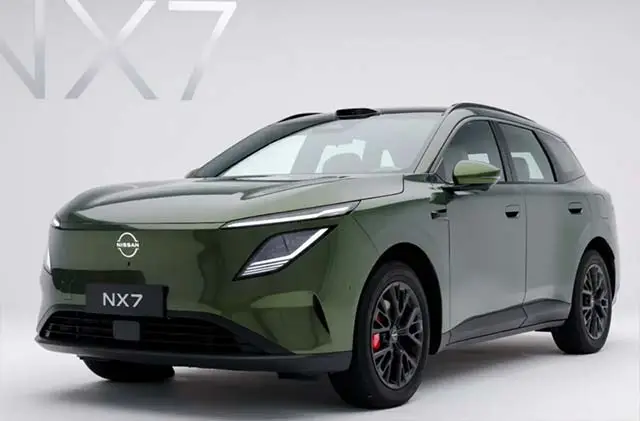
Nissan’s NX7 gives plug-in hybrid buyers in China an unusually large battery and a long claimed electric range at a pre-sale starting price of 129,900 yuan. Developed by Dongfeng Nissan, the family SUV is rated for 320 km of electric driving on China’s CLTC cycle and up to 1,666 km of combined range. Those figures put battery capacity and extended-trip flexibility at the center of its pitch.
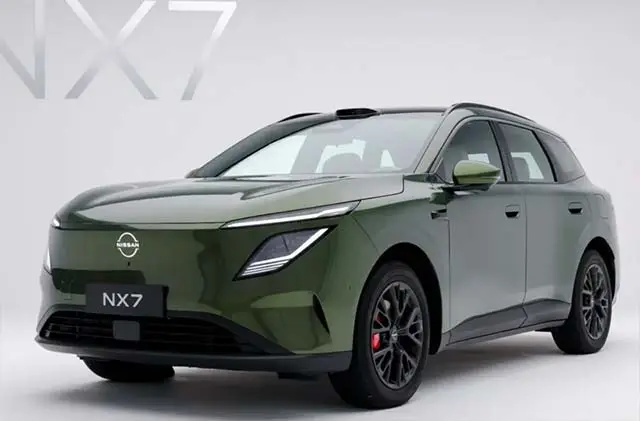
Pre-sales opened on November 13, ahead of the NX7’s market debut on November 27 at the Guangzhou Auto Show. The SUV is offered in three versions: the 320 Pro at 129,900 yuan, the 320 Max at 139,900 yuan and the 320 Ultra LiDAR Edition at 149,900 yuan. These are pre-sale prices, so final retail pricing may differ. Buyers placing a 999-yuan reservation deposit can receive a 3,000-yuan deduction, while Clover Green and Wisteria Purple paint are being offered at no extra cost during the promotion.
A plug-in hybrid with an EV-sized battery
All three NX7 versions use a 40.9 kWh lithium iron phosphate battery supplied by CATL. That capacity is central to the model’s distinction: many plug-in hybrids use smaller packs, while Nissan claims the NX7 can travel 320 km (199 miles) on electricity alone. The combined range reaches a claimed 1,666 km (1,035 miles) with a full battery and fuel tank.
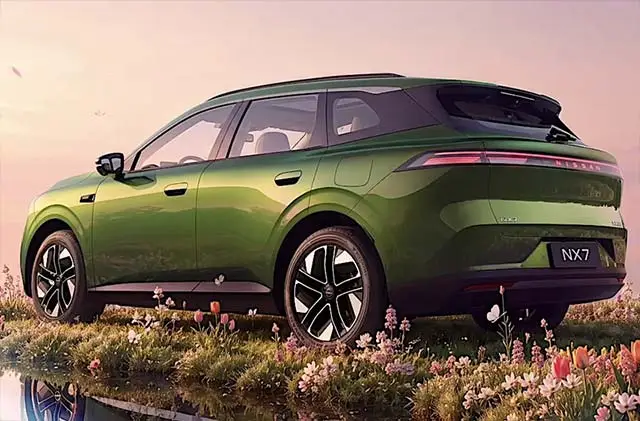
Both range figures use China’s CLTC test cycle, which tends to produce higher results than testing cycles used in Europe and North America. Actual distance will vary with speed, temperature, route and driving conditions. Even with that qualification, the battery size suggests the NX7 is intended to cover a substantial share of everyday driving on electricity for owners who can charge regularly. The gasoline engine remains available for longer journeys, so drivers need not rely entirely on public charging access.
The powertrain combines a naturally aspirated 1.5-liter gasoline engine rated at 73 kW (98 horsepower) with an electric motor producing up to 170 kW (228 horsepower). The source figures identify the motor’s peak output but provide no acceleration time or fuel-consumption rating. Buyers comparing it with other plug-in hybrid SUVs will need those details, along with real-world range results, to judge its performance and running costs.
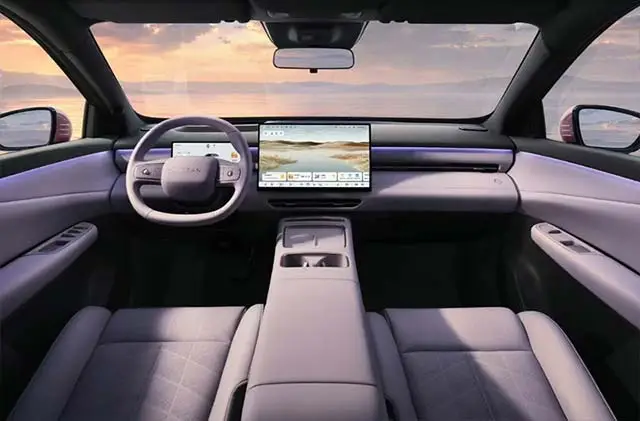
Cabin technology and family practicality
The NX7’s cabin centers on a 17.3-inch, 3K infotainment display and a fully digital instrument cluster. Nissan OS 3.0 runs on Qualcomm’s Snapdragon 8295P automotive processor, and voice functions were developed with iFlytek. Higher trims add a 55-inch augmented-reality head-up display for navigation and driving information.
Comfort equipment includes heated, ventilated and massaging seats. The front seats can recline into a bed-like position, and the equipment list also includes an onboard refrigerator and storage solutions. Nissan says its third-generation motion-sickness prevention technology can reduce its motion-sickness index by as much as 83%; that is the automaker’s stated result, not an independent assessment.
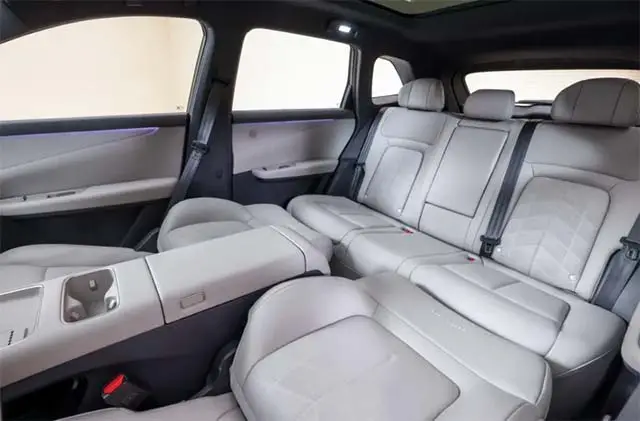
Reported luggage capacity is 783 liters, expanding to 1,878 liters when the rear seats are folded. Those figures give the NX7 a practical family-SUV angle alongside its long electric-range claim. The available information does not specify charging speed, so the time needed to replenish the 40.9 kWh pack remains an open question for buyers weighing home charging and longer trips.
Driver assistance reserved for the top trim
The 320 Ultra LiDAR Edition adds roof-mounted LiDAR sensors and Momenta’s R7 driver-assistance system, developed through a collaboration with Dongfeng Nissan. Its listed functions include highway and urban Navigate on Autopilot, assisted lane changes, guidance through complex intersections and automated parking.
Nissan says the parking system covers more than 300 parking scenarios across China and can maneuver into spaces only 40 centimeters wider than the vehicle. These capabilities are exclusive to the range-topping version as described; the source does not detail the assistance equipment on the Pro and Max trims. That makes the 20,000-yuan gap between the entry model and the LiDAR Edition relevant to buyers deciding whether the added sensors and functions merit the upgrade.
A growing Nissan line-up for China
The NX7 is the fourth model in Nissan’s N-series in China and its second SUV, joining the NX8. The wider line-up also includes the N7 electric sedan and N6 plug-in hybrid sedan. Dongfeng Nissan has said it plans to introduce five more new-energy vehicles in China by summer 2027, placing the NX7 within a broader push to expand its electrified range.
China’s new-energy vehicle market is crowded with domestic brands offering electric and plug-in hybrid models at competitive prices. The NX7’s approach is to combine an electric-only range claim well above what many plug-in hybrids offer with gasoline backup, a technology-heavy cabin and optional LiDAR assistance. The key ownership questions now are how its CLTC range translates to daily use, how quickly it charges and what final prices buyers see at launch. For now, Nissan has introduced the NX7 for China, with no confirmed availability in Europe or North America.