Michèle Mouton Returns to Pikes Peak in an Audi Quattro S1 for Q7 Campaign
Electric Vehicles [email protected] (Ryan Erik King) 647 reads
Audi pairs Mouton’s 1985 Pikes Peak victory with the new Q7 and SQ7, linking Quattro’s rally history to its latest family SUVs.
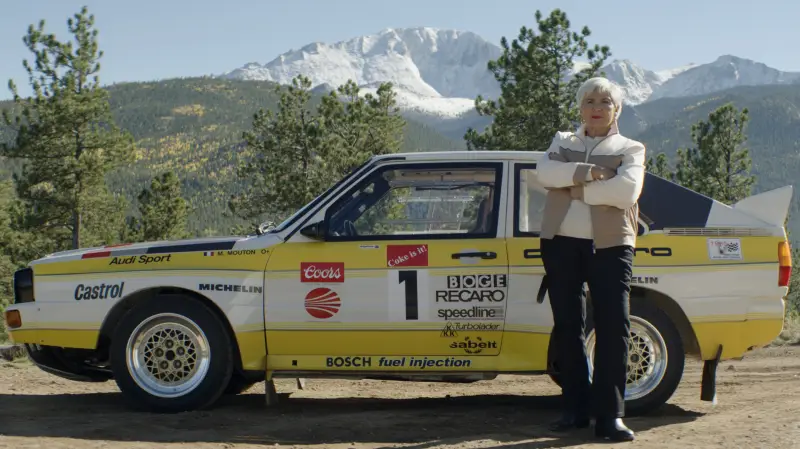
Audi is using one of Quattro’s defining competition moments to introduce its latest Q7 and SQ7: Michèle Mouton back behind the wheel of a Quattro S1 on Pikes Peak. The reunion makes a stronger case for the SUVs’ performance heritage than a standard product walkaround could. It also puts the distance between a purpose-built rally car and a family vehicle in plain view.
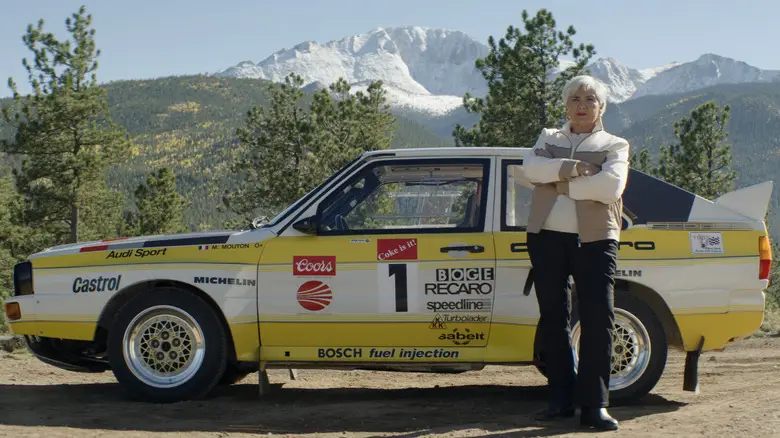
The campaign, titled “Performance Runs in the Family,” includes a 30-second television spot and a four-minute film of Mouton driving up the Colorado mountain. Archival footage connects the drive to Audi’s Group B years, while the shorter ad pairs Mouton with her daughter, Jessica, and shows a 2027 SQ7 on the ascent. Audi hasn’t supplied performance figures or pricing in the material described here; the emphasis is on the family resemblance and the brand’s history with all-wheel drive.
A return to a demanding climb
Mouton’s connection to Pikes Peak goes beyond a memorable appearance in an Audi commercial. In 1985, she became the first woman and the first driver from outside the United States to win the Pikes Peak International Hill Climb. Her time was 11 minutes, 25.390 seconds over the 12.4-mile course, beating the previous record, set by Al Unser Jr. in 1983, by 13 seconds.
The new film lets Mouton revisit that drive from the perspective of someone who knows the road and the pressure of a timed ascent. She recalls the hostility she faced during the 1985 event, her winning run, and the changes to the climb over the 41 years since. At one point, recalling the intensity of the race, she says: “When I was at this spot in the race, I had no time for feelings.” The line is brief, but it captures the focus required to push a rally car up a mountain.
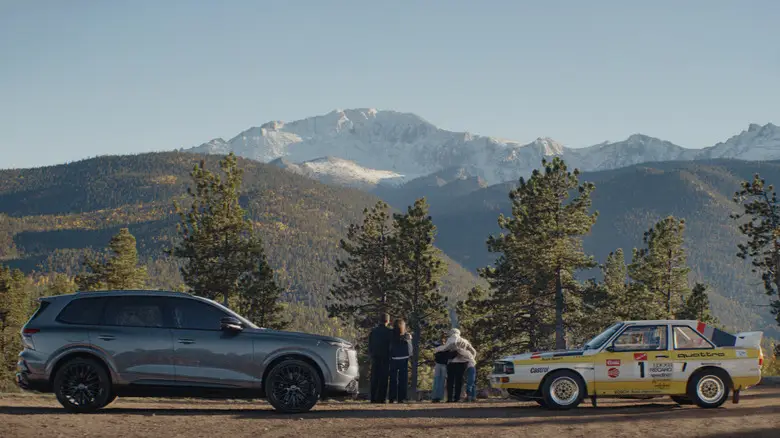
The Quattro S1 is presented as a 493-horsepower machine. That figure belongs to the rally car in the film; it isn’t a specification for the Q7 or SQ7. The distinction matters because the two vehicles serve very different jobs. The S1 was built for competition, while the Q7 is a large SUV intended to carry people and their belongings as well as deliver the performance and traction associated with the Quattro name.
What the Quattro link means for the Q7
Audi’s pitch rests on continuity: Quattro began as a defining part of its rally identity, and the company says the same all-wheel-drive heritage informs its road cars. Vito Paladino, president of Audi of America, described that link as a combination of performance and everyday capability. The new Q7 family, he said, carries the brand’s performance history into its next generation of vehicles.
That’s a useful framing for an SUV, provided the comparison stays in perspective. The SQ7 climbing a mountain road may borrow visual language from the S1’s story, but it isn’t expected to match a Group B car’s agility or purpose. The source material acknowledges that the third-generation Q7 is less nimble on twisting roads than the rally car. Its appeal is the broader mix: SUV practicality and a performance-oriented identity, with styling that Audi presents as more aggressive than before.
For buyers, the film offers little to assess about the new models’ everyday merits. It provides no range, fuel economy, cargo capacity, charging details, running costs, or availability information. It also doesn’t establish how the Q7 compares with direct rivals on those measures. The ad’s job is narrower: make the name Quattro carry meaning beyond a drivetrain badge and connect that meaning with a new generation of SUVs.
Audi’s competition legacy, carried into the present
Mouton’s 1985 victory was her final Pikes Peak event with Audi before she moved to Peugeot for her farewell season. Her place in the company’s story is also built on four World Rally Championship victories with the Audi Quattro. Those results give the reunion real historical weight: the driver in the film isn’t simply standing beside a famous car, but returning to the setting of a landmark win.
The campaign’s most effective idea is that performance history has to be carried into vehicles with different priorities. A rally car earns its reputation through speed and control under competition conditions; a family SUV has to make its capability relevant on ordinary trips, too. Audi is asking viewers to see that connection in the Q7 and SQ7, while Mouton and the S1 provide the proof of where the story began. The next details buyers will need are the new SUVs’ specifications, prices, and availability.