Igor Fraga Takes GT500 Lessons Into SUPER GT’s Bridgestone Era
Electric Vehicles Jamie Klein 373 reads
After a difficult rookie season with Nakajima Racing, Fraga says he feels better prepared for SUPER GT’s switch to Bridgestone tires.
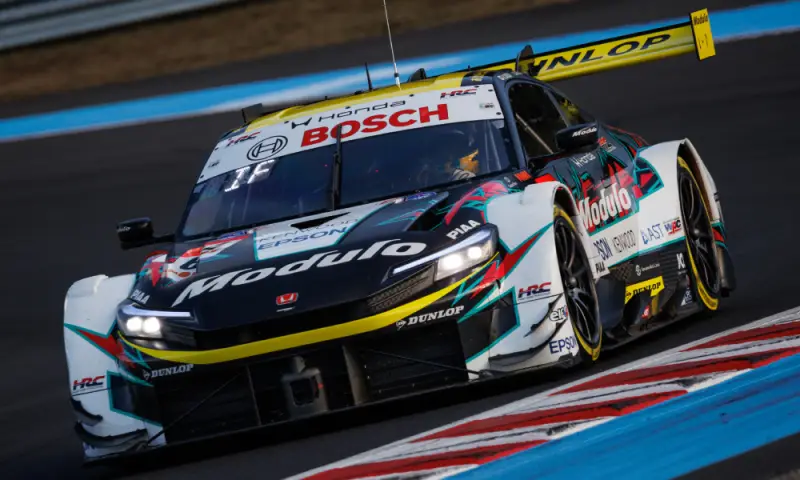
Photo: SUPER GT
Igor Fraga leaves his first SUPER GT GT500 season with a clearer sense of what the class demands, even after a year in which strong qualifying speed rarely translated into race results. The Brazilian says he feels more prepared for next season and its move to Bridgestone tires, following a difficult rookie campaign with Nakajima Racing.
Fraga joined Riki Okusa in the team’s No. 64 Honda HRC Prelude-GT after stepping up from GT300. The car was the only GT500 entry on Dunlop tires, and the pair ended the championship 13th among 14 crews. Their best result came at Motegi, where they finished second in the penultimate race. It was also their only top-ten finish of the season, despite a run of three straight pole positions.
Qualifying speed and race pace diverged
The Motegi double-header captured the gap between the No. 64 crew’s one-lap performance and its results over a full race. After the podium on Saturday, Fraga and Okusa started the finale from the front row but finished 12th. Fraga said the team expected Sunday to be harder once the field had lost its success weight, but the car also lacked the pace it had shown the day before.
He pointed to a tire behavior that made race progress difficult. As more rubber built up on the track, he said, pickup became worse and the car’s pace fell away. The team often felt stronger during the first stint, before the changing track surface began to work against it. With consecutive races run in similar conditions, the effect was especially clear across the Motegi weekend.
That explanation helps make sense of a season in which qualifying offered promise but did not produce a string of strong finishes. A front-row start gives a crew a chance to shape its race, but it still has to sustain pace as the surface changes and manage the tire behavior across the distance. At Motegi, the No. 64 car could not turn its starting position into another result near the front.
A final podium, but no Dunlop win
The second-place finish mattered to Fraga and the team because it gave Dunlop a podium in its final season with Nakajima Racing. They had hoped to deliver a victory before the partnership ended, and came close, but the finale left them frustrated. Fraga said the whole season had been demanding and credited everyone at the team and Dunlop for their effort.
Team director Takuya Izawa shared that mix of satisfaction and disappointment. Izawa, who drove for Nakajima Racing from 2020 to 2025 before taking on the director role, said the team had been especially determined in its final year with Dunlop. Its qualifying results improved from the middle of the season, but race outcomes did not follow. He singled out the poles at Sugo and Autopolis, where safety car periods affected the team’s chances to convert strong starting positions into better finishes.
Izawa welcomed the podium at Motegi while regretting that the final race ended without a stronger result. He also reflected on his own years working with Dunlop and said he hoped to have another opportunity to work with the company.
Fraga’s first Bridgestone test
Fraga’s next reference point came immediately after the Motegi finale, when he tried Bridgestone tires for the first time in a test. SUPER GT is moving to a one-make tire era next season, so his experience with Dunlop will not carry over as a direct comparison of tire suppliers. The broader lessons from his rookie year still matter: adapting to GT500 cars running alongside GT300 traffic, reading changes in grip and building consistency across a race weekend.
He said the start of the season was particularly difficult, but that he adjusted during the final races. The experience has left him more confident about returning to GT500, including the new tire. Fraga also described his prospects of staying with Nakajima Racing as positive, while stopping short of confirming his plans.
The year included setbacks beyond tire performance. Fraga was involved in a major start-line crash at Fuji in August and spent the night in hospital. At the following race at Suzuka, he received a penalty for contact. Those episodes added to the learning curve of a season in which he was adapting to a new class, car and race environment.
Dunlop Japan motorsport department manager Yoshi Yasuda said the front-row start in the finale reflected the development work behind the tires. He also said the team struggled in the race, possibly because of thermal degradation, and had not fully resolved its problems. Yasuda credited Nakajima Racing for 22 years of work with Dunlop.
For Fraga, the clearest takeaway is that one strong qualifying lap is only part of the GT500 challenge. His first season brought limited championship returns, a Motegi podium and direct experience of how tire behavior and race conditions can reshape a weekend. The next step is to apply those lessons with Bridgestone and turn greater familiarity with the class into results that last beyond qualifying.