Teamsters Claim Amazon TOM Drivers in Indiana Joined Union as Company Disputes Move
Electric Vehicles John Kingston 457 reads
The Teamsters cite signed cards and a workplace march at Amazon’s OIL9 site; Amazon disputes the claim, and a first contract remains uncertain.
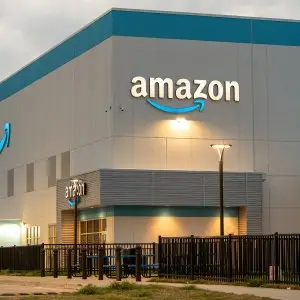
The Teamsters say Amazon’s OIL9 transportation workers in Merrillville, Indiana, have joined the union and are seeking a contract. Amazon disputes that account, leaving the status of the organizing effort contested. The distinction matters: the union describes a successful card-based drive, while the company says it has no bargaining representative at any of its facilities.
OIL9’s Transportation Operations Management (TOM) drivers move trucks within Amazon facilities. They work directly for Amazon and receive W-2 tax forms from the company. That employment arrangement differs from home-delivery drivers employed by Amazon’s direct service providers, or DSPs. The Teamsters have argued separately that Amazon’s influence over DSPs means it should be treated as an employer of those drivers, a claim that has been contested.
What the Teamsters say happened
In a statement about the Merrillville workers, the union said TOM employees at OIL9 had “marched on the boss” to demand recognition and contract negotiations. It also described the Indiana group as part of a wider organizing effort, citing TOM workers at Amazon’s SDF9 facility in Shepherdsville, Kentucky, and MCI9 in Liberty, Missouri.
The Teamsters framed the Indiana effort as an expansion of its Amazon membership. Randy Korgan, director of the union’s Amazon division, said the workers were the first group in their state to join. TOM driver Charles Hurd said workers had concluded that they needed to act together to be heard and said they hoped to win their first contract.
Those statements set out the union’s position, but Amazon rejected the claim that OIL9 workers had unionized. In a prepared response, the company called the Teamsters’ account misleading and said it was skeptical of the claim. Amazon also said the union is not a certified bargaining representative at any Amazon facility.
Card check leaves recognition disputed
The Teamsters’ announcement appears to rely on card check, a process in which workers sign cards indicating that they want a particular union to represent them. When a majority of workers in a group sign, the cards can be presented to the employer as a request for recognition. The union’s statement does not use the term “card check,” but its description of workers marching to demand recognition points to that route.
There is no record of a standard, agency-administered representation proceeding at OIL9 on the National Labor Relations Board’s public results page. That absence helps explain why the company and union describe the situation so differently: the Teamsters say workers have organized and are demanding talks, while Amazon says the union does not represent its employees.
The legal framework cited by the Teamsters is the Cemex precedent, issued in August 2023. In a separate case involving Amazon and the Teamsters, Administrative Law Judge Michael Silverstein described the precedent as creating a path for a labor organization to seek recognition without first filing a representation petition. Under that approach, a group with authorization cards from a majority of workers can present the employer with a demand for recognition.
Amazon and its DSPs have generally declined to accept card-check petitions, according to the source account. That leaves the OIL9 workers’ next steps—and whether the company will recognize their claim—unclear. The Teamsters did not respond to questions about its latest announcement.
A contested precedent and a difficult contract path
The Cemex precedent faces challenges. In August, NLRB General Counsel Crystal Stowe Carey told colleagues she was asking the board to revisit several precedents, including Cemex. Earlier, in March, a divided Sixth Circuit appeals court rejected the board’s authority to establish the precedent in a dispute involving the Teamsters and liquor maker Brown-Forman. It was the first federal court to reject the ruling.
That uncertainty may affect how useful the card-check approach proves to be in future organizing efforts. For workers, signing cards and making a public demand are steps toward representation; they do not, by themselves, settle the dispute with an employer or deliver a contract. The Teamsters’ statement about OIL9 did not address the challenges to Cemex.
The union has also had recent success through formal, agency-administered representation proceedings. Public records show five recent Teamsters cases over the past two months: the union prevailed at Shelby Transport in Indianapolis, DP World Contract Logistics in Detroit, Comprehensive Logistics in Philadelphia, and MV Transportation in Raleigh, North Carolina. It did not prevail in a case at U.S. Foods in Arizona.
Those results offer a point of comparison with OIL9, where the union is relying on a different route and Amazon rejects its claim. Even when workers secure formal recognition, negotiating a first contract can take time. Amazon’s Staten Island workers, whose organizing effort succeeded through an agency-administered process, still have no collective bargaining contract with the company.
For the Merrillville TOM drivers, the immediate question is whether Amazon will engage with their demand for recognition. The Teamsters have presented the effort as a win; the company’s response makes clear that the dispute over representation is still unresolved.