BYD Denza D9 India: Price, Range and Features Compared With MG M9, Vellfire and V-Class
Electric Vehicles Akshay Kulkarni 779 reads
The ₹90 lakh Denza D9 pairs a 730 km claimed range with extensive cabin equipment, while rivals offer different powertrains, space and seating flexibility.
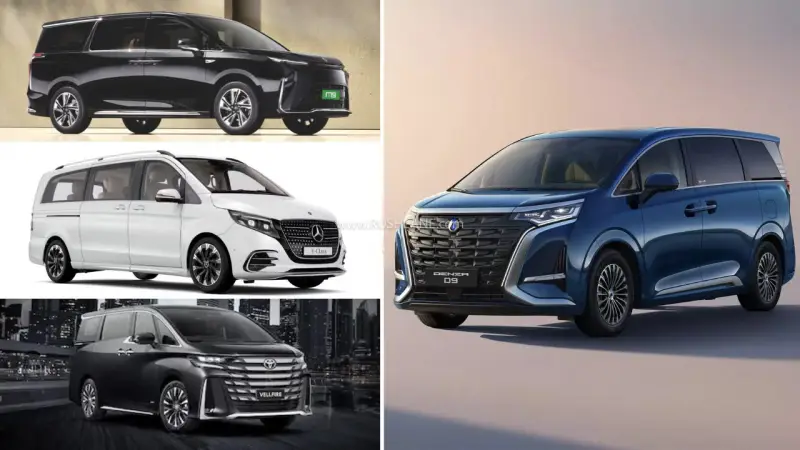
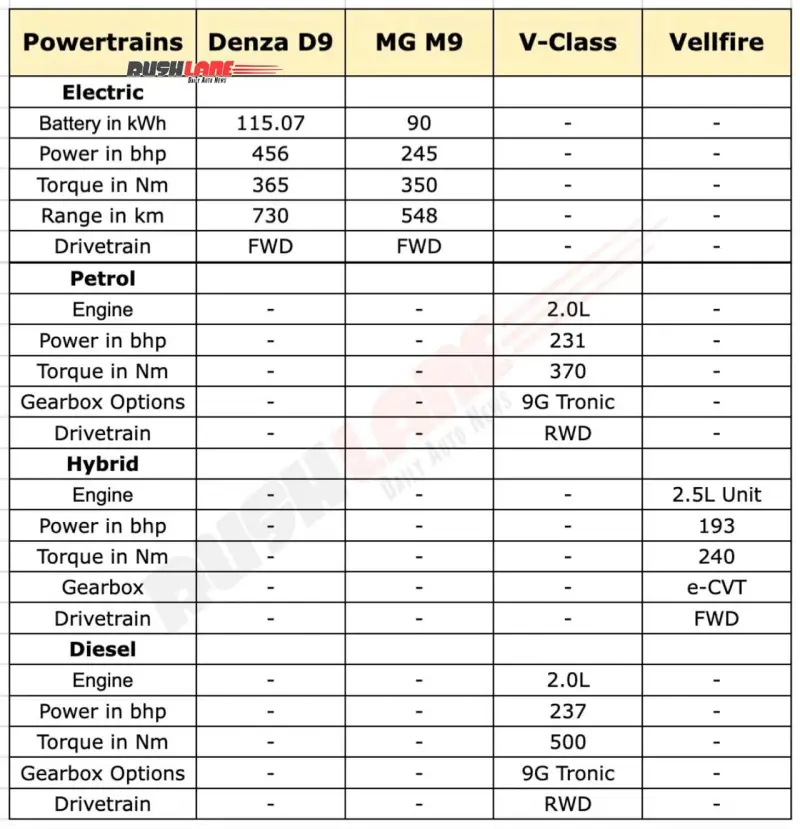
BYD’s Denza D9 enters India’s luxury MPV market at ₹90 lakh (ex-showroom), positioning itself above the electric MG M9 and below the Toyota Vellfire and Mercedes-Benz V-Class on price. Its 115.07 kWh battery, claimed range of up to 730 km and 340 kW output give it the strongest published electric performance figures in this comparison. The choice, though, turns on more than acceleration: the rivals differ in cabin space, seat flexibility, powertrain options and equipment.

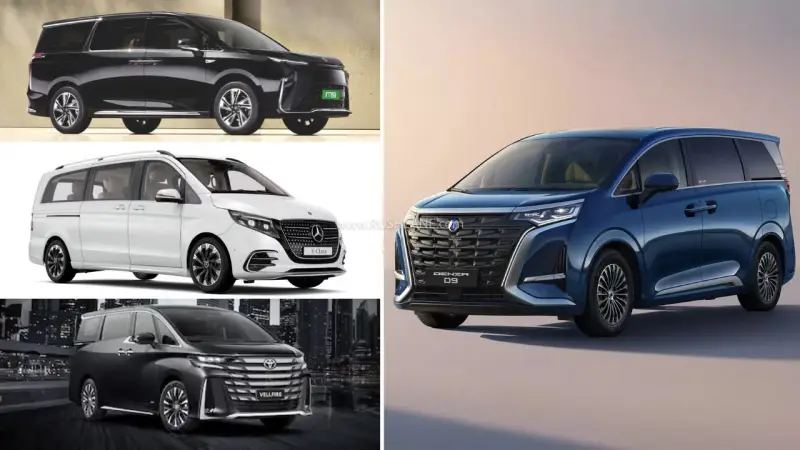
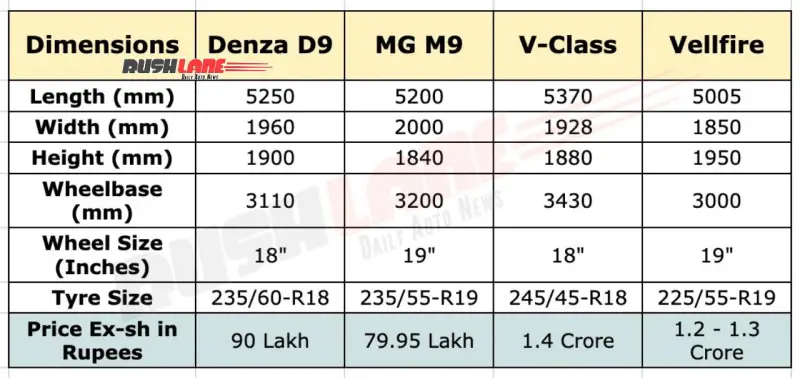
The D9 is the first of two models introduced under BYD’s Denza luxury brand in India, alongside the Z9 GT shooting brake. For buyers considering a large people mover, its closest powertrain match is the fully electric MG M9, priced at ₹79.95 lakh (ex-showroom). Toyota’s Vellfire, offered in India as a hybrid, costs between ₹1.2 crore and ₹1.3 crore. The Mercedes-Benz V-Class is the most expensive of the four at ₹1.4 crore. These prices put the Denza in the middle of the group, while leaving a substantial gap between it and the MG.
The D9’s claimed range leads the electric comparison: BYD quotes up to 730 km from its 115.07 kWh battery. The MG M9 has a 90 kWh battery, a stated range of up to 548 km and a 245 bhp motor. Those figures make the Denza look compelling on paper for buyers weighing distance between charges and power. Real-world range and charging time aren’t specified here, so the quoted maximums alone don’t settle how either electric MPV will fit a particular travel routine.
Cabin size and day-to-day access
The V-Class has the longest wheelbase in the comparison at 3,430 mm, and is described as offering the roomiest cabin. That makes it a strong option for buyers who put passenger space first. The MG M9 is widest at 2,000 mm, while the Vellfire is the narrowest of the four and tallest at 1,950 mm. Buyers comparing dimensions should consider the layout and access they need, as exterior measurements don’t by themselves describe how easily occupants can move through a cabin.
All four offer powered tailgates and substantial cargo space with the third row in place. The V-Class stands out with a split tailgate, which can make loading easier where there’s limited clearance behind the vehicle. Wheel sizes differ too: the M9 and Vellfire have 19-inch alloys, while the D9 and V-Class use 18-inch wheels. The Denza’s 60% tyre profile is highlighted as a practical fit for Indian roads, though no ride comparison is provided.
For powertrain choice, the D9 and M9 are fully electric. The Vellfire is available only as a hybrid in India, while the V-Class offers petrol and diesel engines. Mercedes’ diesel version produces 500 Nm of peak torque and uses a nine-speed 9G-Tronic torque-converter transmission; the same transmission type is also offered with the petrol option. The V-Class therefore caters to buyers who want conventional engine choices, while the electric models put battery range and charging access at the centre of the decision.
Equipment and passenger comfort
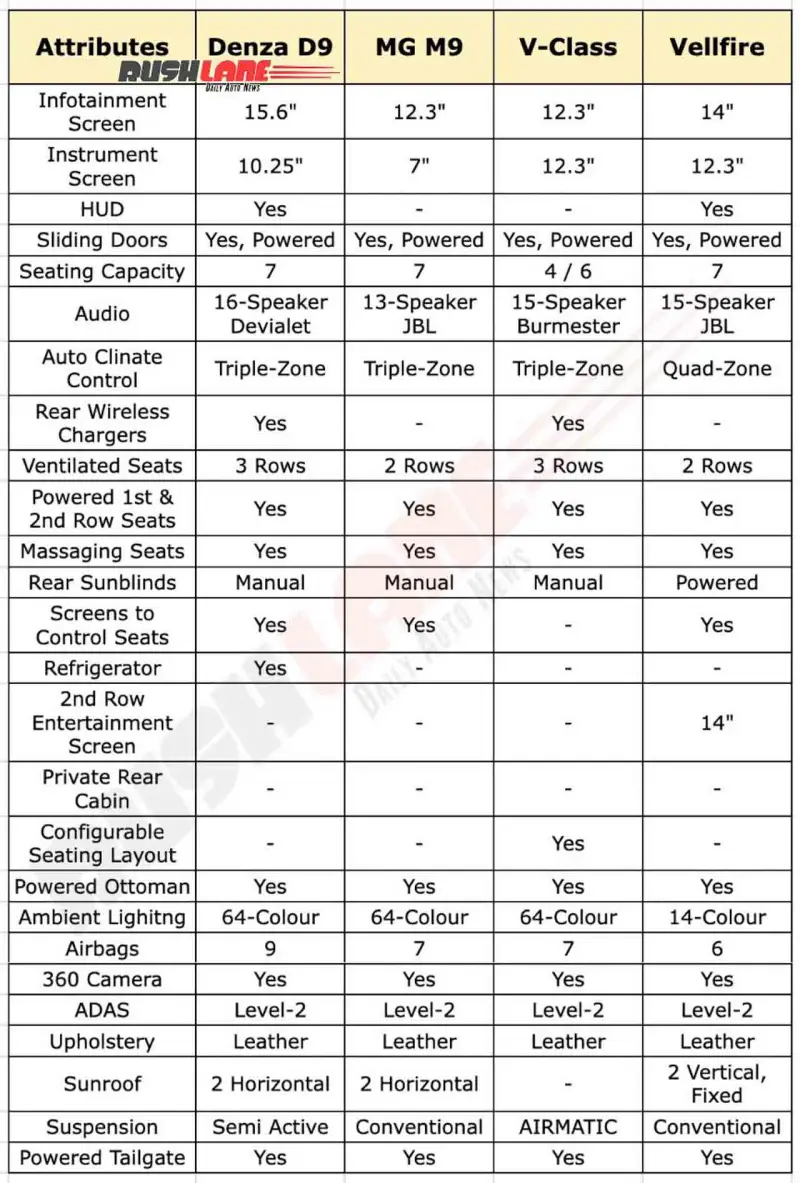
The D9 brings a 16-speaker Devialet audio system, the largest infotainment screen among these models and nine airbags. Its listed equipment also includes rear wireless chargers and semi-active suspension. Those features give the Denza a substantial technology pitch, but the best fit depends on how passengers will use the cabin and which conveniences matter most to them.
The Vellfire has powered window blinds and a rear entertainment package. It’s also the only model here with two vertical sunroofs; the other models’ sunroofs are conventional, and the V-Class has none. The Toyota also offers quad-zone climate control, a feature absent from the other three. Denza and Vellfire include tray tables for rear passengers.
Seat flexibility is a particular strength of the V-Class, whose configurable seats support different passenger and cabin arrangements. It’s also the only one in this group with AIRMATIC air suspension. For second-row captain-chair controls, the Denza, MG and Toyota use screens, while Mercedes relies on physical buttons. That simpler tactile approach may suit occupants who prefer direct controls over a display.
Ambient lighting, powered ottomans, powered first- and second-row seats, and ventilation and massage for those two rows are common across the four. The Mercedes and Denza extend ventilated seating to all three rows. None has a private rear compartment; the Lexus LM is identified as the step up for buyers seeking one.
The Denza D9’s strongest case is its combination of a large battery, the highest stated output here and an extensive feature list, at a price below the two costliest rivals. The MG M9 costs less and also runs on battery power. The Vellfire adds a hybrid powertrain and distinctive rear-cabin amenities, while the V-Class offers the longest wheelbase, configurable seating and petrol or diesel choices. Buyers should weigh those differences against their passenger, luggage and charging needs; the headline range and equipment count are only part of the comparison.