Skoda Kodiaq Adds 200 kW Plug-In Hybrid and Laurin & Klement Trim
Electric Vehicles Blagojce Krivevski 740 reads
The Kodiaq’s new plug-in hybrid raises output to 200 kW and adds DC charging, while Laurin & Klement brings massage seats and distinctive trim.
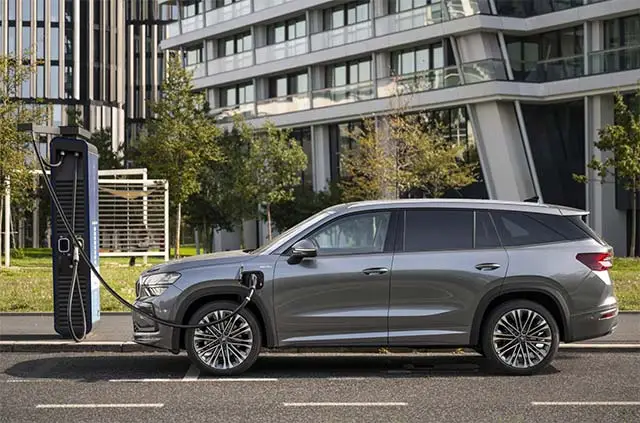
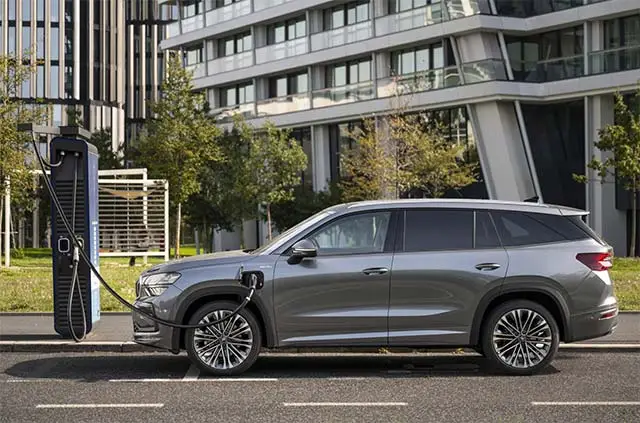
Skoda is widening the Kodiaq’s appeal in two directions: a stronger plug-in hybrid for buyers who want more power, and a new Laurin & Klement grade that puts comfort and finish at the top of the range. The hybrid now delivers 200 kW (272 PS), up from 150 kW (204 PS), and can take DC power at up to 50 kW. That adds useful flexibility for longer trips, though Skoda hasn’t yet stated the new version’s electric range.
The updates arrive as the Skoda Kodiaq reaches its 10th anniversary. Since the model’s 2016 debut, it has drawn 1.2 million customers across 70 markets, making it a significant part of Skoda’s large SUV business.
A more powerful plug-in hybrid, with range still to come
The revised plug-in hybrid pairs a 1.5-litre TSI four-cylinder petrol engine rated at 130 kW (177 PS) with an 85 kW (116 PS) electric motor. Skoda attributes the increase in combined output to engine improvements and updated powertrain control software. The result is a 50 kW lift over the existing Kodiaq iV’s 150 kW system output.
The battery’s stated gross capacity is 25.7 kWh, with 19.7 kWh usable. Those figures match the existing Kodiaq iV, so the headline change is the higher system output and the addition of DC fast charging rather than a larger battery. With charging supported at up to 50 kW, drivers can add energy during a longer stop instead of relying only on slower AC charging.
Skoda hasn’t provided an electric range for this 200 kW version. The current Kodiaq iV is rated for more than 100 kilometres of all-electric driving under its applicable test cycle, but that figure shouldn’t be assumed for the updated powertrain. Final range will depend on the revised model’s specifications and test results.
For buyers comparing plug-in SUVs, this distinction matters: the extra output speaks to performance, while usable electric distance determines how much daily driving can be completed without the petrol engine. The battery capacity remains the same on paper, and the new DC option adds a charging route for journeys beyond routine home charging. Prices, availability and the new model’s range haven’t been stated here.
Laurin & Klement puts comfort at the top of the range
The new Laurin & Klement becomes the Kodiaq’s range-topping trim and can be paired with a choice of powertrains. It takes its name from Skoda’s founders and gives buyers a higher equipment grade without tying the luxury treatment to one particular engine.
Inside, the standout addition is seating with a massage function, aimed at easing long stints behind the wheel or in the passenger seats. Outside, silver roof rails, body-coloured front and rear bumpers, matching side sills and specially designed alloy wheels set the grade apart. Laurin & Klement badges appear both inside and outside.
That combination makes the trim a comfort-led alternative within the range. The source details styling and seating equipment, but doesn’t give a price or a full list of standard features, so the value comparison with other Kodiaq grades will depend on local specifications and pricing.
A decade of Kodiaq, from first large SUV to second generation
The Kodiaq made its world premiere in Berlin on September 1, 2016, with customer deliveries beginning in spring 2017. It marked Skoda’s entry into the large SUV segment and was the brand’s first large SUV based on the Volkswagen Group’s MQB platform. From launch, customers could choose five or seven seats, petrol or diesel engines, and optional all-wheel drive.
Its name comes from Kodiak Island in Alaska; the final “q” draws on the language of the Alutiiq people. Before the SUV reached showrooms, the Alaskan city of Kodiak temporarily changed its name to Kodiaq for one day on May 6, 2016.
The performance-focused Kodiaq RS followed in 2018 as the first Skoda SUV to wear the RS badge. Its initial 2.0-litre BiTDI diesel produced 176 kW (239 PS). Later that year, racing driver Sabine Schmitz completed a Nürburgring Nordschleife lap in a production Kodiaq RS in 9 minutes and 29.84 seconds, a seven-seater SUV record that Skoda says still stands. An April 2021 update added Matrix LED headlights and a 2.0-litre TSI petrol engine, raising RS output to 180 kW (245 PS).
First-generation production ran until 2024, with 866,100 vehicles built. About 60% of customers chose all-wheel drive, and five-seat versions were slightly more popular than seven-seat models. Germany, the United Kingdom and the Czech Republic were among the Kodiaq’s key European markets.
Skoda unveiled the second generation on October 4, 2023, and series production began at its Kvasiny plant in the Czech Republic in mid-January 2024. The newer model brings more interior space, updated technology and styling shaped by Skoda’s Modern Solid design language. Its Smart Dials use multifunctional rotary controls for frequently used vehicle settings, while the Kodiaq iV introduced plug-in hybrid power at 150 kW (204 PS) and an all-electric range of more than 100 kilometres under the applicable test cycle.
Almost 330,000 second-generation Kodiaqs had been produced by the time of Skoda’s latest update. The new 200 kW hybrid and the comfort-focused Laurin & Klement grade extend a lineup already built around varied seating, powertrain and equipment choices. For buyers, the key details to check next are the revised hybrid’s tested electric range, local prices and which features each market includes.