Aston Martin Valhalla Spider PHEV: 1,079 PS and 217 mph with the Roof Off
Electric Vehicles Blagojce Krivevski 586 reads
The Valhalla Spider pairs a 1,079 PS plug-in hybrid system with removable roof options, active aerodynamics and a claimed 217 mph top speed.
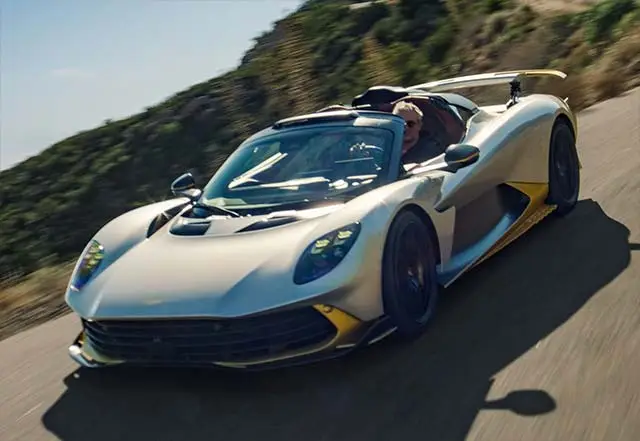
Aston Martin’s Valhalla Spider brings open-cockpit driving to the brand’s first production mid-engined supercar, with a 1,079 PS plug-in hybrid powertrain and a claimed top speed of 217 mph (350 km/h). Its key engineering test is making the car work across roof-on and roof-off driving: Aston Martin says it has adapted airflow management, aerodynamic controls and stability systems while keeping the Coupe’s core hardware.
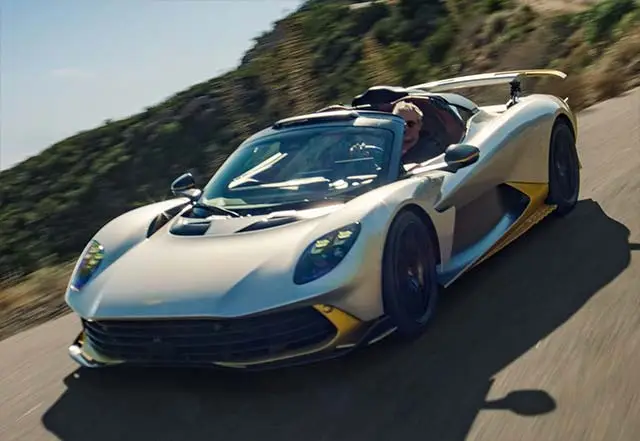
The Spider is described as Aston Martin’s fastest open-cockpit car. It shares the Valhalla Coupe’s carbon-fiber structure, hybrid system and active aerodynamics, with development input from Aston Martin Performance Technologies, the consultancy arm of the Aston Martin Aramco Formula 1 team. The result looks intended to preserve the Coupe’s high-speed and track capability while adding the flexibility of an open cabin.
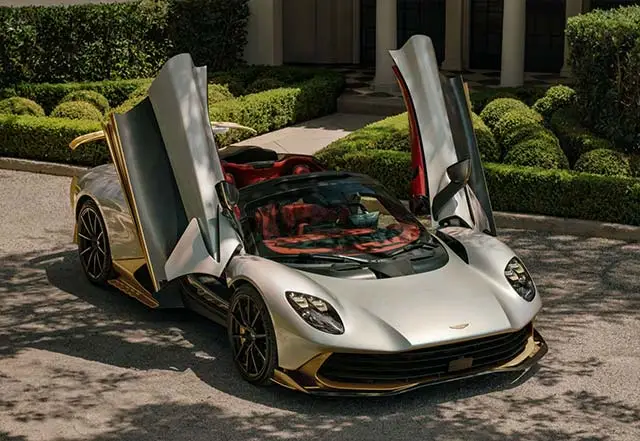
Roof choices and open-cabin airflow
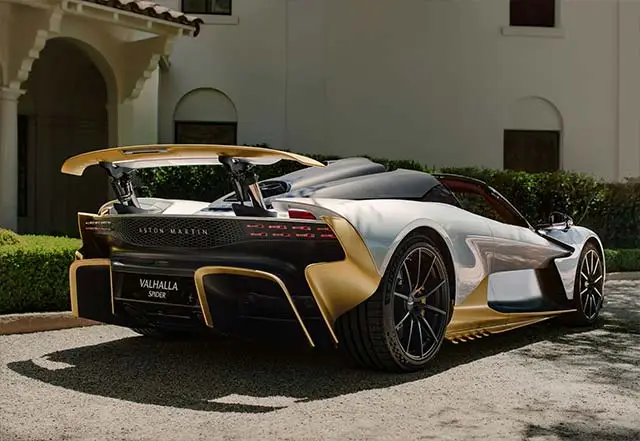
A removable black fabric roof is standard and can be stowed when conditions allow. With that roof fitted, the Spider’s stated maximum speed is 124 mph (200 km/h). An optional carbon-fiber hardtop allows the car to reach its electronically limited 217 mph (350 km/h) maximum. Aston Martin also says the Spider can reach that top speed with the roof removed, making it the fastest open-cockpit model in the company’s history.
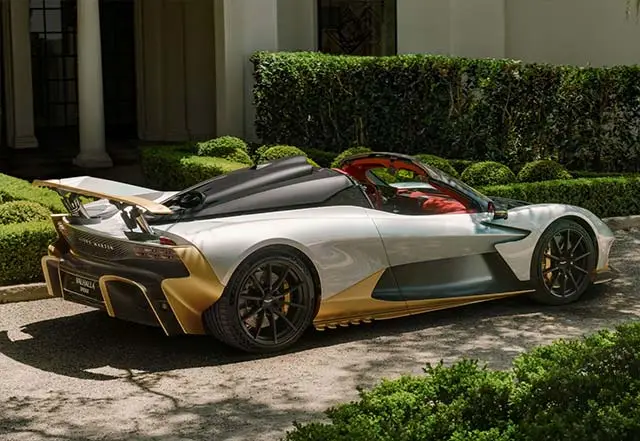
Managing air around the occupants is a practical concern at those speeds. A dedicated wind deflector redirects flow from the top of the windscreen. Aston Martin says this helps draw cooling air toward the engine intake while guiding airflow over the cabin to improve comfort.
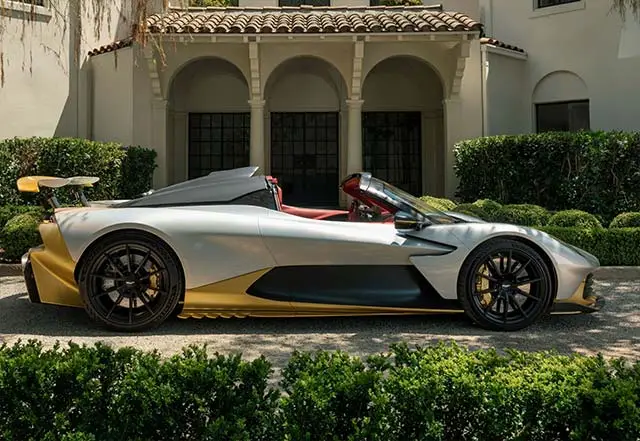
The engine intake snorkel sits 35 millimeters higher than the Coupe’s to suit the Spider’s revised airflow needs. When the roof is installed, the wind deflector folds into three sections and fits in new 15-liter storage compartments in the side sills. Those details address the packaging demands of a removable roof without leaving the deflector loose in the cabin.
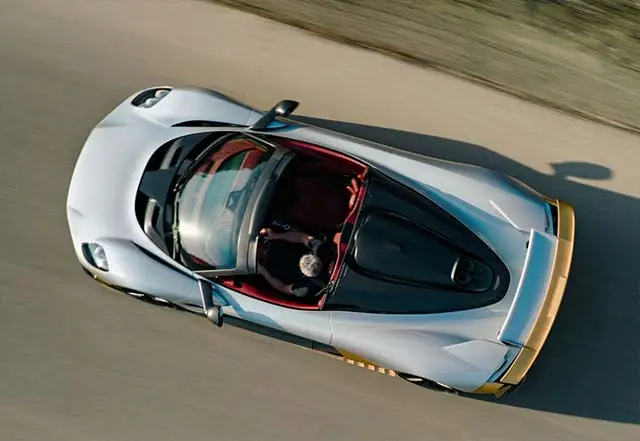
Aston Martin has also recalibrated the active-aerodynamics systems and electronic stability control for roof-on and roof-off use. The aim is to account for the changed airflow and keep the car’s responses predictable in either configuration.
Hybrid power and wheel-by-wheel control
The plug-in hybrid system combines a twin-turbocharged 4.0-liter V8 with three electric motors. The V8 produces 828 PS, or about 817 hp, and has a stated specific output of 207 bhp per liter. Aston Martin calls it the highest-specific-output combustion engine it has produced.
The electric motors add 251 PS, bringing combined output to 1,079 PS and maximum torque to 1,100 Nm. Two motors drive the front axle, where they provide electric torque vectoring; a third is integrated with the eight-speed dual-clutch transmission and assists the V8 in powering the rear wheels.
Because the front and rear axles have no mechanical connection, the system can manage power delivery to individual wheels. That gives the car more scope to balance traction, cornering response and stability. An Integrated Vehicle Dynamics Control system coordinates the powertrain with the suspension, steering, braking and active aerodynamics. Four selectable driving modes let the driver choose different behavior, while the control system adjusts to conditions and driver inputs.
For a car with this level of output, that coordination is central to its road manners. Aston Martin’s stated aim is to combine sharp response for track use with a more approachable feel on public roads, though the figures and engineering details provided don’t establish real-world fuel use or electric-only range.
Active aerodynamics and carbon-fiber construction
Movable elements at the front and rear adjust airflow over and under the body. They work together to balance downforce and drag, increasing aerodynamic load for cornering stability or reducing drag when conditions call for greater efficiency. With the roof fitted, Aston Martin says the Spider can generate more than 600 kg of downforce. The system has been recalibrated to maintain its aerodynamic performance with the roof removed, too.
The Spider retains the Coupe’s bespoke carbon-fiber tub, developed with Aston Martin Performance Technologies. Its upper and lower sections use a combination of resin-transfer molding and autoclave manufacturing. The company says the structure is designed to deliver rigidity and strength while keeping weight low and preserving cabin packaging.
Changes to the carbon-fiber dihedral doors are more specific to daily use. They keep their upward-opening movement, but revised mechanisms are intended to make operation smoother. The doors also use frameless glass, with a slightly more curved upper edge to improve access when the roof is on.
Cabin changes and the Coupe connection
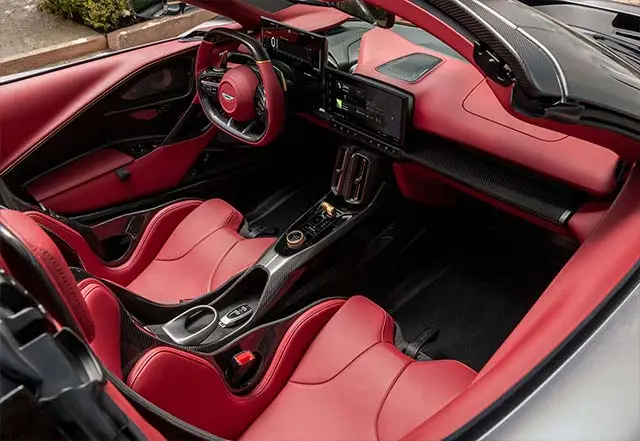
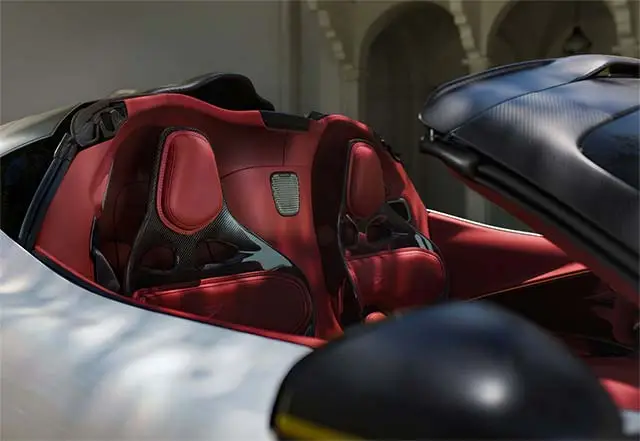
A carbon-fiber Touring Seat is standard, with a focus on comfort and easier entry and exit. Buyers can choose the more supportive carbon-fiber seat offered in the Coupe at no additional cost. That choice reflects the Spider’s dual role: a performance-focused car that also needs to accommodate ordinary tasks such as getting in and out.
Aston Martin CEO Adrian Hallmark has described the Coupe as a landmark for the company. It introduced Aston Martin’s first production mid-engined supercar and first plug-in hybrid, along with its first bespoke flat-plane-crank V8 paired with a new eight-speed dual-clutch transmission. The Spider carries that engineering into an open-top format.
The shared powertrain, chassis architecture and vehicle-dynamics hardware keep the Spider closely tied to the Coupe, while the roof system, altered airflow and revised controls define its distinct engineering work. Buyers get the option of a fabric roof, a hardtop or open-air running, with stated performance depending on configuration. Range, charging details, pricing and availability aren’t specified; for now, the headline is a 217 mph open-cockpit car with the same 1,079 PS hybrid system as its Coupe sibling.