BYD Qin Plus DM-i Adds 220 km CLTC Range and Updated Cabin in China
Electric Vehicles Blagojce Krivevski 429 reads
The new Qin Plus DM-i pairs up to 220 km of CLTC electric range with prices from 76,900 yuan during its limited-time launch offer.
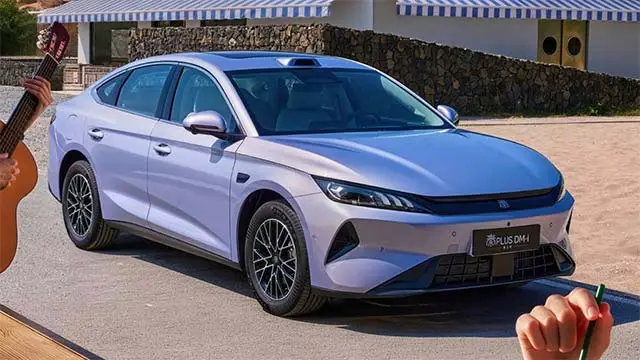
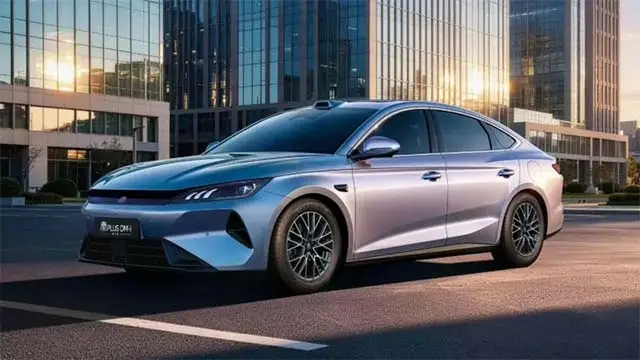
BYD has redesigned its Qin Plus DM-i around two buyer priorities: more electric driving before the gasoline engine is needed, and a larger cabin in a sedan that remains priced for China’s mainstream market. The third-generation plug-in hybrid offers up to 220 km of CLTC-rated electric range, while limited-time prices start at 76,900 yuan (about $11,450).
The range claim is the headline, but the model’s appeal depends on a familiar plug-in hybrid trade-off. Drivers who can charge regularly may complete many routine trips on battery power; those making longer journeys retain the flexibility of a gasoline engine. BYD claims up to 2,290 km of combined range with a full battery and full tank, though that figure, like the electric-range rating, is a test-cycle claim rather than a promise of typical use.
Three versions, two battery sizes
BYD offers three configurations. The Leading trim pairs a 16.2 kWh lithium iron phosphate battery with a claimed 140 km of CLTC electric range. Superior and Excellence use a larger 24.3 kWh pack and are rated for up to 220 km. Official guide prices run from 79,900 yuan to 100,900 yuan; the limited-time launch prices are 76,900, 87,900 and 97,900 yuan respectively.
| Version | Official price | Limited-time price | CLTC electric range |
|---|---|---|---|
| Leading | 79,900 yuan | 76,900 yuan | 140 km |
| Superior | 90,900 yuan | 87,900 yuan | 220 km |
| Excellence | 100,900 yuan | 97,900 yuan | 220 km |
The 3,000-yuan reduction applies across all three versions during the offer period. The price ladder makes the choice straightforward on paper: buyers seeking the lowest entry price get the smaller battery, while the two costlier trims add the longer electric range. The equipment differences between those upper versions are not detailed in the available specifications, so range and price alone do not explain the full distinction.
CLTC is China’s testing cycle and tends to produce higher range figures than drivers may see in everyday conditions. Temperature, speed, traffic, heating or air conditioning, and driving style can all affect electric distance. The 220 km rating should therefore be read as a standardized comparison figure. It still indicates a substantially larger battery option within this model range, but owners will need to consider their own routes and charging access.
Hybrid hardware and daily use
The plug-in hybrid system combines a 1.5-liter naturally aspirated gasoline engine rated at 74 kW (99 hp) with an electric motor producing 120 kW (161 hp). BYD says the car uses its fifth-generation DM hybrid technology. With the battery depleted, the stated fuel-consumption figure is 2.58 liters per 100 km under the NEDC cycle; real consumption will depend on conditions and how the vehicle is driven.
For a driver with dependable home or workplace charging, the larger-battery versions could cover a meaningful share of commuting and local errands using electricity, while still keeping gasoline power available for trips beyond the battery’s reach. That convenience has a practical condition: regular charging is what lets a plug-in hybrid make the most of its electric capability. Without it, buyers may not realize the same day-to-day benefit implied by the range rating.
BYD’s combined range claim of up to 2,290 km describes the car with both its battery and fuel tank full. It signals the intended long-distance flexibility of the powertrain, but it does not indicate how far the vehicle will travel on electricity alone. Drivers comparing it with a battery-electric sedan will need to weigh that distinction alongside their access to charging and typical trip lengths.
A larger footprint and revised cabin
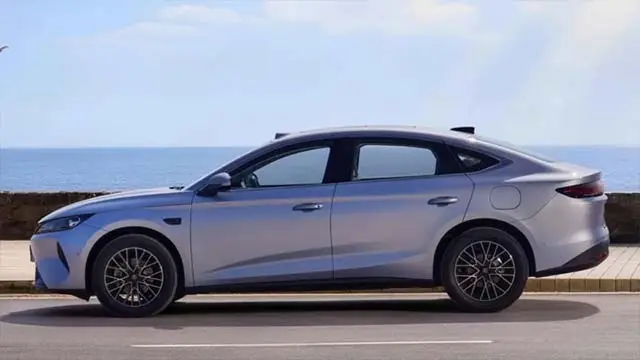
The new sedan measures 4,840 mm long, 1,900 mm wide and 1,498 mm tall, with a 2,800 mm wheelbase. Compared with its predecessor, it adds 60 mm in length, 63 mm in width and 82 mm between the axles. Those increases give BYD more room to package the cabin, and the longer wheelbase may benefit rear-seat legroom, though no interior-space measurements are provided.
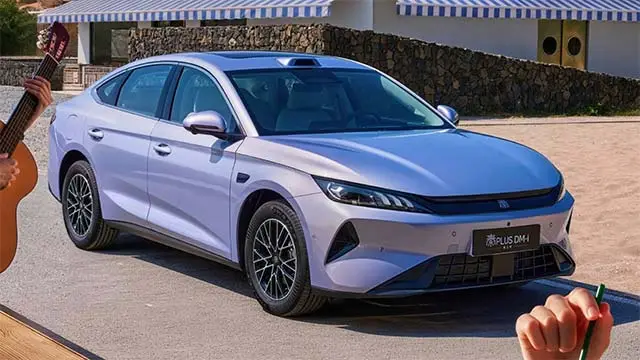
Exterior changes include a revised front end, sharper headlamps and a roofline with a fastback-like sweep. Full-width rear lamps carry forward the Qin family’s Chinese-knot-inspired motif. Island Blue joins the paint choices, and selected colors can be paired with a contrasting floating roof. The shape remains that of a conventional family sedan, with the added dimensions serving practicality as much as visual refresh.
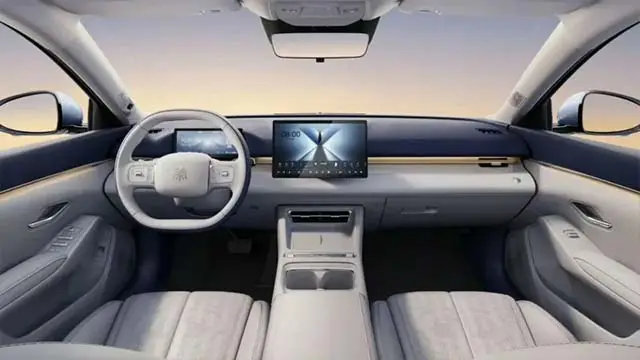
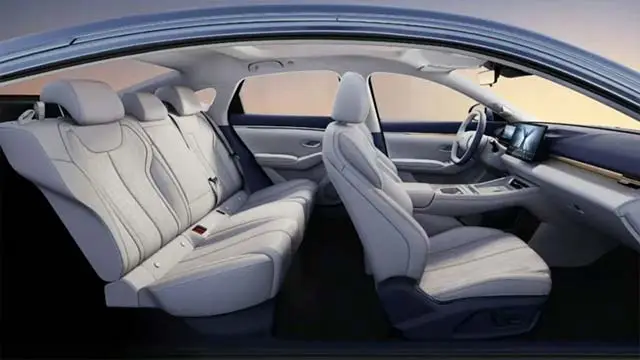
Inside, BYD has fitted a two-spoke multifunction steering wheel, a floating central touchscreen and a cleaner dashboard layout. Depending on trim, the main display measures 10.1 or 12.8 inches; an 8.8-inch digital instrument panel is also listed. Ambient lighting, added storage and redesigned seats are among the cabin updates. Buyers can choose Cloud Yarn Beige or Ink Smoke Grey upholstery.
LiDAR is an option, and the market backdrop is challenging
A roof-mounted LiDAR sensor is available with BYD’s God’s Eye B driver assistance system. The system supports navigation assistance on city streets and highways, as well as intelligent parking functions. It is optional rather than standard throughout the range, so the advertised capability depends on configuration. These features assist the driver and still require supervision.
The refresh arrives as the Qin family faces a sharp sales decline in China. Figures compiled by CnEVPost put September 2026 sales at 23,472 vehicles, down 65.27% from a year earlier. For the first nine months of 2026, the family recorded 207,589 sales, a 54.71% decrease compared with the same period in 2025.
BYD’s response combines a longer electric range, more cabin space, updated displays and aggressive launch pricing in a crowded sedan segment. The Qin Plus DM-i sits alongside the Qin L and Qin Max in the broader family; the battery-electric Qin Plus is a separate model. The new plug-in hybrid’s announced prices and specifications apply to China, and BYD has not confirmed an overseas launch or pricing. For prospective buyers there, the key decision is whether the larger battery’s extra electric distance justifies the step up from the entry version—and whether regular charging fits their routine.