John Hughes’ Cars Turned 1980s Movie Characters into a World of Their Own
Electric Vehicles Lyn Woodward 321 reads
From a Ferrari in Vacation to the Porsches in Sixteen Candles and Pretty in Pink, Hughes used cars to signal status, desire and character.
In John Hughes’ films, a car could sketch a character before they said a word. A red Porsche might announce money and confidence; a battered Volkswagen could fit its owner better than a polished luxury car. Even when the plot revolved around family troubles or teenage longing, the vehicles helped make Hughes’ fictional 1980s feel lived in.
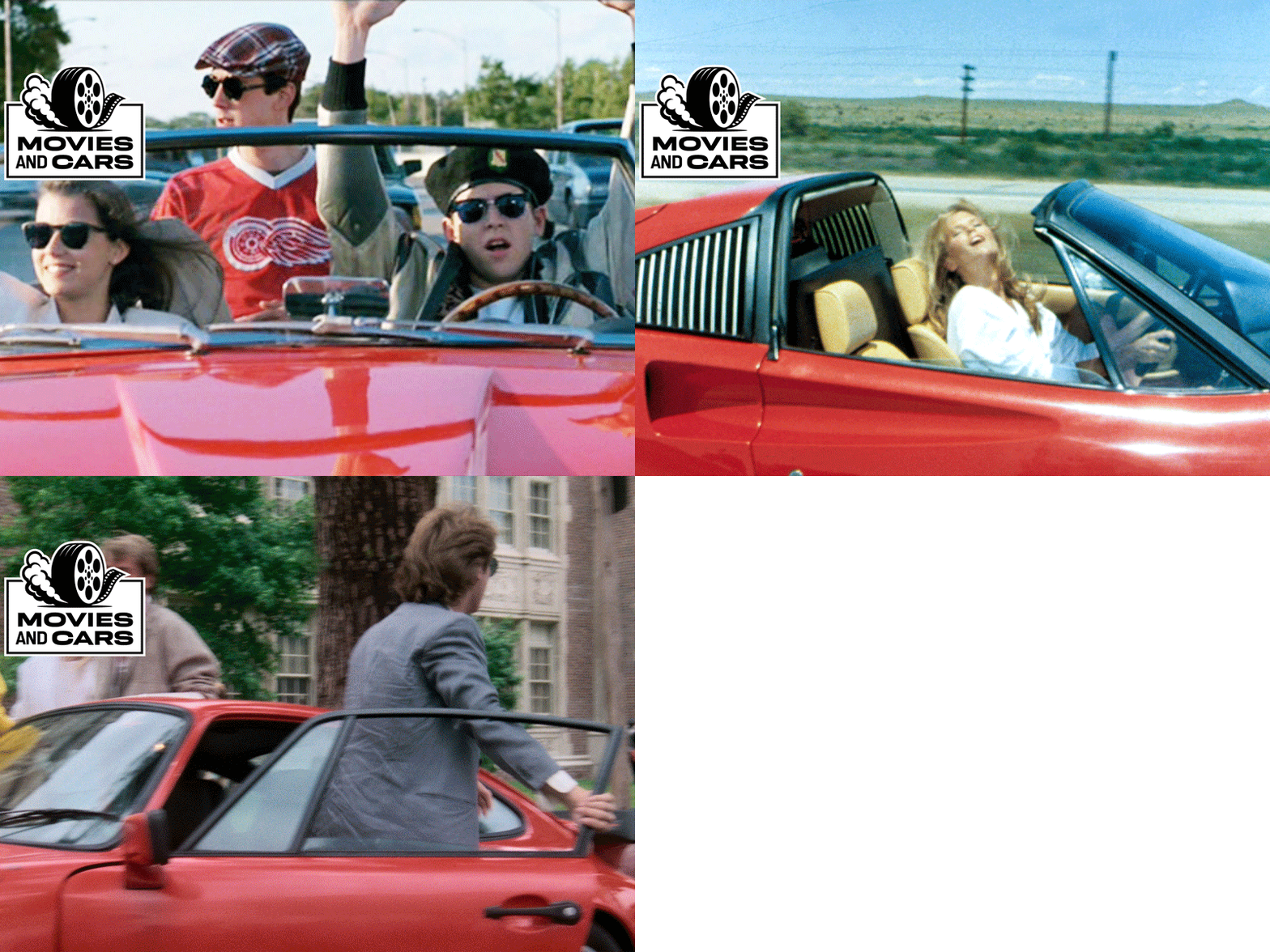
That attention to the cars around the edges is part of what makes his films rewarding for enthusiasts. The celebrated Ferrari from Ferris Bueller’s Day Off and the Wagon Queen Family Truckster from National Lampoon’s Vacation are obvious landmarks. But Hughes’ supporting cars carry their own stories, hinting at who has money, who wants to escape, and what kind of life a character imagines for himself.
Hughes built much of his film world around Shermer, Illinois, the Chicago suburb where he set at least 16 films. He once told former National Lampoon editor P.J. O’Rourke that he knew the residents beyond the people who appeared on screen: where they lived, what they did, and, as the films suggest, what they drove. Across these stories, the red sports car keeps returning as a compact symbol of aspiration. Its meaning changes with the person behind the wheel.
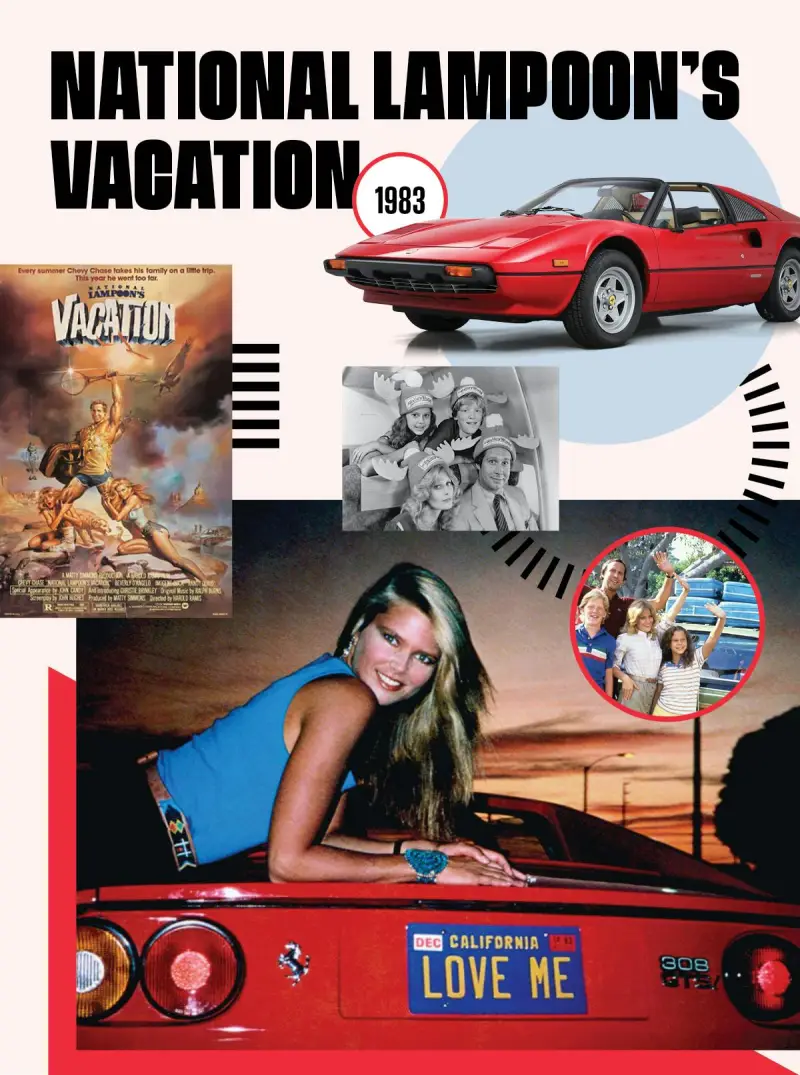
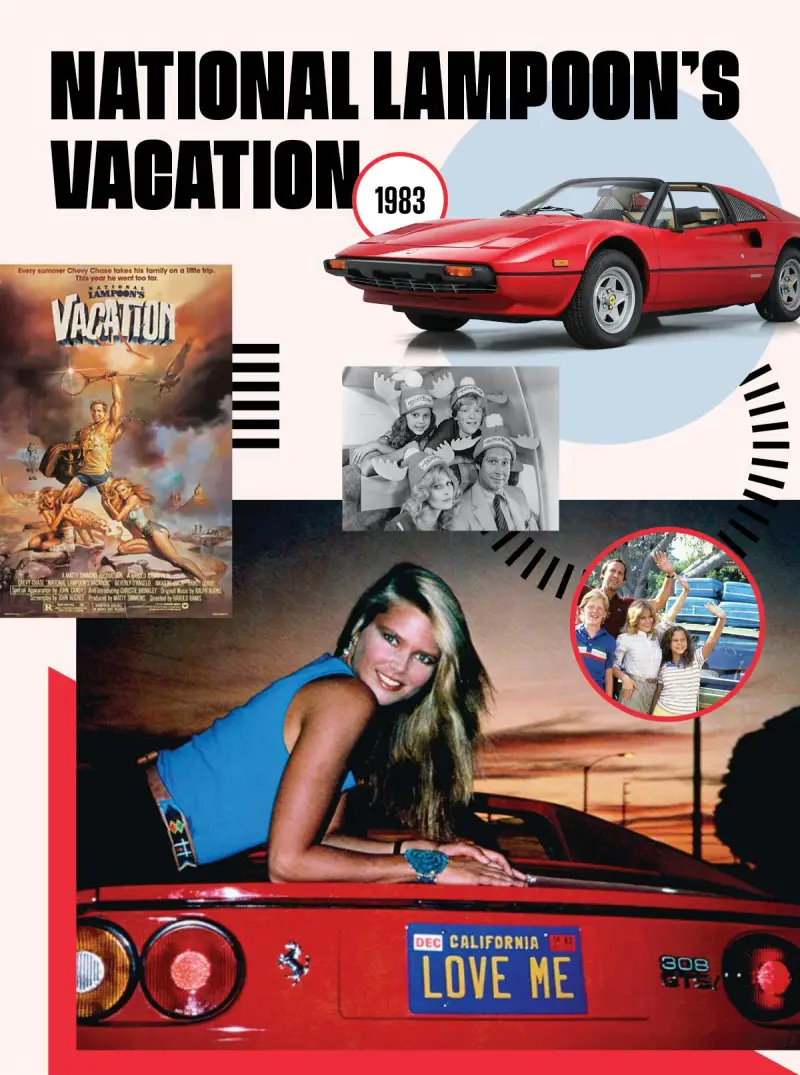
National Lampoon’s Vacation: 1981 Ferrari 308 GTS
Clark Griswold’s cross-country family trip is built on frustration, mishaps and his stubborn hope that things will work out. The bright red Ferrari 308 GTS that appears beside him offers a different kind of fantasy: speed, glamour and a brief escape from the responsibilities crowding into his vacation. Christie Brinkley’s character drives it, and Griswold’s fascination turns a roadside encounter into a comic detour from the family itinerary.
The 308 had a starring role in popular culture before Tom Selleck’s Magnum, P.I. made it a familiar TV sight. Vacation arrived two years earlier, giving the Ferrari a place in a broad comedy about an ordinary family’s trip. That juxtaposition is the joke and the appeal. The car looks like a dream within reach, at least until the realities of family life reassert themselves.
Hughes’ route to the film began with “Vacation ’58,” a short story inspired by a childhood road trip. Before writing screenplays, he worked in advertising and contributed to National Lampoon. O’Rourke later recalled how quickly Hughes wrote, at a pace that could challenge a monthly magazine to keep up. The film carries that sharp, sometimes deliberately outrageous comic energy from the Midwest to the Griswolds’ destination, Wally World.
The Ferrari isn’t the only vehicle that makes the trip memorable. The Wagon Queen Family Truckster is based on a Ford LTD Country Squire wagon, transformed into a grotesque, metallic pea-green family hauler. Its outsized, awkward presence fits Clark’s ambitious plan and the chaos that follows. Replicas have become common at car shows and auctions, a measure of how thoroughly this fictional wagon lodged itself in viewers’ memories.
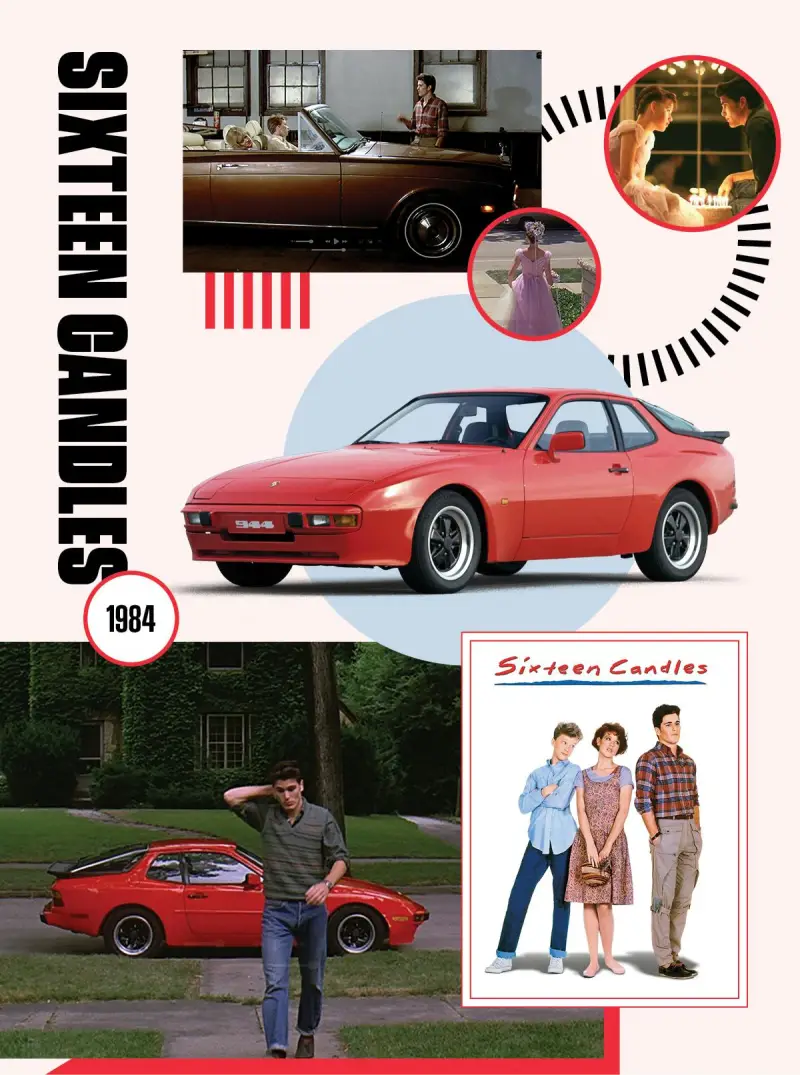
Sixteen Candles: 1983 Porsche 944
On her 16th birthday, Samantha Baker feels overlooked by her family, who are caught up in her older sister’s wedding. She also has a crush on Jake Ryan, a popular senior whose Guards Red Porsche 944 helps establish his appeal before the film explains much about him. The car is handsome and desirable, but its place in the Porsche range matters to the characterization.
The 944 was a front-engine, rear-wheel-drive sports car positioned as a more attainable entry point to the marque. In Hughes’ story, it suggests that Jake comes from a comfortable family with taste and resources. His parents can afford a Porsche for their son, yet the choice of a 944 rather than a 911 gives the car a quieter sense of privilege. Fuchs wheels and red paint complete the picture: this is a teenager who seems to have arrived with an advantage.
That advantage doesn’t make Jake flawless. His relationship with his girlfriend is unhappy, and Samantha’s awkward self-consciousness gives the story its emotional center. The Porsche functions like a fairytale steed, carrying the promise that the girl who feels invisible might be seen. By the end, Jake and Samantha get their moment together, while the car remains a tidy visual shorthand for the world he inhabits.
Other cars add texture to the film’s social world. Ted, played by Anthony Michael Hall, makes out with Jake’s girlfriend in a Rolls-Royce Corniche convertible. A 1981 Oldsmobile Cutlass appears in a pivotal auto shop scene, looking almost new for a car only a few years old. Their brief appearances help make the school’s hierarchy feel tangible, with vehicles serving as markers of access, taste and teenage status.
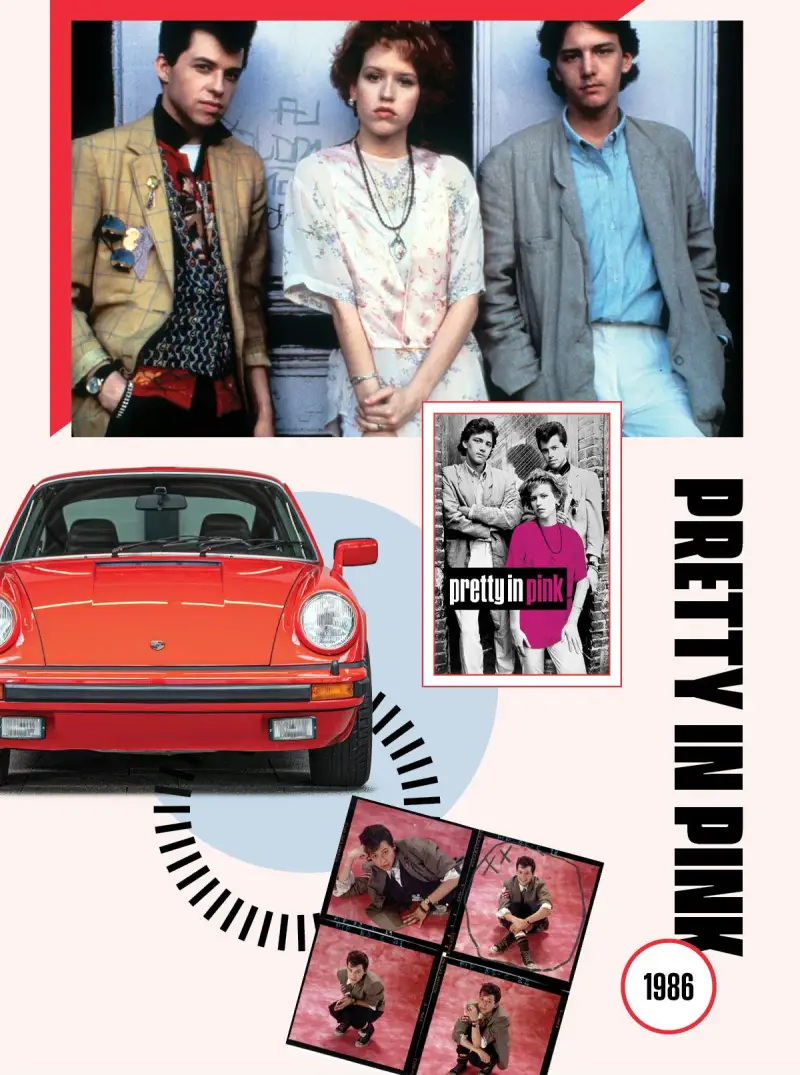
Pretty in Pink: 1978 Porsche 911 SC
In Pretty in Pink, the red Porsche belongs to the antagonist. Steff McKee, played by James Spader, drives a cherry-red 1978 Porsche 911 SC, a car that makes his wealth visible as he looks down on Andie Walsh. She’s a middle-class teenager with a distinctive personal style and a battered Volkswagen Karmann Ghia that suits her far better than a glossy status symbol would.
The difference between Steff’s 911 and Jake Ryan’s 944 is a neat example of Hughes’ casting instincts. Both Porsches signal money, but the 944 reads as youthful and relatively restrained. Steff’s 911 is a louder declaration of privilege. Its Guards Red finish and commanding shape mirror his certainty that wealth gives him a claim over other people.
That confidence doesn’t hold up. Steff disparages Andie to his friend Blane while pursuing her himself, using money and social standing as part of the pressure. The film ultimately exposes the insecurity beneath his performance. Blane tells him that he can buy almost anything, but not Andie’s affection. Steff’s Porsche makes him look powerful; his behavior shows the limits of what the car can say on his behalf.
Andie’s Karmann Ghia, meanwhile, is painted pink in a deliberately rough, homemade finish. It’s an imperfect match for the pristine 911, but that’s the point. The car reflects her independence and creativity, while the contrast between the two vehicles makes their owners’ differences visible without a speech.
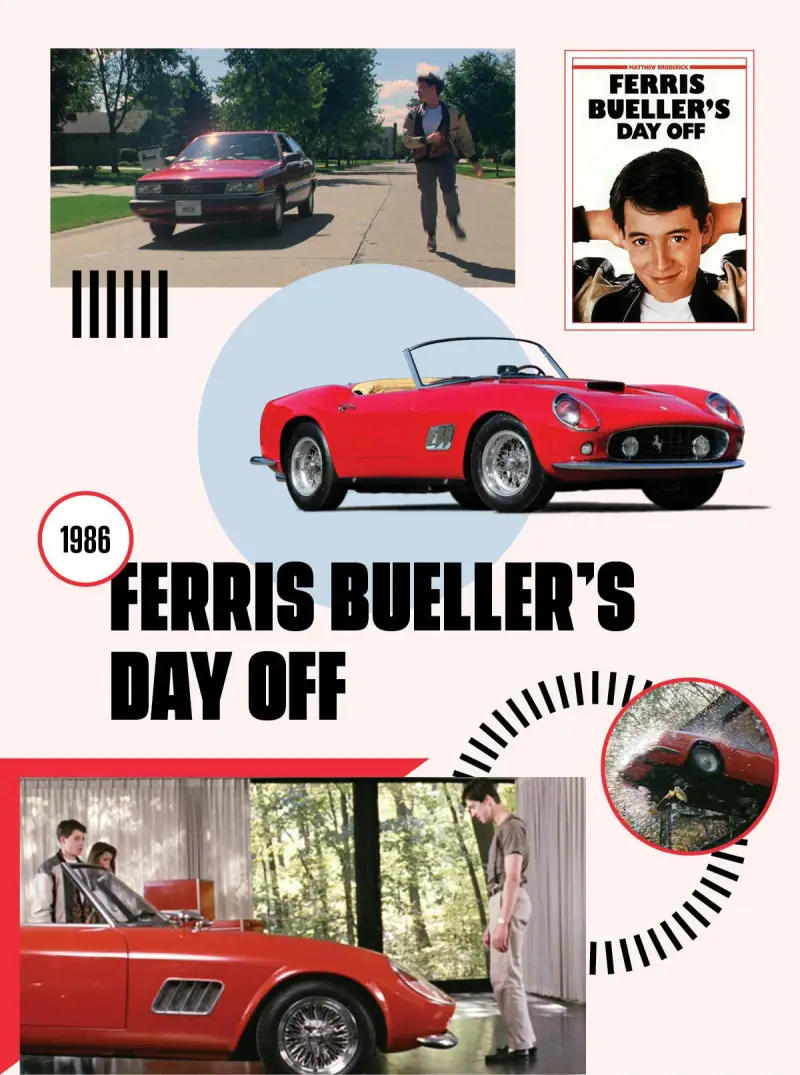
Ferris Bueller’s Day Off: Ferrari fantasy and Audi family car
The Ferrari 250 GT California Spider in Ferris Bueller’s Day Off is a replica, and its famous plunge is one of the film’s defining scenes. Yet the less theatrical red car in the story may reveal more about the family at its center: Tom Bueller’s 1985 Audi 5000S Turbo Quattro, finished in Tornado Red.
Tom, Ferris’ father, works in advertising in downtown Chicago. The Audi fits a professional who wants an advanced German performance car and doesn’t need the conventional status of a Lincoln or Mercedes-Benz. In the film’s world, Audi has the air of a choice for someone who sees himself as informed and modern. It is a telling counterpoint to the Ferrari owned by Cameron’s father, whose attachment to the car overshadows his relationship with his son.
Ferris’ father has his own shortcomings, but he isn’t willing to trade his child for an expensive automobile. That distinction supports the film’s emotional resolution: the day’s car chaos pushes Ferris’ friend Cameron to confront the way his father values the Ferrari. The contrast between the two households gives the vehicles a role beyond spectacle.
Ferris’ sister Jeanie has a white Pontiac Fiero, a birthday present that makes Ferris’ complaint about receiving a computer instead of a car all the more pointed. The Fiero is a small detail, but it helps the film’s family dynamics land. In Hughes’ work, even a car parked in the driveway can sharpen a joke or expose a character’s priorities.
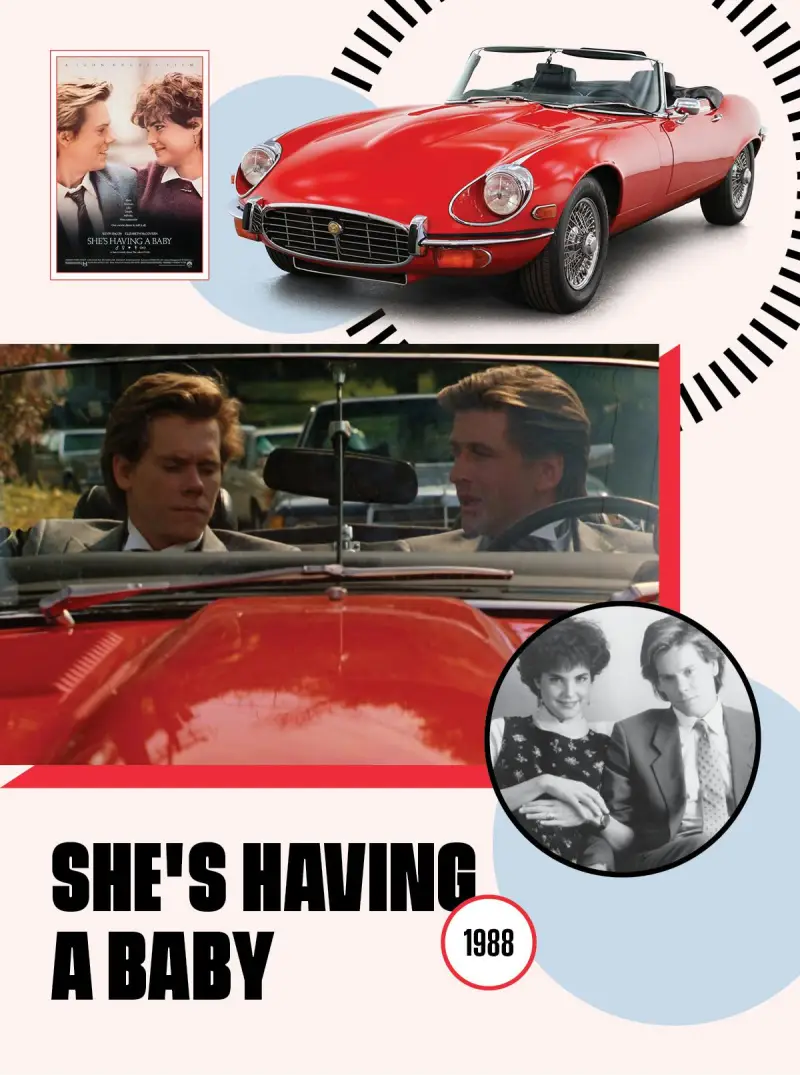
She’s Having a Baby: 1974 Jaguar E-Type
Hughes described She’s Having a Baby as his most autobiographical film. Jake, an aspiring writer played by Kevin Bacon, takes a job in advertising and wrestles with the compromises of marriage, work and family life. His best friend Davis McDonald, played by Alec Baldwin, arrives at the wedding with an offer to leave before Jake commits. Their conversation takes place in Davis’ red 1974 Jaguar E-Type.
The Jaguar is an apt setting for Davis’ pitch. At the end of the E-Type’s 13-year production run, the 1974 model already had the bearing of a classic by the time the film reached theaters in 1988. It lends Davis an easy, fast-living glamour, though the car’s age also hints at the effort required to keep such a machine on the road. For a young writer trying to build a stable life, owning and maintaining one would be a distant prospect.
Jake declines to leave. The choice fits Hughes’ own biography: he married his high school sweetheart at 20, then built a career in advertising before becoming a filmmaker. Davis’ carefree offer looks tempting in the moment, but the film gradually turns the tables. He envies the settled life he urged Jake to abandon, and he recognizes from the start that Jake would return if he walked away.
Other vehicles quietly mark the path ahead. A red Nissan ZX sits in a neighbor’s driveway during a musical sequence featuring suburban fathers and lawn mowers. Later, Jake drives his wife to the hospital in a silver BMW 325i. The cars make adulthood look less like a single dramatic choice than a series of practical steps, with room for pleasure and style along the way.
Across these films, Hughes repeatedly gave cars the work of a supporting actor. A Ferrari can make an ordinary road trip feel glamorous; a Porsche can separate quiet privilege from showy entitlement; an old Jaguar can embody an alluring escape that may not survive contact with daily life. The cars add more than period color. They turn each character’s desires into something you can see, hear and remember long after the scene ends.