V10 Sedans: Volkswagen, BMW and Audi’s 10-Cylinder Flagships
Electric Vehicles [email protected] (Chloe Clougher) 510 reads
The Phaeton, M5 and Audi S6, S8 and RS6 brought V10 power to sedans, with used prices tempered by costly repairs.
V10 power in a sedan once meant choosing between very different kinds of excess: a quiet Volkswagen flagship with a diesel engine, BMW’s high-revving M5, or Audi’s mix of naturally aspirated S models and a twin-turbo RS6. These cars arrived in the 2000s, when mainstream brands were still putting 10-cylinder engines into four-door models. Today, their used prices can look surprisingly accessible. Keeping them running is the harder calculation.
Volkswagen and BMW each put a V10 in one production sedan. Audi used the layout across three: the S6, S8 and RS6. Their powertrains and intended roles varied, but all share a defining ownership reality: complex engines packed into large cars can make routine repairs expensive. Two more V10 sedan concepts—from Ford and Lamborghini—showed how far the idea might have gone, but neither reached production.
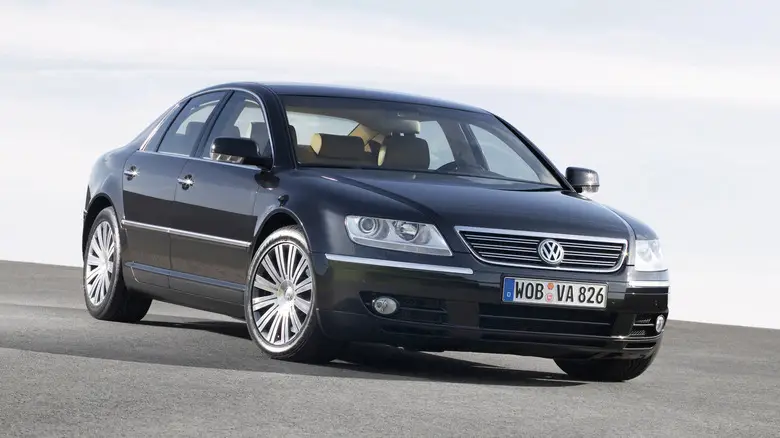
Volkswagen Phaeton: luxury first, diesel torque second
The Phaeton was the first V10-powered sedan to reach the market, arriving in 2003 as part of Ferdinand Piëch’s effort to raise Volkswagen’s standing. Its equipment included air suspension, leather seats and an elaborate climate control system. Buyers could choose from several engines, from the base VR6 and optional 4.2-liter V8 to a 6.0-liter W12. The 4.9-liter V10 TDI was the unusual choice.
That diesel produced 313 horsepower and 553 pound-feet of torque. It wasn’t sold in the United States, where the Phaeton was offered with V8 and W12 engines; buyers in the U.K. could order the V10. Its early-2003 price was £57,840, equivalent to $95,574 at the time, or about $175,000 in today’s dollars. Depreciation has been severe: V10 examples rarely top £10,000 ($13,480) today. U.S. W12 versions generally trade for around $15,000 to $20,000, depending on mileage.
The low purchase price doesn’t make this a cheap luxury car to maintain. Space in the engine bay is tight, and some repairs, including turbocharger replacement, require removing the engine. That turns labor intensive work into a poor fit for casual do-it-yourself maintenance. The Phaeton may offer considerable comfort for its current asking price, but repair bills can quickly test that appeal.
BMW M5: a high-revving V10 with costly weak points
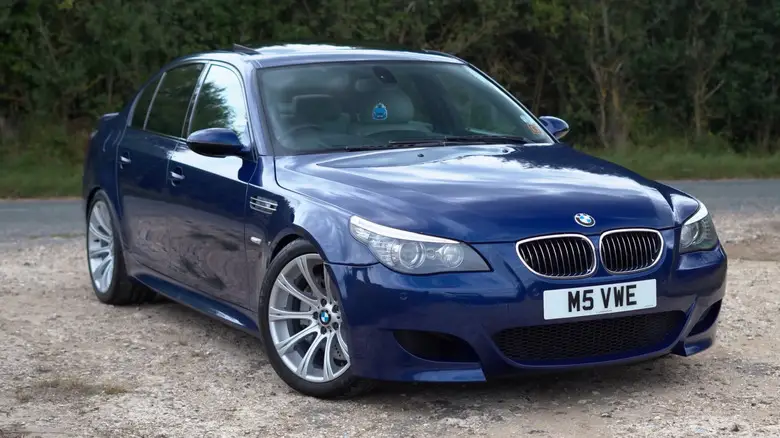
The E60-generation BMW M5 arrived for the 2005 model year with a very different brief. Its naturally aspirated 5.0-liter S85 V10 made 500 horsepower and 384 pound-feet of torque. A 12:1 compression ratio helped it reach 100 horsepower per liter, while the engine’s 8,250-rpm redline gave the sedan a character distinct from the Phaeton’s torque-focused diesel. The S85 won International Engine of the Year in 2005 and 2006, and remains a major part of the car’s enthusiast appeal.
New, the M5 cost $84,895. Used values vary sharply by transmission. Classic.com lists an average price paid of $25,555 for SMG-equipped examples, compared with $45,127 for six-speed manuals. Buyers pay more for the manual’s direct involvement, while the automated SMG transmission has a reputation for expensive problems. Hydraulic pump failures can cost thousands of dollars to fix.
The engine also has known trouble spots, including its oil pump, throttle body actuators and rod bearings. So the M5’s price gap between transmission types is only part of the ownership picture: a lower purchase cost can leave more room for repairs, but it doesn’t remove the mechanical risks.
Audi: three V10 sedans, including a twin-turbo RS6
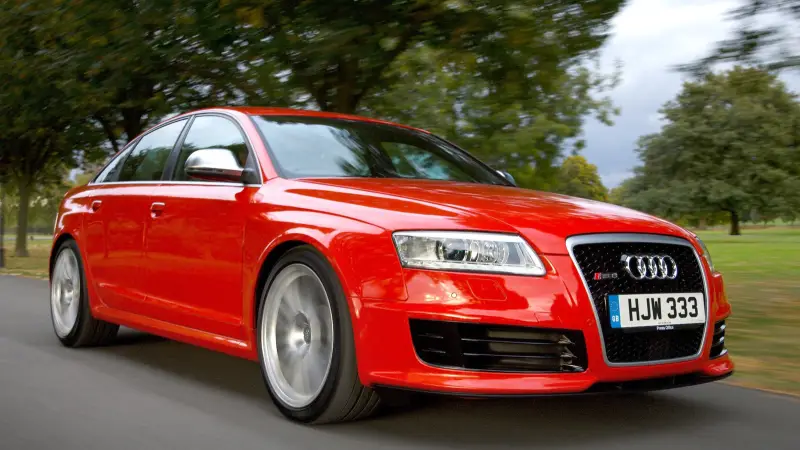
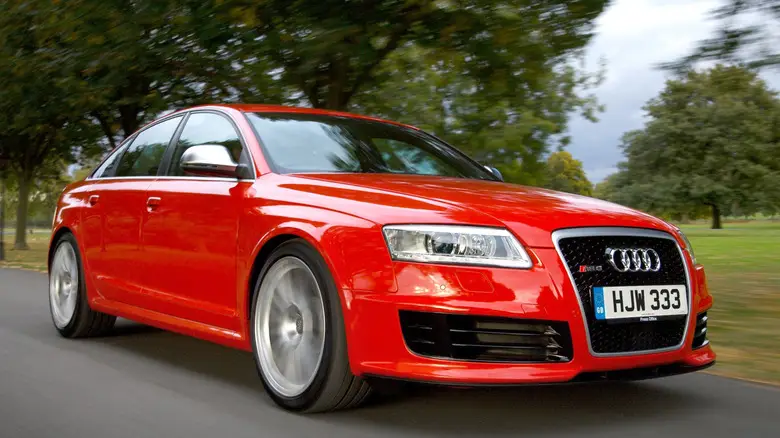
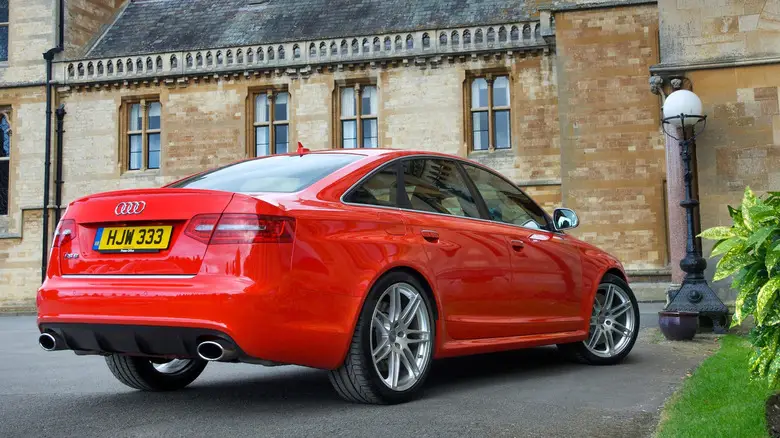
Audi spread V10 power across the C6 S6 and RS6 and the D3 S8. The S6 and S8 reached U.S. showrooms as 2007 models; the C6 RS6 never came to the U.S. The S6 and S8 used a naturally aspirated 5.2-liter engine, with 398 pound-feet of torque. The S6 produced 435 horsepower, while the S8 made 450.
The RS6 took a different route. Its 5.0-liter V10 used two turbochargers and delivered 579 horsepower and 479 pound-feet of torque. At its 2008 model-year debut, it was the most powerful production Audi to date. A new RS6 Sedan cost £76,160, about $150,000 at the time and equivalent to $239,440 today. For context, the newer RS6 Avant had a stated price of $122,995.
Used U.S. S6 and S8 models can be found for below $10,000 with reasonable mileage, but repairs are a major part of the equation. On the RS6, even an oil pump seal can call for an engine-out job costing several thousand dollars. That repair gives a sense of the labor involved in owning these tightly packaged V10s. Affordable entry prices leave room in the budget for maintenance, but don’t make the cars low-cost propositions.
Two concepts that stayed off the road
Ford’s 427 Concept, revealed in 2003, imagined a large American luxury sedan with rear-wheel drive and a modular V10. Its 427 cubic inches of displacement corresponded with claimed outputs of 590 horsepower and 509 pound-feet of torque. Ford kept it a concept as its attention shifted to models including the 2005 Ford GT and S-197 Mustang.
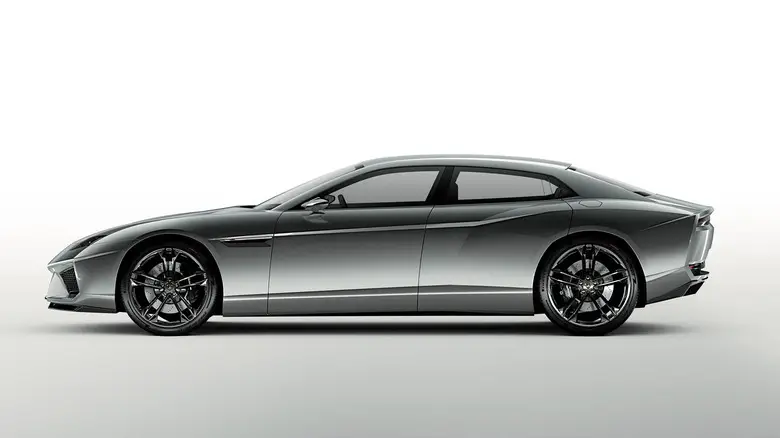
Lamborghini’s 2008 Estoque explored a different kind of four-door: a car designed for everyday tasks such as commuting and school drop-offs, with a Gallardo-derived V10 expected to produce around 500 horsepower. The global recession and Lamborghini’s changing plans stalled the project; the Urus later became the brand’s practical model. The Estoque and 427 remain glimpses of a period when automakers considered V10 power a plausible fit for a sedan. The production cars show the trade-off clearly: their performance and character endure, while the complexity that made them special can make ownership demanding.