Audi Q9 Digital Matrix Lights Add Road Projections and Glare Control
Electric Vehicles [email protected] (Logan K. Carter) 514 reads
The 2027 Audi Q9 brings matrix headlights to U.S. models, with selective high beams, projected turn arrows and door area warnings.
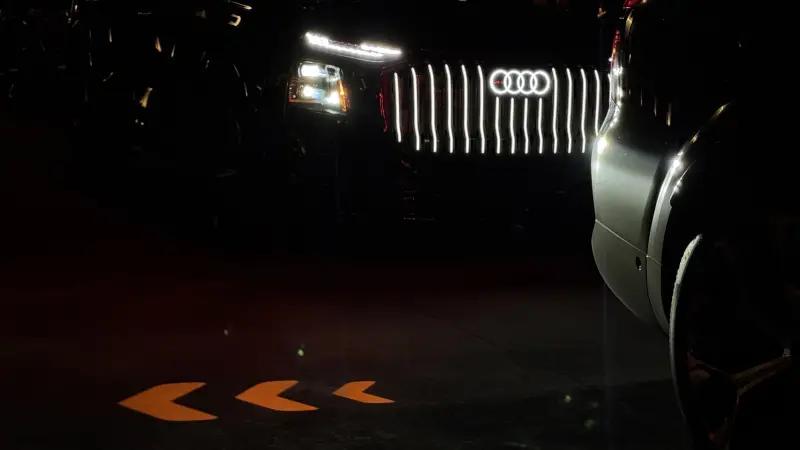
Audi’s 2027 Q9 brings two lighting features into its U.S. lineup that do more than shape the SUV’s appearance: digital matrix headlights that adapt their beam around other road users, and projectors that put turn arrows and warning symbols on the pavement. The setup makes the Q9 a showcase for lighting that communicates with people outside the vehicle as well as illuminating the road for its driver.
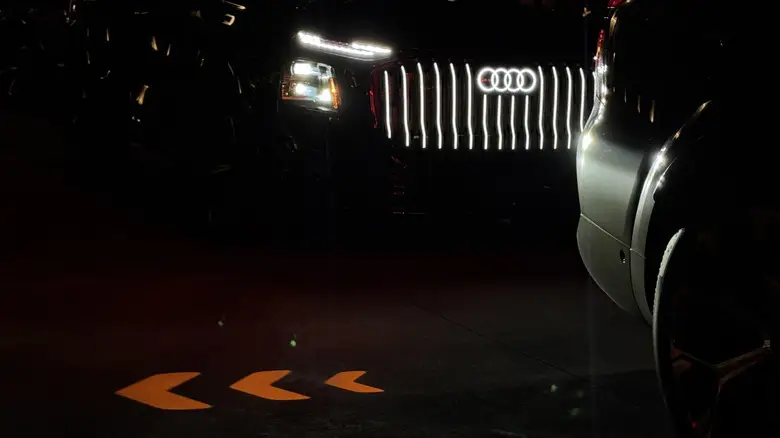
Audi has developed matrix lighting for years, but the Q9 is the first U.S. model from the brand described as having the system configured to meet the country’s updated headlight requirements. The distinction matters for buyers because the technology’s useful feature is its ability to keep high beams active while changing where their light falls. Audi’s earlier lighting designs and selectable daytime running light signatures established the brand’s interest in configurable lamps; the Q9 extends that approach into nighttime visibility and exterior warnings.
High beams with a changing dark zone
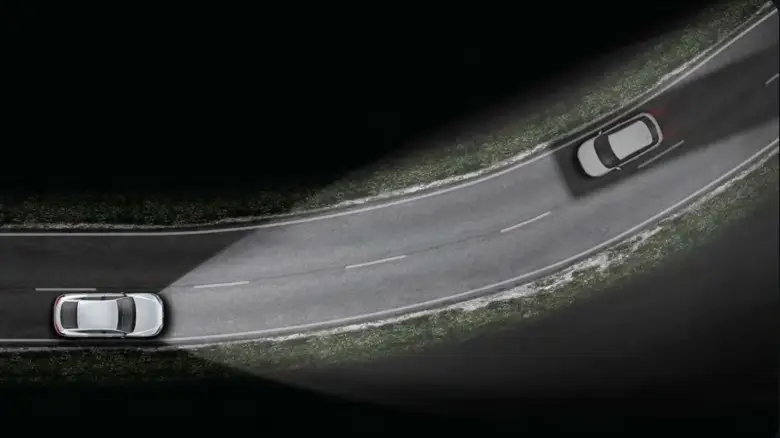
A camera behind the rear-view mirror scans the road for vehicles and signs. With the high beams on, the matrix headlights shape the beam to leave darker areas around detected targets. The driver keeps much of the extra illumination that high beams provide, while drivers ahead and approaching traffic are shielded from direct light. The system also dims around road signs, according to the demonstration.
That approach could be useful on unlit rural roads, where a driver often has to choose between seeing farther and avoiding glare for other road users. During a nighttime demonstration in Utah, the Q9’s beam illuminated a broad area while darker zones followed other cars and road signs. The driver reported that those zones were difficult to pick out from behind the wheel. That observation points to the intended balance: preserve a useful view of the road without making the beam’s adjustments distracting.
 Audi
The system depends on the camera identifying what lies ahead and the headlamps adjusting around it. Its practical value, then, comes from how well those actions work together on roads with changing traffic and lighting. The demonstration showed the effect under dark conditions, but the available description doesn’t provide a performance range or explain how the system behaves in every weather or road situation. Buyers should read the feature as an added way to manage high beams, not as a substitute for paying attention to the road.
Signals and warnings on the pavement
The Q9’s headlamps and taillamps can also project turn arrows onto the road when the headlights are on. The arrows extend beyond the vehicle’s body, which could make a driver’s intention visible sooner when the SUV is parked at the curb and preparing to pull into traffic. In Audi’s demonstration, the projected arrows were not especially bright in every situation. Their usefulness will depend on visibility and on whether nearby drivers can see the pavement where the signal appears.
On Q9s equipped with the Prestige package, white rhombus shapes appear beneath the front and rear doors. They unfold when a door opens, and can also appear when a cyclist or car approaches as a passenger is preparing to get out. The projections work alongside exit warning: radar sensors in the rear bumper detect approaching vehicles, cyclists or pedestrians. The system can prevent a door from opening or stop one that is already moving toward an obstacle. In that situation, the projected lights display warnings as well.
 Logan K. Carter
These features address a familiar challenge for larger vehicles: other road users may have limited time to notice a car turning out from a parking space or a passenger opening a door. Putting an arrow or warning directly on the ground gives the Q9 another way to signal what is happening. Whether that extra cue helps will depend on where people are standing, the brightness around the vehicle and how clearly the projection shows up.
Trim availability and the price of the extra lighting
Digital matrix headlights are standard on Q9 Premium Plus and higher trims, and on the SQ9. The advanced turn signal projections are tied to option packages: they’re included in the Q9’s $14,700 Prestige package and the SQ9’s $4,750 Luxury package. On the SQ9, that package also includes powered doors. Those package prices put the projected signals among a broader set of equipment rather than listing them as a separate option.
The Q9 also uses curved OLED taillights, described as the first of their kind on a road car. They can show a hazard triangle when the hazard lights are active, and the vehicle offers eight daytime running light signatures for buyers to choose from. The mix of selectable lighting designs, road projections and beam control gives the Q9 a wider lighting feature set than a conventional headlamp upgrade.
For buyers comparing trims, the main distinction is straightforward: matrix headlights are available from Premium Plus upward, while the projected turn arrows require a package. The door area projections are part of Prestige equipment. Repair costs and long-term reliability figures aren’t provided, so the purchase decision comes down to whether these added functions justify the package cost and complexity. The Q9’s lights make a clear case for what adaptive beams and pavement signals can do; real-world visibility and ownership costs will determine how much that sophistication matters over time.