Bugatti Veyron at 20: 253mph Performance, Running Costs and Values
Electric Vehicles John Barker 790 reads
Two decades on, the 1,001ps Veyron still delivers startling speed. A drive in prototype XP5.5 revisits its engineering, upkeep and rising collectable values.
The Bugatti Veyron’s defining achievement wasn’t simply reaching 253mph. It made extraordinary speed feel controlled and usable: 20 years after its launch, its 8.0-litre W16 still delivers a forceful, sustained surge that can make a modern 1,001bhp hybrid supercar feel familiar by comparison. A drive in XP5.5, the last pre-production 16.4 prototype, shows how much of the Veyron’s appeal lies in the engineering beneath its understated shape.
Back in 2005, a full-throttle run on a dry, lightly trafficked German autobahn took the car from 80km/h to almost 300km/h in seconds. The acceleration didn’t arrive as a single dramatic hit; it kept building, seemingly compressing time and distance until the driver lifted. A Porsche Carrera GT and Ferrari Enzo, both with more than 600bhp, had seemed formidable on the drive to meet the Bugatti. The Veyron made their performance feel comparatively modest.
Its headline figures remain striking. The original Veyron was rated at 1,001ps, or 987bhp, and a 250mph target. It weighs close to two tonnes, yet 0-60mph takes 2.5 seconds. Acceleration from rest to 70mph approaches 1g; reaching 186mph takes 14 seconds, with an average of 0.65g from 70mph. The sprint to 250mph takes 55 seconds. A verified top speed of 253mph (407km/h) ultimately exceeded the target.
For this return drive, the comparison is a Lamborghini Revuelto, a hybrid supercar with a combined peak output of 1,001bhp. That gives the Veyron a useful contemporary benchmark: its age is obvious in some details, but its acceleration still feels extraordinary beside a car with similar headline power.
From W18 concept to record-breaking W16
The Veyron began as a different proposition. Volkswagen Group acquired Bugatti in 1998, and the following year showed the 18.3 Chiron concept. Based on the four-wheel-drive Lamborghini Diablo VT, it used a naturally aspirated W18 engine rated at 555bhp. Later in 1999, the concept became the Veyron 18.4, retaining the W18 while adopting a form closer to the production car.
At Geneva in 2000, Volkswagen Group chairman Ferdinand Piëch announced that the Veyron would reach production with 1,001ps and a 250mph top speed. Setting targets beyond what seemed practical was characteristic of Piëch, whose earlier projects included the Porsche 917 and Audi quattro. He wanted to see another major engineering undertaking through before his planned retirement in 2002, aged 65.
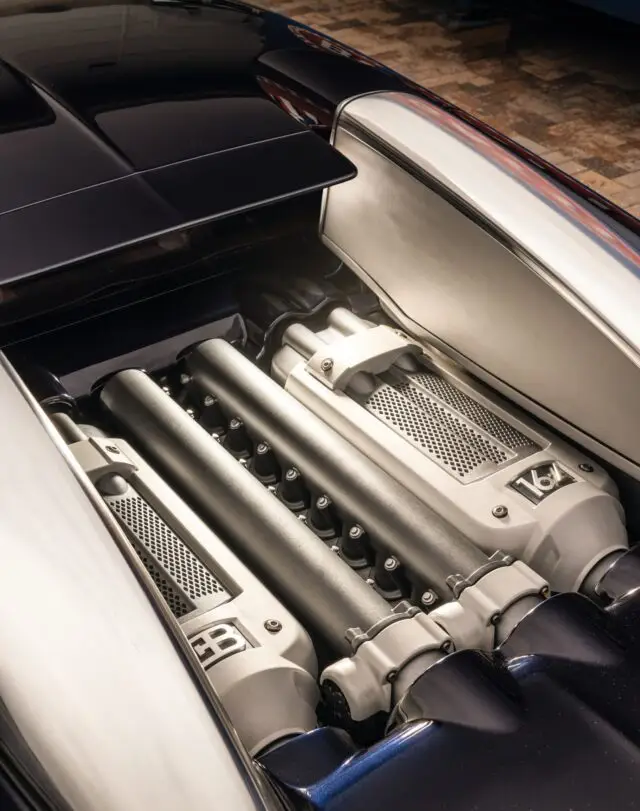
The W18 gave way to a W16: two banks of narrow-angle V8s, with four turbochargers. Turning that layout into a production car proved difficult. In 2003, banker, racer and former McLaren F1 owner Thomas Bscher was brought in to help get the programme on track. He described the project as “pure chaos,” citing excessive drag, more than 600 basic packaging problems and unresolved cooling demands. The promised output, he said, existed only on paper. New Volkswagen board chairman Bernd Pischetsrieder also thought the car felt too focused and race-oriented.
Fuel delivery and heat management were among the toughest engineering problems. Pumps capable of supplying the 8.0-litre engine at full demand didn’t exist, so a suitable system had to be developed. At maximum speed, the Veyron could consume its 100-litre fuel tank in 12 minutes. And producing nearly 1,000bhp at the wheels meant handling about 3,000bhp of combustion energy; roughly 2,000bhp was lost as heat and noise. The cooling system had to cope with that extraordinary waste load.
The car reached production in 2005 and met Piëch’s targets, including a 253mph run at Volkswagen Group’s Ehra-Lessien test facility, about 20km from Wolfsburg. The original price was €1m, or £872,000 at the conversion given at the time. It was widely said that Bugatti lost money on each car, but Piëch rejected that claim in late 2006: “We now make money on every Veyron sold. The whole Bugatti operation including the refurbished château cost less than one season for a midfield F1 team.”
For all its scale and speed, the Veyron’s design is restrained. Its smooth surfaces and quietly assertive stance don’t rely on the conspicuous wings and vents common to many supercars. The fastest car in the world could afford to be subtle.
XP5.5: a prototype with a high-speed history
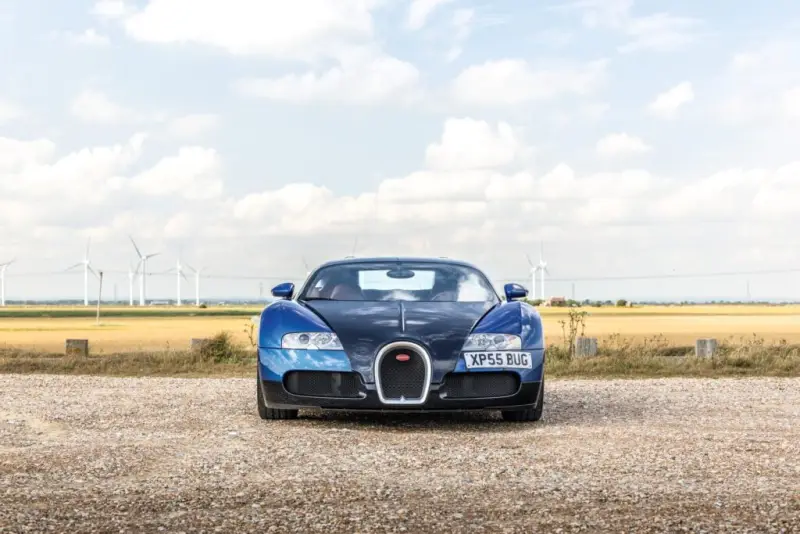
The car for this drive is at Furlonger Specialist Cars in Ashford, Kent. XP5.5 is the last pre-production Veyron 16.4 prototype, distinguished by experimental vented wings and sculpted doors. The features were tried on the XP3 series; Furlonger sales director Matt Honeysett believes XP5.5 is the only car in the 5-series fitted with them. Bugatti didn’t carry the design into production, judging it less elegant. The vents may have helped airflow, but airflow through the body also adds drag. Former Bugatti technical chief Wolfgang Schreiber put the trade-off plainly: “Every cubic inch of air that flows through the car, the drag coefficient suffers and you lose a little speed.”
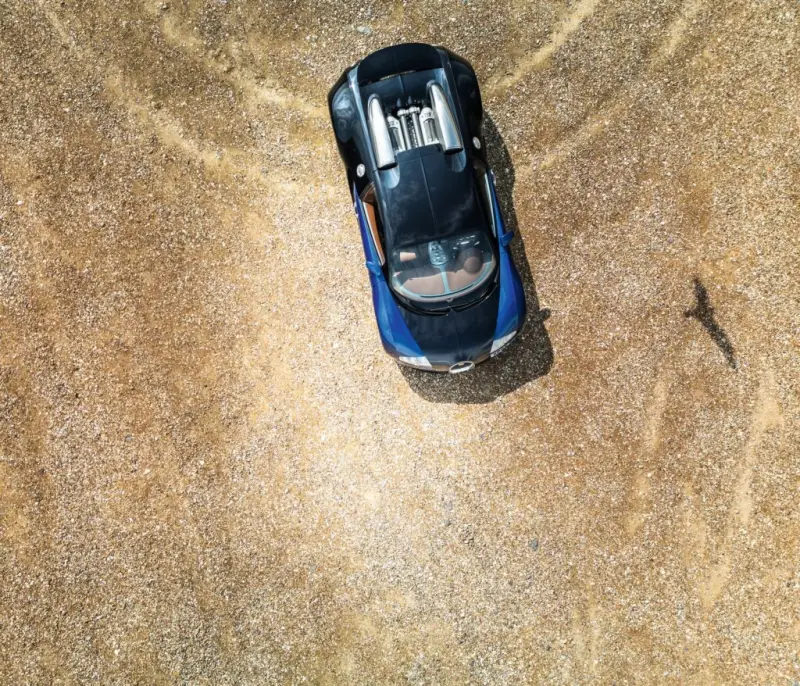
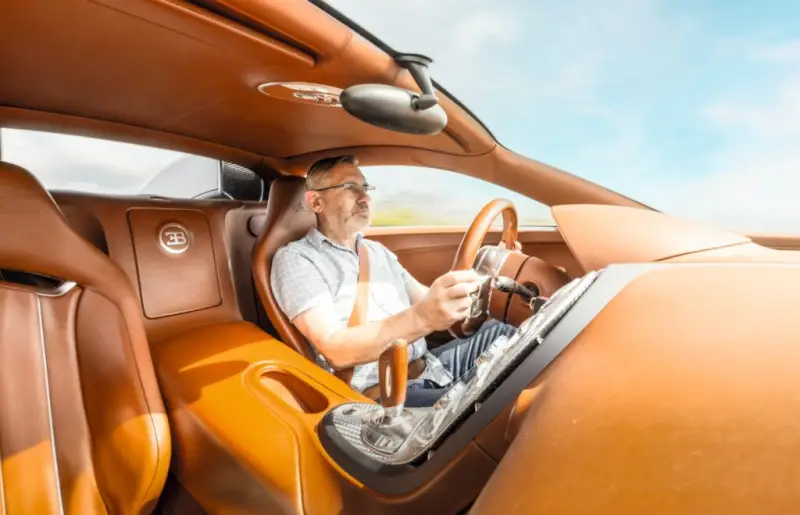
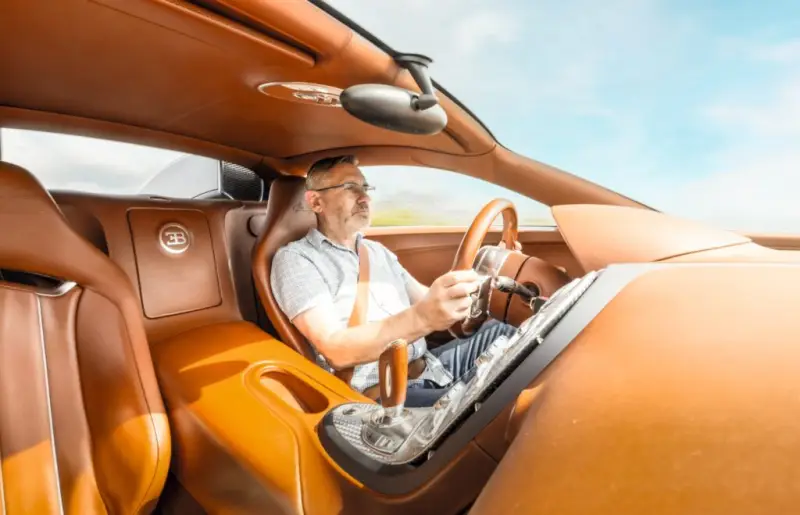
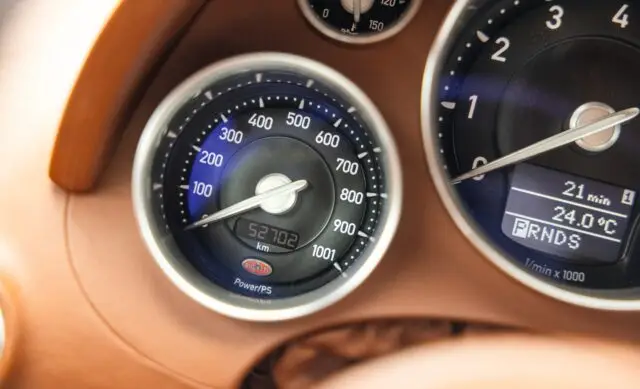
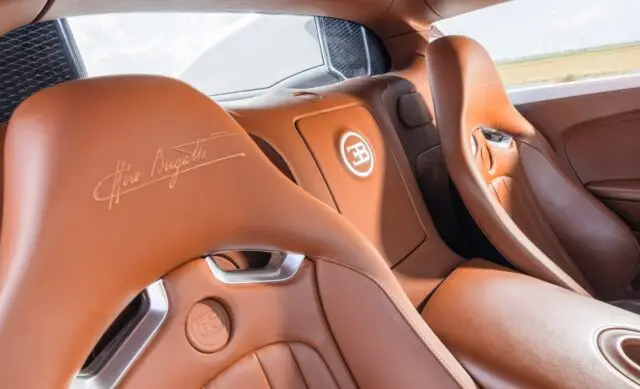
XP5.5 has covered 50,000km (30,000 miles), yet its original paint and trim look close to new. The cabin is surprisingly simple, with Art Deco touches in the three-spoke steering wheel and machine-turned centre console. Starting the engine brings a deep, resonant idle, more like a large V8-powered motor cruiser than a high-strung supercar.
Low-speed driving calls for care. There’s more torque-converter-like slip than remembered, and first gear feels long. The turning circle is poor, while thick A-pillars and door mirrors restrict the view. On the other hand, the ride is comfortable at town speeds for a car with this performance. Its hydraulic suspension lets the driver change ride height quickly. In handling mode, the body drops 45mm and the large rear spoiler rises. In normal mode, those changes happen automatically at 137mph.
For a run at maximum speed, the driver uses a Topspeed key fitted in a slot between the seat and door. That setting puts the car into its lowest-drag configuration: the spoiler retracts flush with the body, front diffuser panels close, and ride height falls by 65mm at the front and 70mm at the rear. The resulting setup gives no downforce at the front axle and 40kg at the rear. Although the engine’s stated rating is 1,001ps, it produces 1,050ps, allowing for a headwind during a top-speed attempt.
Still startling at full throttle
Patchy damp on the roads means the first throttle inputs are cautious. Even a light press sends a swelling wave of torque through the car, accompanied by a low rumble. When the surface dries and a clear opportunity comes, full throttle confirms that the Veyron’s appeal hasn’t faded: the acceleration passes from very fast to almost unreal and keeps pulling harder as speed rises. It feels as startling as it did when new, and can still match the shock of the Revuelto’s performance.
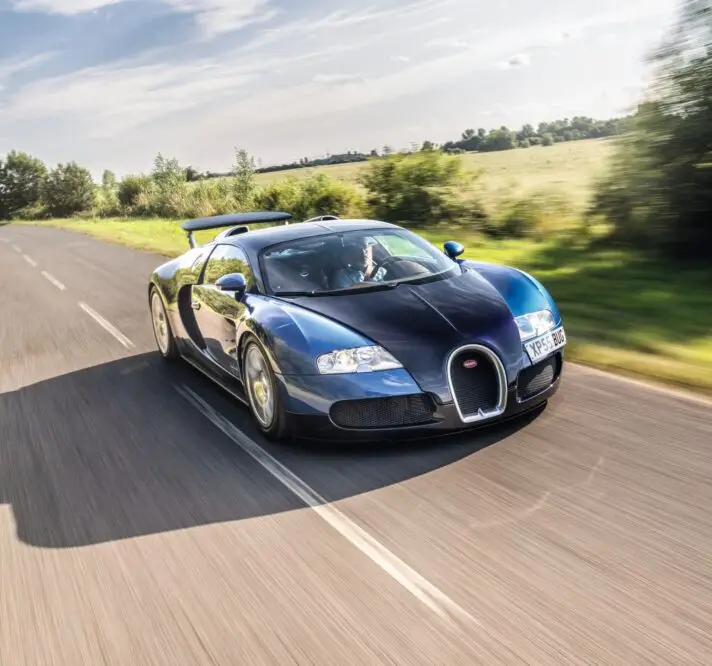
Its acceleration rapidly crosses the threshold between fast and theme park crazy
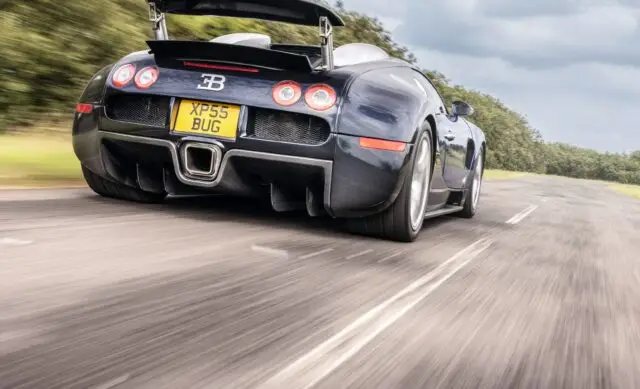
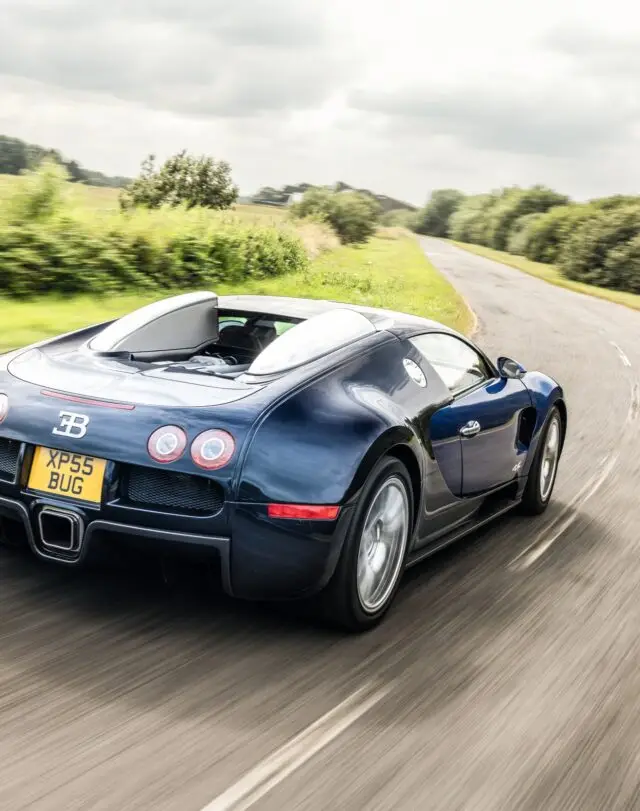
Its acceleration rapidly crosses the threshold between fast and theme park crazy
Honeysett, who has driven several Veyrons, laughs from the passenger seat as the turbos come on boost. Furlonger is best known for Ferrari and Lamborghini, and has also worked with the Bugatti EB110 for years. XP5.5 first came to the business for storage; the company later took on its servicing and has displayed it at events, including the Goodwood Festival of Speed.
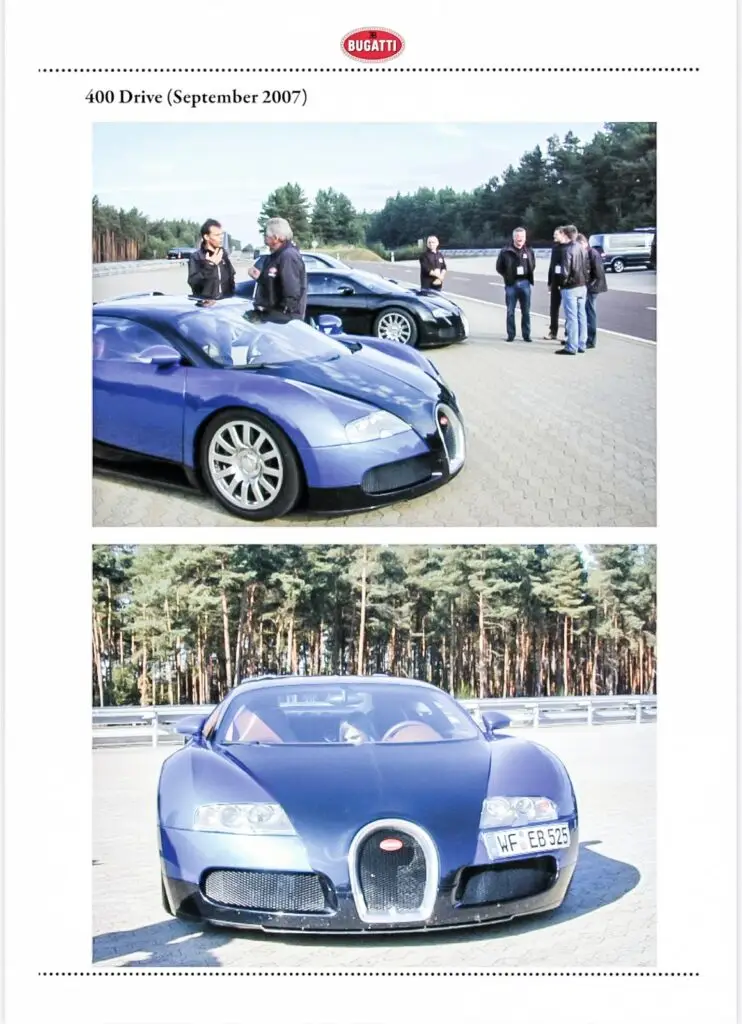
Its history connects it directly to the Veyron’s development. The owner bought the car from the factory. It served as a press car with registration WF EB 525, and was among five vehicles at Ehra-Lessien when the top speed was verified. Honeysett says he was told all five exceeded 400km/h. Bugatti supplied a letter identifying XP5.5 as the final 16.4 prototype; its chassis number ends in 55055. Before it was sold, its engine and gearbox were rebuilt and the car was tested to confirm it could reach 407km/h. During disassembly, the workshop found “5.5” chalked on wheelarches and other parts, signs that components had been assembled as a batch.
Maintenance is part of the ownership calculation
Veyron repairs have a reputation for high costs, so Furlonger initially tended to avoid taking them on. The complexity of the engineering means that putting faults right can demand a substantial budget. Honeysett and Simon Furlonger, both from engineering backgrounds, decided to learn the car by buying one and taking it apart over two years. They identified all 16 oil drain plugs and used a vacuum pump to remove the 24 litres of engine oil. The process gave the workshop the tools, technical data and parts knowledge it needed to service and repair Veyrons alongside its other specialist cars.
Bugatti’s service approach was built around the assumption that a Veyron might be driven at 250mph every day. Furlonger says its own work reflects how cars are actually used. A major service costs £7,500 plus VAT and involves removing the front and rear decks, wheels and brakes, then changing all fluids, including those in the four-wheel-drive system’s Haldex couplings. The workshop hasn’t yet stripped and rebuilt a Veyron gearbox, but Honeysett says that work is on the horizon.
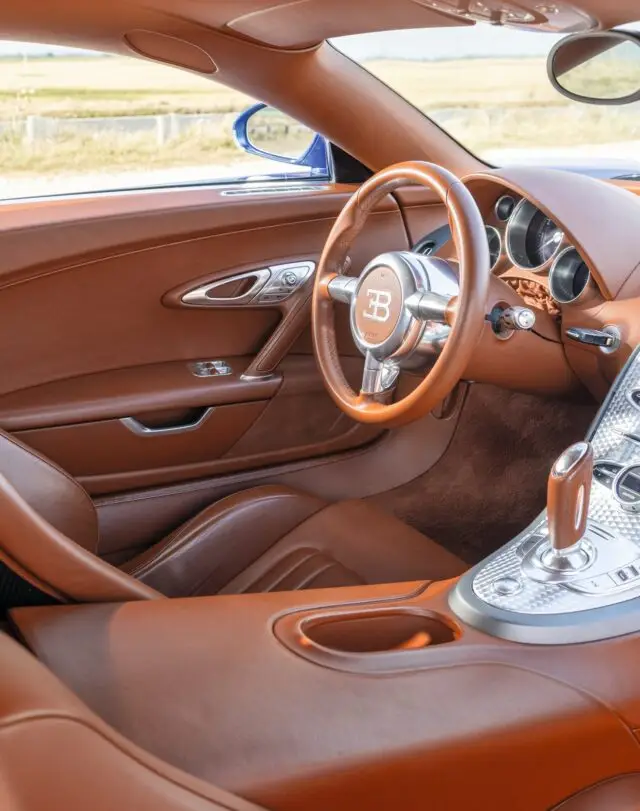
Gearbox strength, balance and a caution with the boost
The seven-speed dual-clutch gearbox is nearly as impressive as the engine. Developed by Ricardo in the UK, it was key to making the Veyron’s output manageable. Project leader Mike Everitt likened the design challenge to “balancing an elephant on a beach ball.” He also joked that the engine was “a significant actuator on our gearbox.” Late changes made the task tougher: the engine would no longer be torque-limited in first gear, the tyres would offer 25% more grip, and the car would be heavier. The transmission gears therefore had to use vacuum arc remelted steel, an exceptionally strong and expensive material.
The Veyron is more nimble on a winding road than its mass suggests. XP5.5 feels composed and agile on routes that look more suited to a hot hatch, with a 45:55 front-to-rear weight split. More than a tonne still sits over the rear axle, close to the entire weight of a McLaren F1, but the steering is direct and accurate. Its balance feels neutral enough to encourage confident progress; the main challenge is keeping track of how quickly it gains speed between bends.
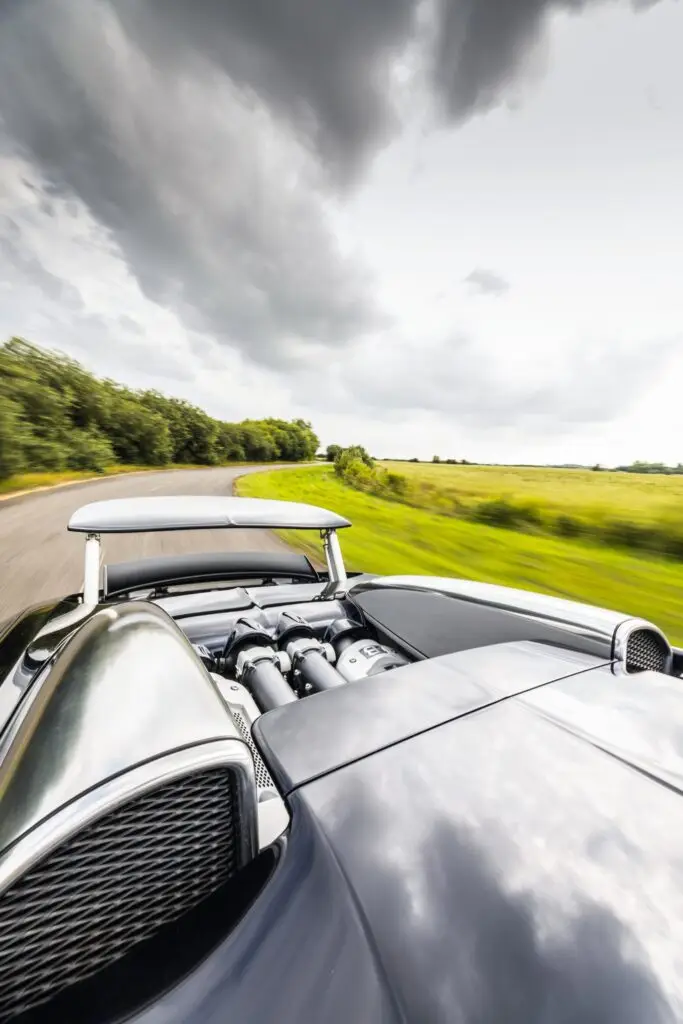
That confidence makes the magnesium shift paddles tempting. Selecting gears manually keeps the engine ready for a response, because flooring the throttle at low revs can bring a pause while the gearbox chooses a ratio and the turbos build pressure. The delay feels like drawing back an enormous catapult. Four-wheel drive and traction control help manage the torque, but the system can intervene bluntly. Pulling away from a bumpy junction triggers a prolonged power cut. With boost arriving so forcefully, the car doesn’t let wheelspin build unchecked.
Collectable status, values and what comes next
Twenty years on, the Veyron remains a landmark because it delivered thousand-horsepower performance in a calm, stable package. Other supercars can be more tactile, louder or more involving, but few have matched the combination of speed, engineering ambition and restraint that made the Veyron distinctive.
Honeysett puts XP5.5 at £5m. He estimates that entry-level Veyrons now sit at £1.3m-£1.4m, with Super Sports reaching £2.5m. He argues that the model is undervalued beside Ferrari F50s selling for £4.5m. Only 450 Veyrons were built, including 254 original 16.4s.
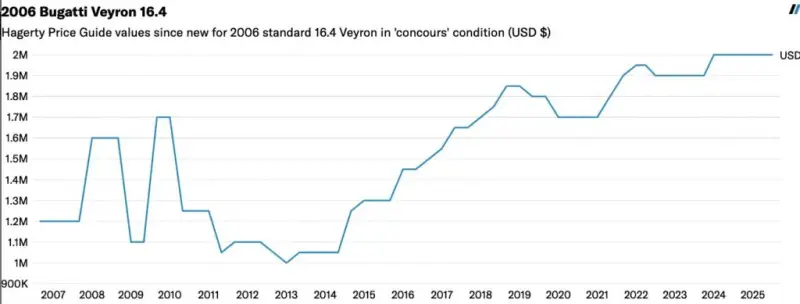
The value story began early. The Veyron was tracked by the Hagerty Price Guide from its launch, an unusual distinction that reflected its immediate standing as a collectable. Its €1m starting price rose as demand outstripped production of around 50 cars a year. The 2009 Grand Sport then became the sought-after version, while values for the 16.4 eased. The Super Sport followed in 2010, then the Grand Sport Vitesse in 2012. From 2011 until standard production ended in 2014, 16.4 values remained below the original recommended retail price.
For its long-term value comparison, Hagerty’s concours figure is used instead of its usual Condition 2, or “excellent,” value. That makes sense when tracking a new car, which begins life in concours condition with delivery mileage. Since production ended, values for the best examples have generally climbed, apart from a short decline during the Covid period and a brief rebound afterwards. Over the latest 12 months covered, values were flat while much of the collectable-car market fell.
That strength doesn’t extend equally to cars in poorer condition. Hagerty’s Condition 4 “fair” value is $1m, and has moved by less than 5% since September 2016, lagging inflation in real terms. Hagerty’s Collectability Algorithm places the model in the 91st percentile. Its buyers also skew older: 73% were born before 1965, compared with 65% across all cars insured by Hagerty.
UK auction records offer another measure of the model’s price journey. In 2010, BCA sold a 2006 Veyron EB 16.4 for £625,000, then a UK auction record for a modern production car and the highest price BCA had achieved for a single vehicle. At the Goodwood Festival of Speed in 2025, a 2007 Veyron 16.4 surpassed its £800,000 upper estimate at a Bonhams sale, reaching £1,527,000, or $2.07m. It became the most valuable Veyron sold at auction.
The next chapter is the Bugatti Tourbillon, now in the final stages of development. Its naturally aspirated 8.3-litre V16 will be paired with electric assistance for a combined 1,800bhp. Bugatti says it will accelerate from rest to 250mph in 25 seconds, half the Veyron’s 50-second-plus run to that speed. The Tourbillon’s figures will reset expectations, but XP5.5 makes the Veyron’s lasting achievement clear: it turned a seemingly abstract power target into a car that could be driven with composure.
2005 Bugatti Veyron specifications
| Engine | 7,993cc 64-valve W16, DOHC per bank, four turbochargers, electronic fuel injection and engine management |
| Power | 987bhp at 6,000rpm |
| Torque | 922lb ft at 2,000-2,500rpm |
| Transmission | Seven-speed dual-clutch, four-wheel drive |
| Steering | Power-assisted rack and pinion |
| Suspension | Double wishbones front and rear, self-damping hydraulics |
| Brakes | Carbon-ceramic discs |
| Weight | 1,888kg |
| Top speed | 253mph |
| 0-60mph | 2.5 seconds |