Maserati Ghibli Primatist: The 1996 Speedboat Record Behind Its Blue Interior
Electric Vehicles Nathan Chadwick 521 reads
A 216.703km/h powerboat record inspired 36 Ghibli Primatist cars, whose striking blue cabin came with the standard GT’s 302bhp.
The Maserati Ghibli Primatist made its mark through colour, not extra speed. Built to celebrate a powerboat record, it paired the Ghibli GT’s standard 302bhp engine with a vivid turquoise and blue cabin. That unlikely combination makes the 1997 special edition one of the most distinctive late versions of Maserati’s Biturbo-era coupé.
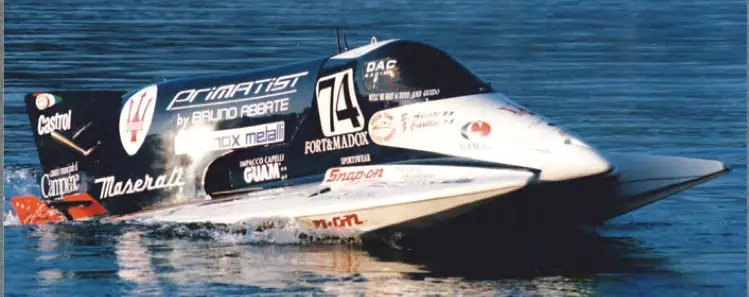
The record came first. On 4 November 1996, Guido Cappellini took a Maserati-powered catamaran across Lake Lugano, averaging 216.703km/h over two timed runs in the R5000 category. The boat reportedly reached 223km/h during the attempt. Two days later, Cappellini made another pass at a reported 230km/h, but the R5000 record stood at the earlier average. It was a class record, rather than the outright water-speed mark.
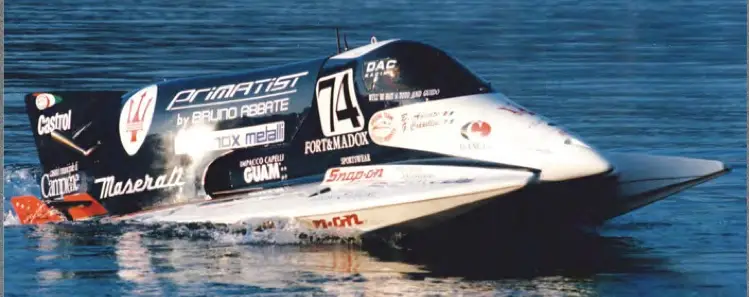
The project began with Bruno Abbate, whose Primatist boatyard on Lake Como built high-performance leisure craft. Abbate wanted a record that could draw attention to his boats and asked Maserati for an engine. The two companies had a precedent: in 1954, a Maserati 150S racing engine powered the Timossi-built hydroplane Maria Luisa IV to a class record exceeding 170km/h on Lake Iseo, with Liborio Guidotti driving.
For the 1996 attempt, Abbate chose Maserati’s 2.0-litre twin-turbocharged V6, developed through successive Biturbo models. Its compact size suited a light catamaran, but the engine’s forced induction counted against it under the Union Internationale Motonautique’s capacity-equivalency formula. It was treated as roughly 2.8 litres, a theoretical fit for a 3000cc category that wasn’t recognised for the record. The boat therefore entered R5000, which required a minimum weight of 600kg.
Romeo Ferraris adapted the V6 for marine use. The twin turbochargers moved towards the rear, requiring new exhaust manifolds and extensive pipework changes. Ferraris also revised boost pressure and cooling. The resulting engine reportedly produced about 400bhp at 8100rpm, compared with around 302bhp in the roadgoing two-litre Ghibli. A purpose-built DAC catamaran carried it, using carbonfibre and other composite materials. Its hull followed the broad layout of contemporary Formula 1 inshore boats, but was wider and heavier to meet R5000 requirements.
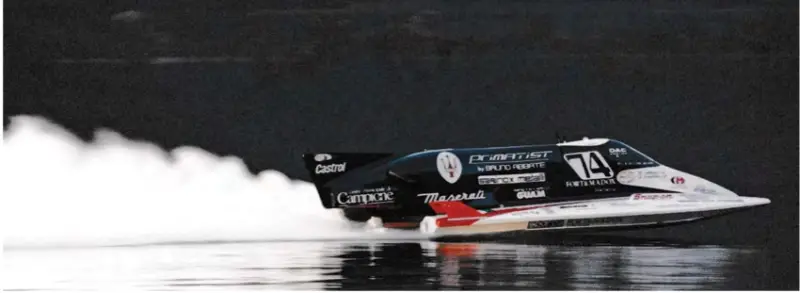
The boat’s shape addressed stability as well as speed. A large vertical fin rose behind the cockpit, while two smaller winglets sat near the rear of the sponsons: one was arranged to create lift, the other downforce. A custom Z-drive sent power from the inboard engine to the propeller at the stern. Packaging the drive and the turbo engine’s cooling system was part of the build challenge.
Cappellini brought proven experience to the attempt, having won four consecutive Formula 1 powerboat world championships by 1996. The run took place off Campione d’Italia, on Lake Lugano, in sunshine, with little wind and calm water. He completed two timed passes in opposite directions over a measured kilometre, and the average determined the result. The conditions and the format made consistency as important as the boat’s peak speed.
The record arrived while Maserati was reshaping its road-car range. Fiat had taken full control of the company in 1993, while several models still drew on engineering developed during Alejandro de Tomaso’s ownership. The Ghibli II had launched in 1992, followed by Marcello Gandini’s Quattroporte IV in 1994. A 3.2-litre twin-turbo V8 joined the Quattroporte range in 1996, as Maserati worked on the coupé that would become the 3200 GT.
The company had also returned to circuit competition with the Ghibli Open Cup in 1995. The series used prepared two-litre coupés, but its second season ended after two rounds in 1996, with costs cited as the reason. The boat record offered Maserati another way to put its engine engineering in front of enthusiasts, through a project connected to a well-known Italian boatbuilder and a similarly affluent customer base.
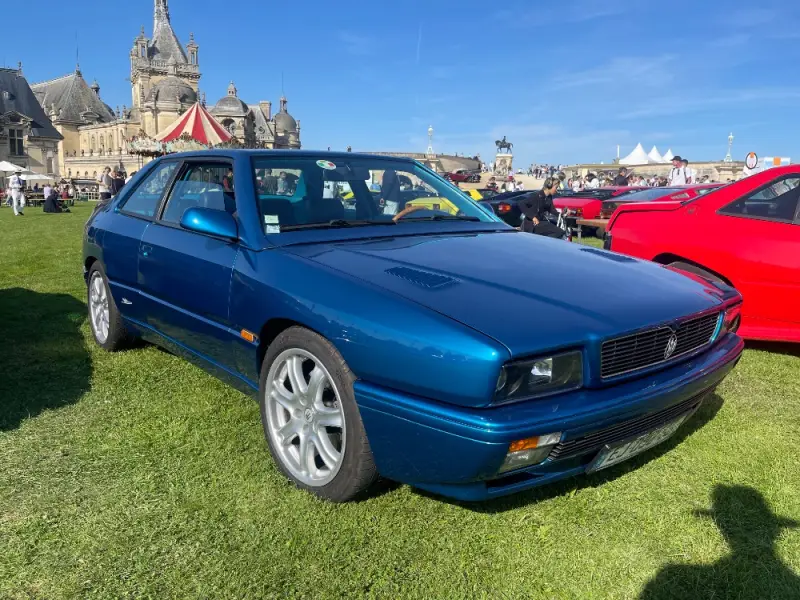
At the Bologna Motor Show in December 1996, the record-breaking catamaran appeared beside the Ghibli Primatist. The display’s line, “Born from a World Record,” linked the road car directly to Cappellini’s achievement. The Primatist was based on the Ghibli GT, introduced in 1995 as the coupé’s final major development. By then, Maserati had made a series of changes to address weaknesses in earlier Ghiblis.
The GT’s key mechanical revision was at the rear axle, where a ZF differential replaced the earlier Ranger limited-slip unit. The ZF assembly sat in a substantial tubular support structure, with related hardware used in the Quattroporte IV. Maserati also continued adjusting the suspension geometry and settings. Later GTs received revised brakes and 17-inch, seven-spoke Mille Miglia alloy wheels, replacing the earlier 16-inch wheels. Other clues included dark headlamp surrounds, changes to the exhaust and deletion of the dummy fuel-filler flap on the left rear quarter panel.
The two-litre Ghibli Cup had a sharper specification tied to the Open Cup programme: about 325bhp, along with revised suspension, brakes and five-spoke Speedline wheels. The Primatist took a different route. It retained the GT’s approximately 302bhp engine, six-speed gearbox, differential and suspension settings. Its distinction was chiefly visual, and Maserati made the cabin the main event.
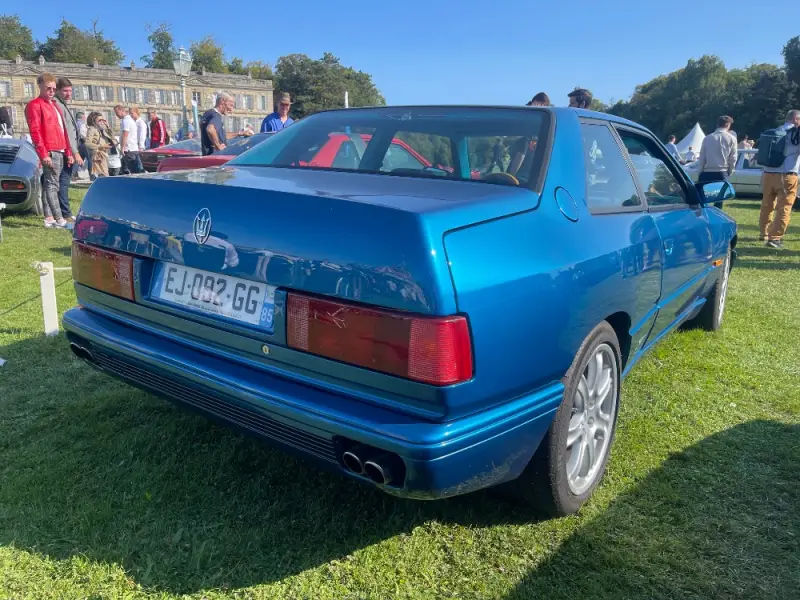
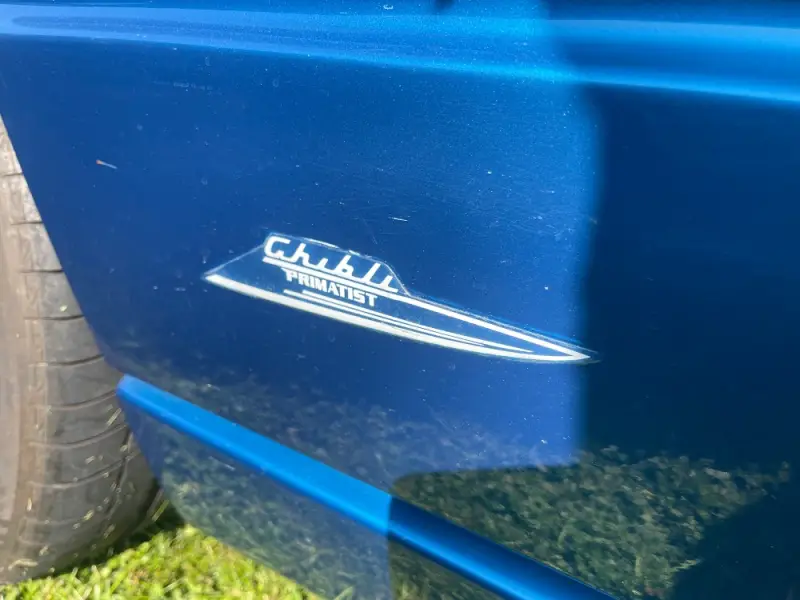
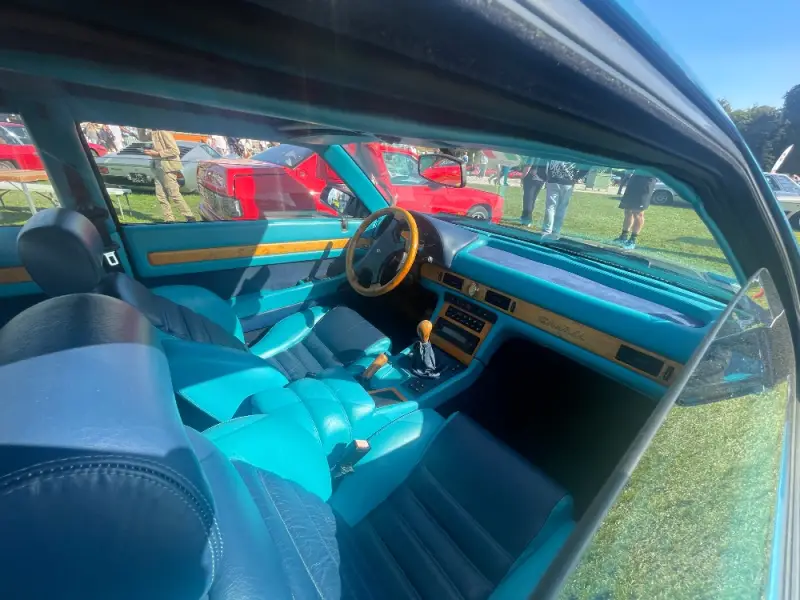
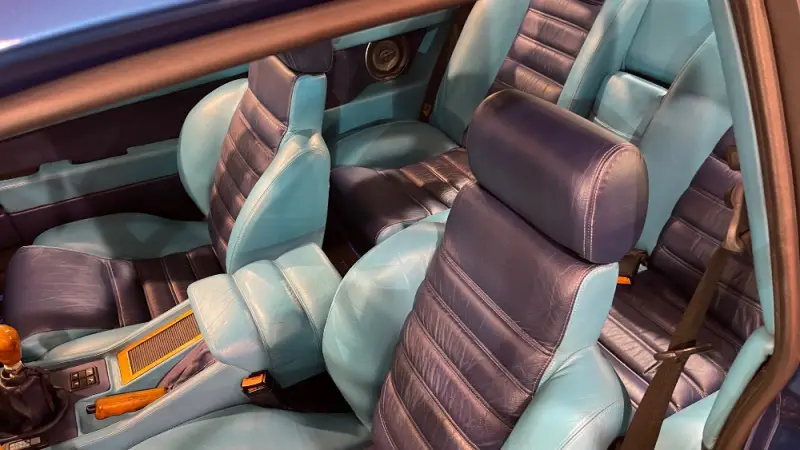
The body wore metallic Blu Mare, also called Ultramarine Blue in period material, with silver wheels and the GT’s dark headlamp surrounds. Primatist badges sat on the rear quarter panels. Inside, the standard Ghibli GT seat shapes remained, but their trim split vivid turquoise leather across the outer sections and darker blue across the centres. Maserati carried the two-tone treatment to the rear seats and used blue leather on the dashboard and doors, with Alcantara on additional trim sections.
Blue carpet covered the footwells and rear passenger area, while the lower dashboard and centre console continued the colour scheme. These were familiar Maserati materials in an unfamiliar combination. Standard Ghibli interiors generally used black, grey, beige or tan leather with dark carpets and heavily figured wood. The Primatist kept wood on the dashboard, doors and steering-wheel rim, but specified lighter briarwood. It also retained the wooden gearknob and the gold oval dashboard clock. Against the saturated blue upholstery, the paler wood became a prominent part of the cabin’s character.
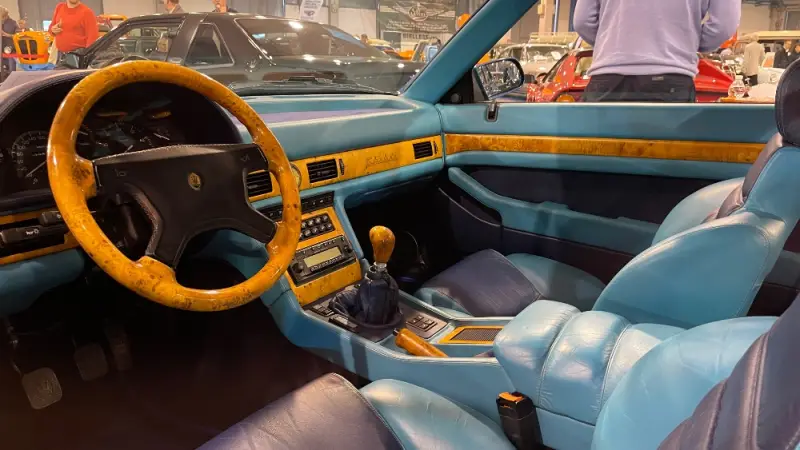
The materials and colours were intended to recall luxury motorboats, tying the car’s interior to Abbate’s Primatist range. In person, the leather colours are notably lighter than they appear in some period studio photographs. That detail matters for buyers assessing the car from old images: the bold effect survives, but the actual cabin can look less dark and saturated than the publicity shots suggest.
Maserati reportedly considered an initial run of 60, but completed fewer. Specialist records have often listed 35 cars; Maserati’s November 2026 anniversary announcement gives a total of 36. Production took place in 1997 after the Bologna unveiling. All were left-hand drive, mostly associated with the Italian market, though some were exported. One documented car appeared at the Geneva Motor Show before reaching its first Swiss owner in June 1997.
That limited supply sets the Primatist apart from ordinary two-litre Ghibli GTs, which remain comparatively accessible among Maseratis of the period. In December 2025, a 1995 GT with 155,184km sold at Dorotheum for €22,000 before fees. Later advertisements included a 1996 car with 105,000km at €36,000 and one with 95,900km at €39,420. Primatist asking prices were higher: in 2026, a 58,000km example in Greece was advertised at €55,000, while Italian specialist Garage Ponzio had offered another at €62,000 in recent years. These are asking and sale figures from different cars, so mileage, condition and provenance remain central to any comparison.
Ferrari took management control of Maserati in July 1997, as Primatist deliveries were under way. The following year, the Ghibli gave way to the 3200 GT, closing a coupé line that had begun with the Biturbo in 1981. The Primatist arrived near the end of that evolution, using an engine family more than 15 years in development.
Its appeal today rests on the gap between its serious mechanical inspiration and its restrained road-car specification. The racing catamaran needed a specially adapted V6, bespoke aerodynamics and Cappellini at the helm to set its mark. The limited-run Ghibli made no extra power; it turned the achievement into a rare, unmistakable interior. For prospective collectors, the Primatist’s story and cabin are the draw, while its GT underpinnings keep it connected to the final development of the Ghibli II.
More details on Maserati Classiche are available Maserati’s heritage site; Guido Cappellini’s career details are at his website.
===END===