Alfa Romeo Cuorerosso and 25 Concepts That Shaped the Marque
Electric Vehicles Nathan Chadwick 942 reads
Cuorerosso previews Alfa Romeo’s design direction, joining a concept-car legacy that runs from the aerodynamic B.A.T. studies to the 8C Competizione.
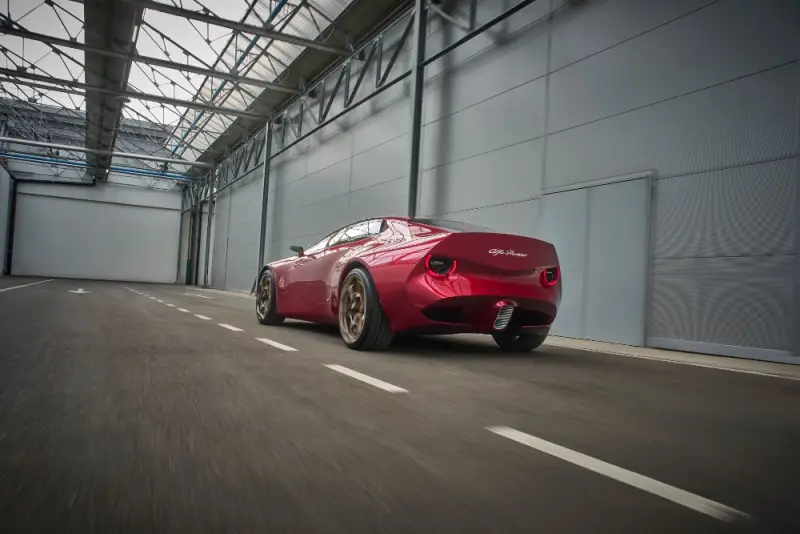
Alfa Romeo’s Cuorerosso arrives with a difficult question attached: can a new design manifesto make a mark beside concepts that helped define the sports car? Unveiled at the 2026 Paris Motor Show, it sets out a possible direction for the brand through a low 2+2 coupé, a V6 hybrid powertrain and a cabin that changes its displays to suit the driving mode. Its significance will depend on what reaches production, but the concept draws on a lineage that includes influential aerodynamic studies, radical wedges and cars that did make the jump to the road.
That history makes a simple ranking hard to settle. Some Alfa Romeo concepts explored engineering; others tested how far a coachbuilder could push form. A few became the basis for production cars, though the transition often meant changes to the original idea. The Cuorerosso’s designers say its influence should start to appear on production models from 2028–29. For now, it offers a fresh way to assess what Alfa Romeo wants its next generation of cars to look like.
A design manifesto with a hybrid V6
Alfa Romeo calls the Cuorerosso a design manifesto rather than a preview of one specific model. Its guiding idea, Bellezza Necessaria — “Necessary Beauty” — is to strip away details that serve no clear purpose, leaving each visible element with an aesthetic or functional role.
The design process started with a sculptural form rather than a conventional car sketch. After a week or two of initial drawings, the team moved to three-dimensional modelling, shaping a solid mass without wheels or windows. Recognisable car features were added as the proportions developed. The aim was to make the body work as one composition, rather than a collection of separate styling cues.
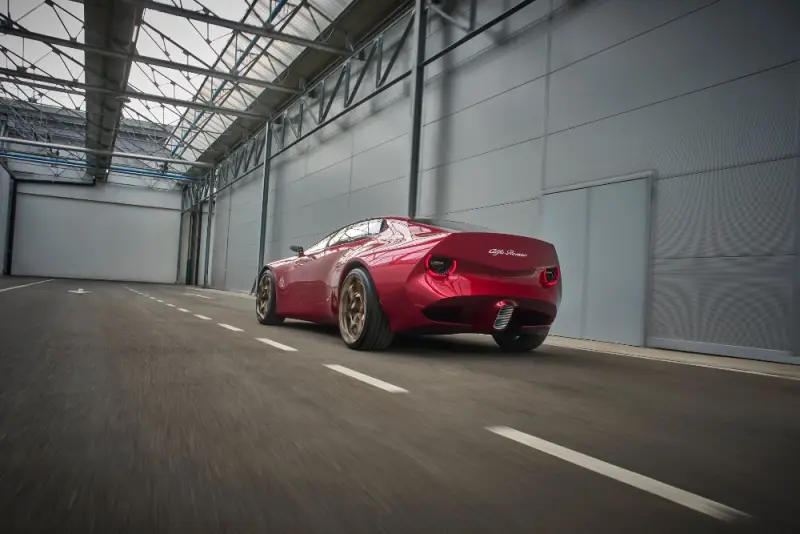
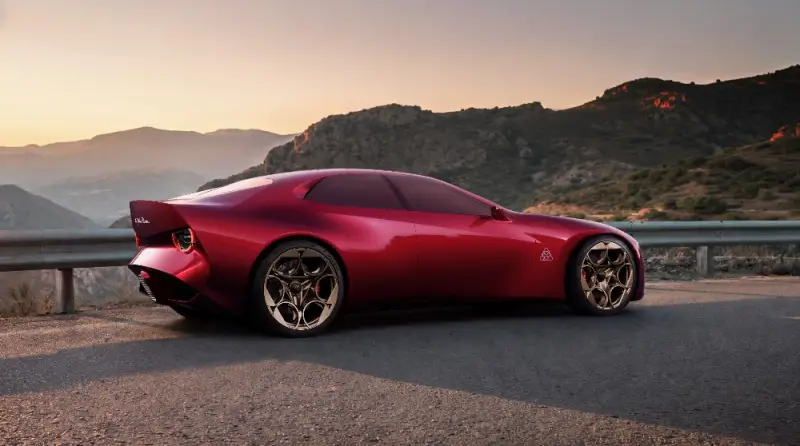
The result is a four-door, four-seat coupé measuring 4700mm long, 1980mm wide and 1331mm tall. Its wheelbase is 2930mm. A long cabin, pronounced rear haunches and a sweeping wedge line lead to a truncated Kamm-style tail. Alfa Romeo quotes a drag coefficient of 0.28, attributing it to the smooth body surfaces, cut-off rear and integrated diffuser.
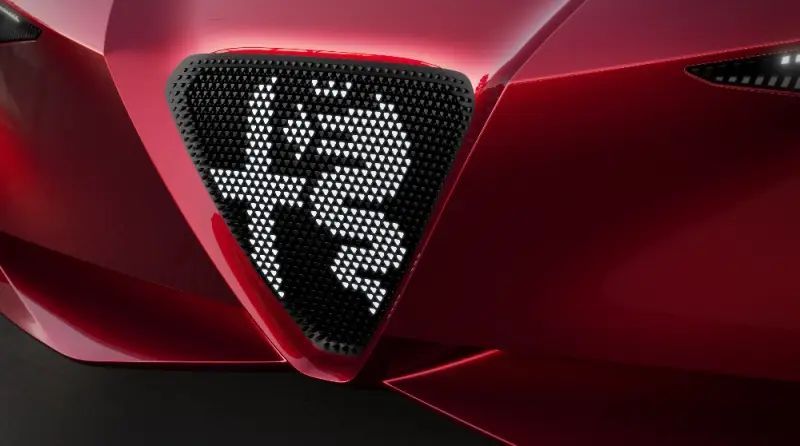
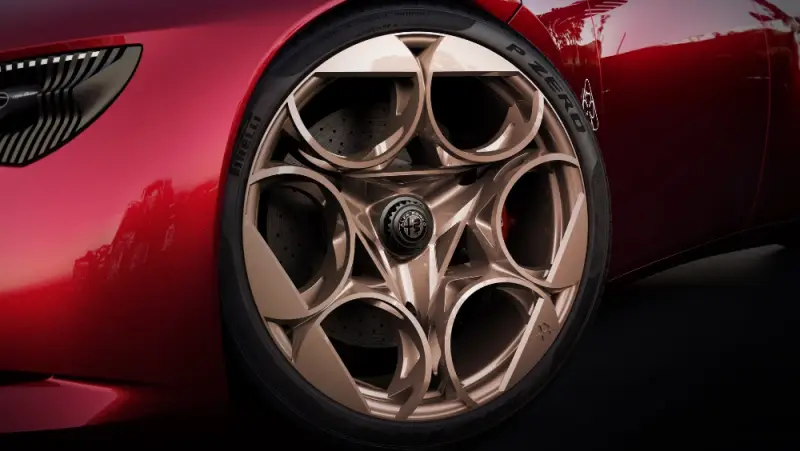
Past Alfa Romeos appear in the details, though rarely as direct copies. The triangular Scudetto grille is backlit, while the rear window takes the shape of the brand’s shield, above two round tail-lights. The forged wheels reinterpret Alfa’s telephone-dial pattern with six circular openings arranged in three pairs.
Four doors provide access, with the rear doors hinged at the back and touch-operated opening controls built into the roof. The Liquid Ink Red finish pairs a fine aluminium base with a transparent coloured layer; its appearance shifts from bright red towards black as the light and viewing angle change.
The proposed powertrain is a 2.9-litre V6 with full-hybrid assistance, Q4 four-wheel drive, a torque-converter automatic transmission and a carbon-fibre driveshaft. Alfa Romeo has not published power or torque figures. The quoted weight is 1750kg dry, so it doesn’t include operating fluids or other equipment included in a ready-to-drive figure.
Other specified hardware includes electronically controlled air suspension, Brembo carbon-ceramic brakes and steer-by-wire. The V6 hybrid is presented as one option in a wider multi-energy approach that will include fully electric, plug-in hybrid, mild-hybrid and full-hybrid models. Alfa Romeo says future vehicle architectures will also accommodate Quadrifoglio versions. That range of possibilities makes the Cuorerosso’s engine choice a clear signal: electrification, in Alfa Romeo’s view, needn’t rule out a V6.
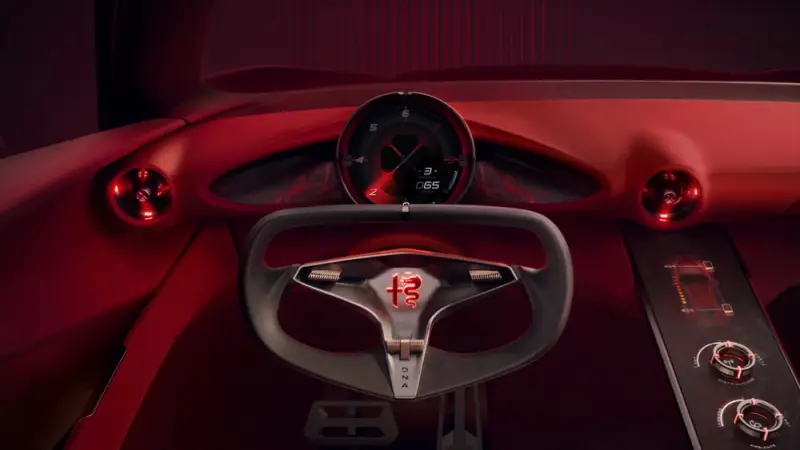
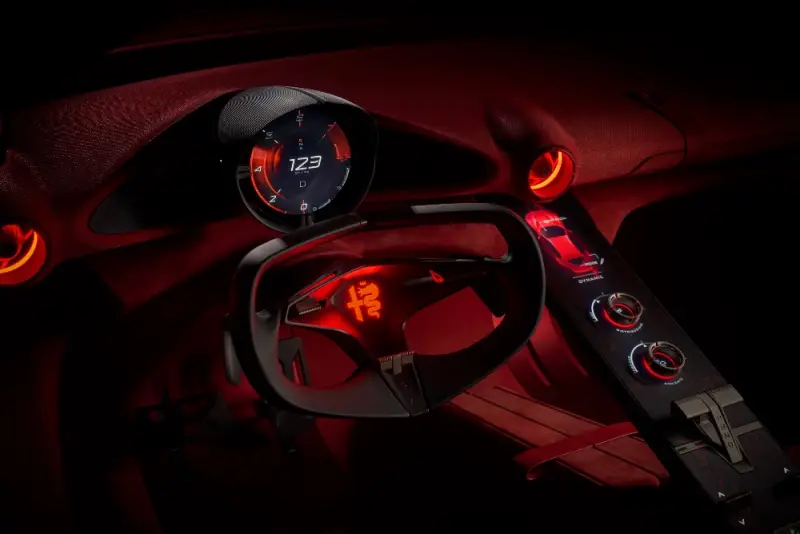
The cabin’s standout feature is the Cannocchiale Vivente, or “Living Telescope”. Its two circular instrument housings can move together into a single, more focused display, reducing the amount of information shown as the driver selects a setting. The three modes are Cruise, Sport and Quadrifoglio. The steering wheel has a conventional three-spoke shape, but its steer-by-wire system adds haptic and acoustic feedback. On the centre console, the Magma Display combines a touchscreen with physical toggles, a rotary controller and the drive-mode selector.
Materials have a practical focus. Poltrona Frau nubuck is used on surfaces occupants touch, and the regenerated leather contains 60 percent post-industrial waste. A lightweight monofilament dashboard fabric draws on technical work with the Luna Rossa sailing team. The designers also explored recycled carbon fibre combined with red resin. A removable passenger-side bag uses its retaining straps as a carrying handle.
Alfa Romeo design chief Alejandro Mesonero-Romanos told Italian magazine Quattroruote that Cuorerosso features should begin appearing on production cars from 2028–29. Some details might transfer almost unchanged. The larger opportunity, though, is the design method: simpler surfaces and technology that feels integrated into the car’s form.
That makes the Cuorerosso a different kind of statement from concepts that tried to overturn established sports-car design. Its V6 hybrid and changeable instruments give it a more tangible connection to future production than an abstract styling study, but the gap between a show car and a road car can be large. Alfa Romeo’s own history offers both outcomes: the 8C Competizione kept much of its concept’s appearance, while the production Brera lost important parts of its engineering and proportions. The Cuorerosso’s real test will be which ideas survive.
Concepts that tested the limits
1952 Alfa Romeo Disco Volante by Touring
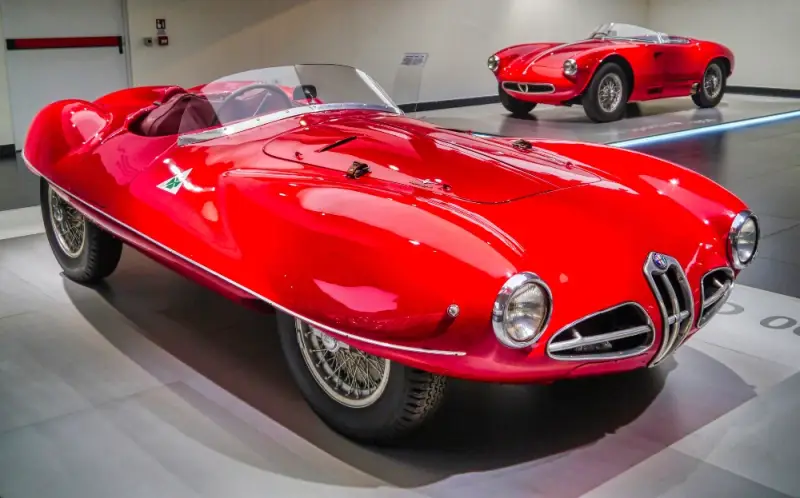
The Disco Volante, or “Flying Saucer”, began as an aerodynamic sports-racing project built on the mechanical foundations of the 1900. Engineering director Gioacchino Colombo specified a tubular spaceframe and a 1997cc twin-cam four-cylinder with an aluminium block, dry-sump lubrication and about 158bhp. Touring’s lenticular body and enclosed wheels were designed to work in crosswinds as well as reduce drag. Alfa Romeo claimed a top speed above 135mph.
Three four-cylinder prototypes were followed by two cars with the 6C 3000 CM’s 3.5-litre straight-six. A closed coupé and a narrow-winged version were also explored; the latter was the only Disco Volante to race in period. Its planned competition career never fully arrived, but its aerodynamic thinking helped shape 1950s sports-car design. Touring returned to the name six decades later with an 8C Competizione-based car.
1953–55 Alfa Romeo B.A.T. 5, 7 and 9d by Bertone
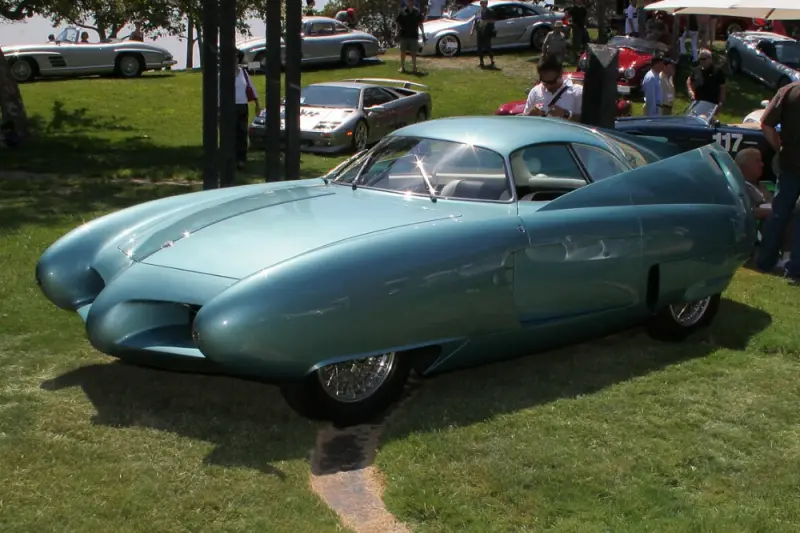
Franco Scaglione’s three Berlina Aerodinamica Tecnica studies used Alfa Romeo 1900 mechanicals to test aerodynamic forms. B.A.T. 5 appeared in 1953 with enclosed wheels, curved fins and a tapered glasshouse. Its reported drag coefficient was 0.23; with about 90bhp, it could approach 125mph. B.A.T. 7 went further the following year, with longer, inward-curving fins and a reported coefficient of 0.19.
For B.A.T. 9d in 1955, Alfa Romeo took a more restrained approach: shorter fins, uncovered rear wheels and a recognisable shield grille. The series informed Scaglione’s Giulietta Sprint Speciale. The three cars weren’t displayed together when new; they were reunited at Pebble Beach in 1989 and sold together at Sotheby’s Contemporary Art Evening Auction in 2020 for $14.84 million.
1954 Alfa Romeo 2000 Sportiva by Bertone
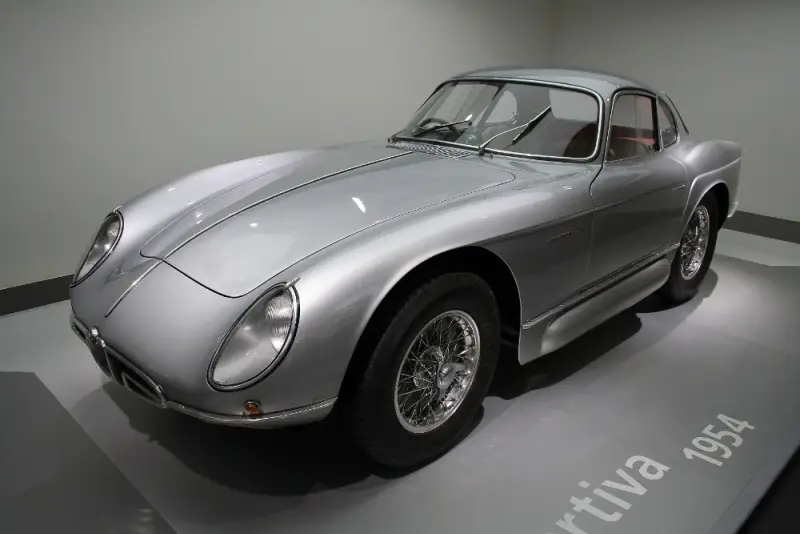
The 2000 Sportiva was conceived as a limited-production sports car, with a planned run of about 100 for competition and road use. Scaglione designed coupé and spider bodies for Bertone. The aluminium body sat on a tubular steel frame, and a 1997cc twin-cam four-cylinder produced 138bhp at 6500rpm. At 915kg, the coupé was said to reach about 137mph.
Its suspension paired independent front wheels with a De Dion rear axle, Watt’s linkage and inboard rear drum brakes. A low roof, enclosed headlights and wraparound rear window made the car look purposeful; elements of the rear design carried into the Giulietta Sprint. Alfa Romeo stopped the project after four cars, two coupés and two spiders.
1955 Alfa Romeo Giulietta Bertone Spider
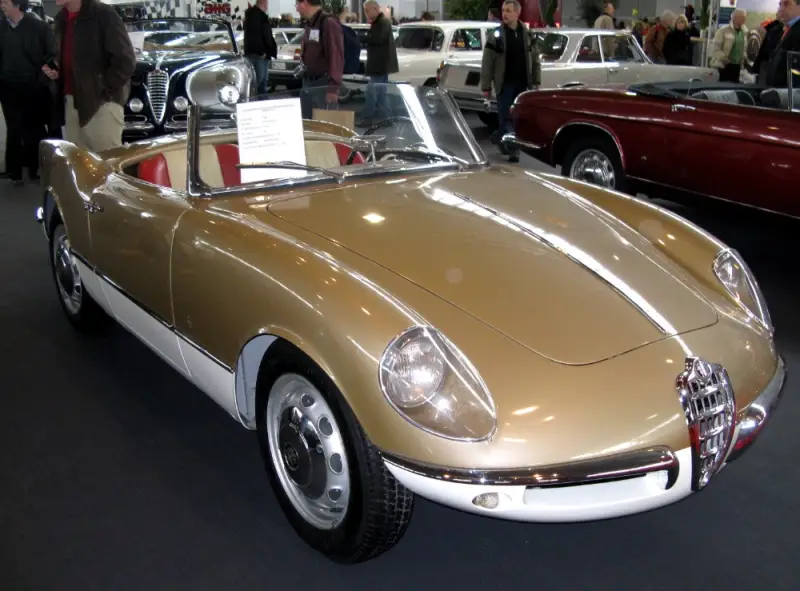
American importer Max Hoffman saw demand for an open Giulietta Sprint and prompted Alfa Romeo to invite designs from Bertone and Pinin Farina. Scaglione’s Bertone proposals included chassis AR1495.00004, a particularly dramatic aluminium-bodied prototype. Its low nose, sculpted wings and fins drew on the B.A.T. studies, while its mechanical base came from the Giulietta’s 1290cc twin-cam platform.
The design was more complex to build than Pinin Farina’s simpler proposal, and Bertone was already busy with Sprint production. Alfa Romeo chose Pinin Farina for the production Spider. Chassis 004 survived, eventually entering Corrado Lopresto’s collection. Restoration uncovered its original gold paint and, with period photographs, helped recover its two-tone appearance; about 80 percent of its aluminium bodywork was reportedly retained.
1956–60 Alfa Romeo Superflow series by Pinin Farina
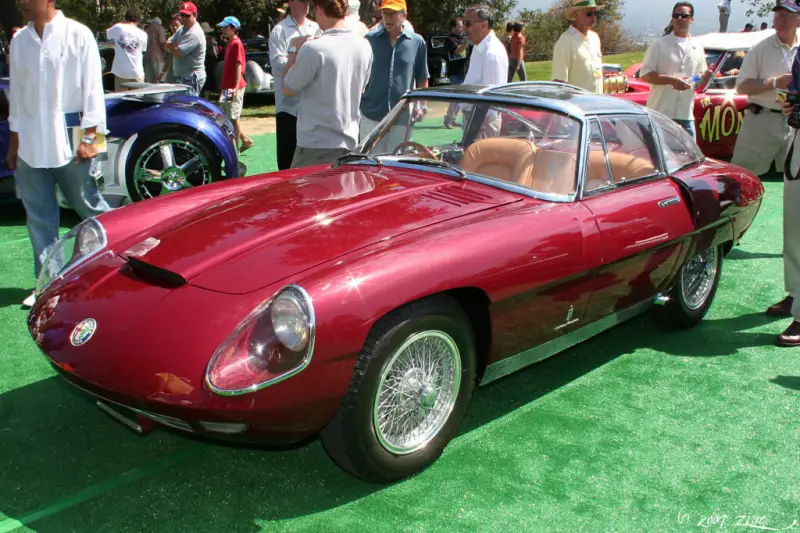
All four Superflows developed the same 6C 3000 CM chassis, AR1361.00128, which Juan Manuel Fangio had driven to second place in the 1953 Mille Miglia. Pinin Farina designer Aldo Brovarone used the ex-racing car to explore changing ideas about sports-car aerodynamics. The first, shown at Turin in 1956, had transparent Plexiglas front wings, rear fins and a glass canopy with gullwing-style roof sections.
Superflow II, shown in Paris later that year, replaced the front treatment and used transparent rear fins. The 1959 Spider Super Sport did away with the fixed roof and fins, moving towards a low rounded tail. For Superflow IV, displayed in 1960, Brovarone returned to a coupé with a transparent roof and cleaner surfaces. The series helped develop the osso di seppia, or cuttlefish-bone, shape associated with the 1966 Alfa Romeo Spider. Superflow IV survives.
1964 Alfa Romeo Canguro by Bertone
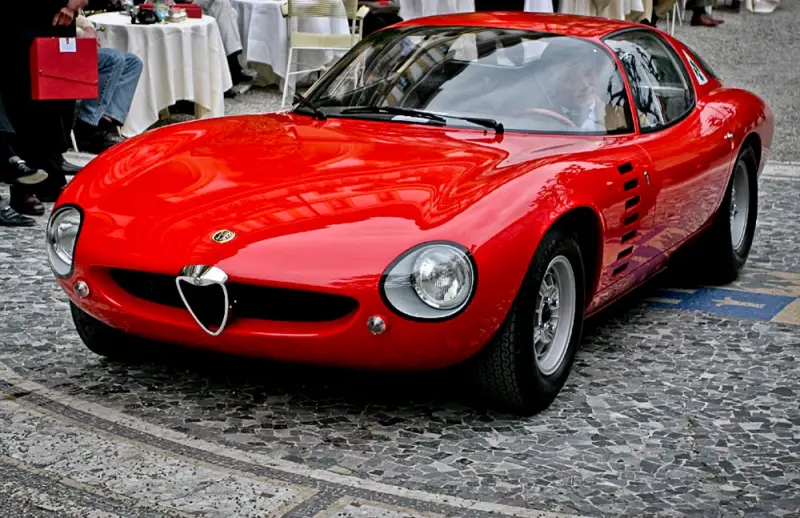
Alfa Romeo considered a more road-friendly relative of its Giulia TZ racer and gave Bertone a TZ chassis for Giorgetto Giugiaro to shape. Shown at the 1964 Paris Motor Show, the Canguro used the tubular chassis and 1.6-litre twin-cam engine beneath a low aluminium body. At just 1050mm tall, it used glass bonded directly to the body instead of conventional rubber seals, an aircraft-inspired technique that helped keep the roofline down. Curved doors extended into the roof to improve access.
Alfa Romeo judged the car too expensive and uncompromising for production. The prototype was badly damaged at Monza during a press demonstration, in a collision with Bertone’s Chevrolet Testudo. Nuccio Bertone declined to pay for a full rebuild. After passing through several owners, the Canguro was restored with help from Cecomp and returned to view at the 2005 Concorso d’Eleganza Villa d’Este.
1965 Alfa Romeo Giulia SS Bertone Prototipo
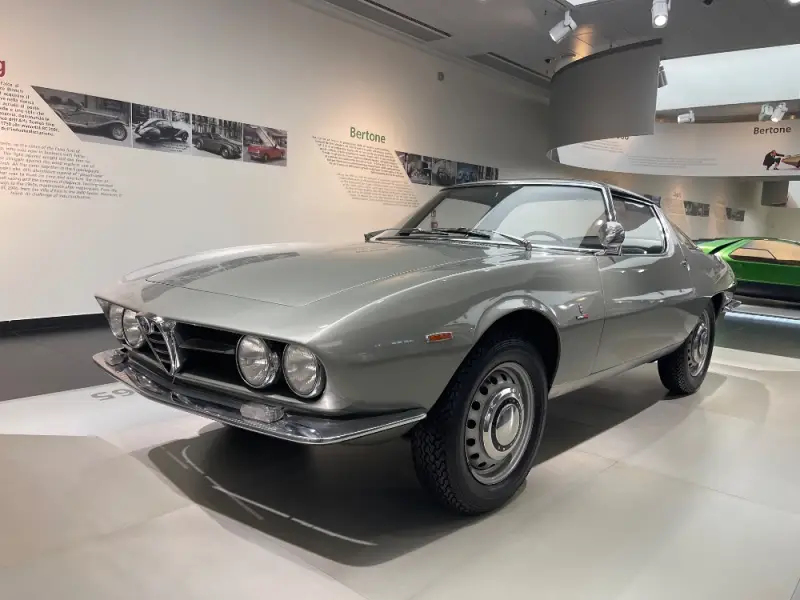
Bertone’s proposed Sprint Speciale successor came as Alfa Romeo considered the future of Scaglione’s design, first introduced in Giulietta form in 1957 and later adapted for the Giulia. Giugiaro’s prototype traded the earlier car’s soft, rounded surfaces for more architectural volumes and clear edges, reflecting the shift in Italian GT styling during the 1960s.
Production never made sense alongside the established Giulia Sprint GT and other models under development. Only one prototype was completed; it now belongs to Alfa Romeo’s historical collection at Arese. It also marks one of Giugiaro’s final Alfa Romeo projects at Bertone before he moved to Ghia.
1966 Alfa Romeo Scarabeo by OSI
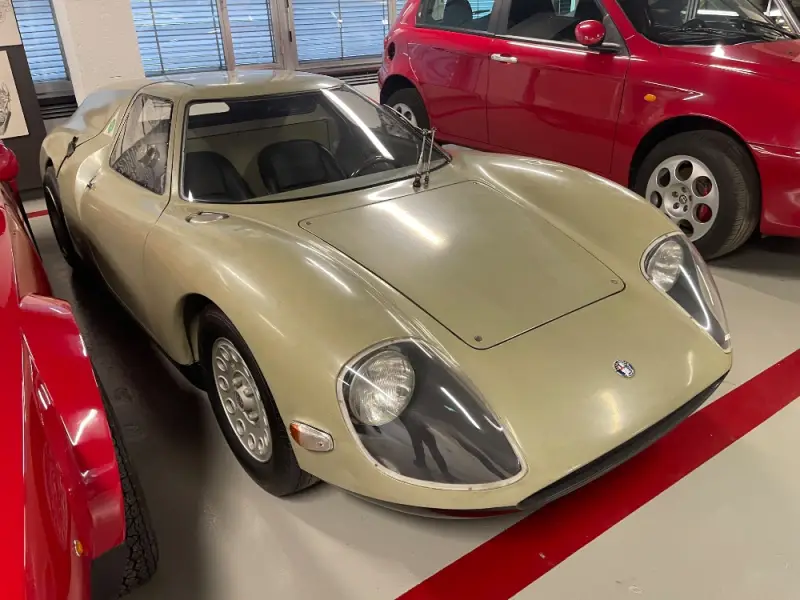
The Scarabeo was an engineering experiment led by Giuseppe Busso after Alfa Romeo’s Tipo 33 competition programme moved to Autodelta. Busso proposed putting the Giulia GTA’s 1570cc twin-cam four-cylinder transversely behind the cockpit, with the engine, clutch and gearbox forming a compact unit. A shaft set at 45 degrees drove the differential. Tubular side members, inspired by the Tipo 33, also held the fuel tanks.
OSI built the car, with Sergio Sartorelli responsible for its low body and canopy cockpit. The first prototype appeared at the 1966 Paris Motor Show; a second had a simpler finish, and an open third remained incomplete. The car weighed about 700kg, produced around 115bhp and was said to reach 124mph. Alfa Romeo dropped production plans, and OSI soon ended its coachbuilding work.
1967 Alfa Romeo Montreal Expo Prototipo by Bertone
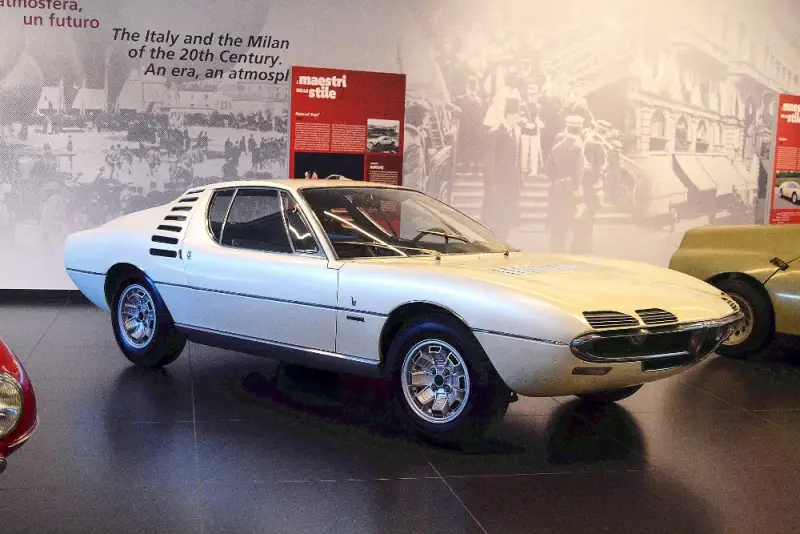
For Expo 67 in Canada, Alfa Romeo had only nine months to create a car representing contemporary design ambitions. Bertone used a Giulia Sprint GT chassis and the Giulia TI’s 1570cc four-cylinder, giving Marcello Gandini a practical base for a striking new shape. The low coupé had a steep windscreen, partly covered headlights, C-pillar vents and a near-horizontal rear glass hatch.
Two pearl-white prototypes stood among mirrors in the “Man the Producer” display, multiplying their reflections. The response led Alfa Romeo to develop a road car. It replaced the four-cylinder with a 2.6-litre version of the Tipo 33 V8 and needed revised proportions to fit the larger engine. The Montreal debuted at Geneva in 1970 and went into production.
1968 Alfa Romeo Carabo by Bertone
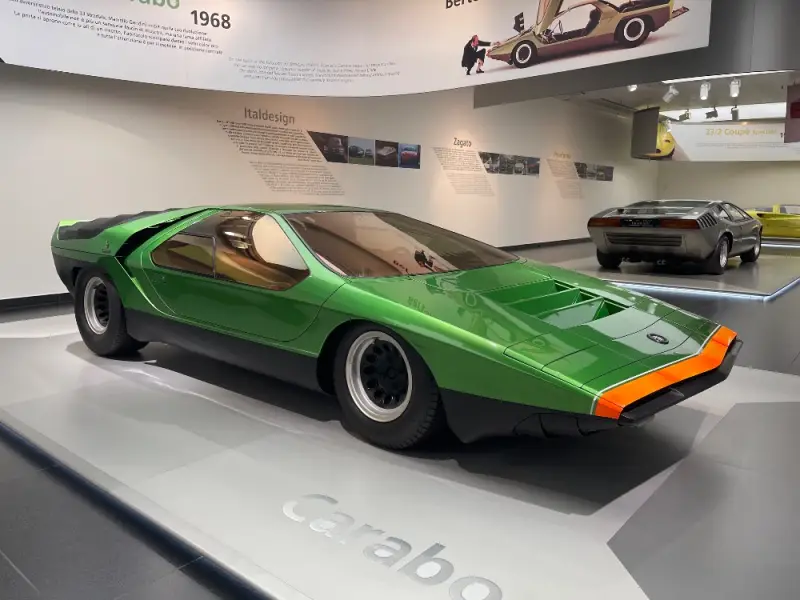
Gandini took about ten weeks to create the Carabo, one of the era’s most influential wedge designs. Revealed in Paris in 1968, it used the Alfa Romeo 33 Stradale’s chassis and mechanicals beneath fibreglass bodywork. Its name referred to the Carabus auratus beetle, echoed in iridescent green paint, orange details and gold-tinted glass.
The car stood just 990mm tall. Its front-hinged doors opened vertically, a layout Gandini later developed for the Lamborghini Countach. The Tipo 33’s two-litre V8 delivered 230bhp at 8800rpm through a six-speed transmission; quoted weight was 700kg. Retractable headlights made room for the low nose, and the sharply cut rear departed from the rounded sports-car forms that had come before. The Carabo stayed a concept, but its wedge shape influenced the supercars that followed.
1969 Alfa Romeo Iguana by Italdesign
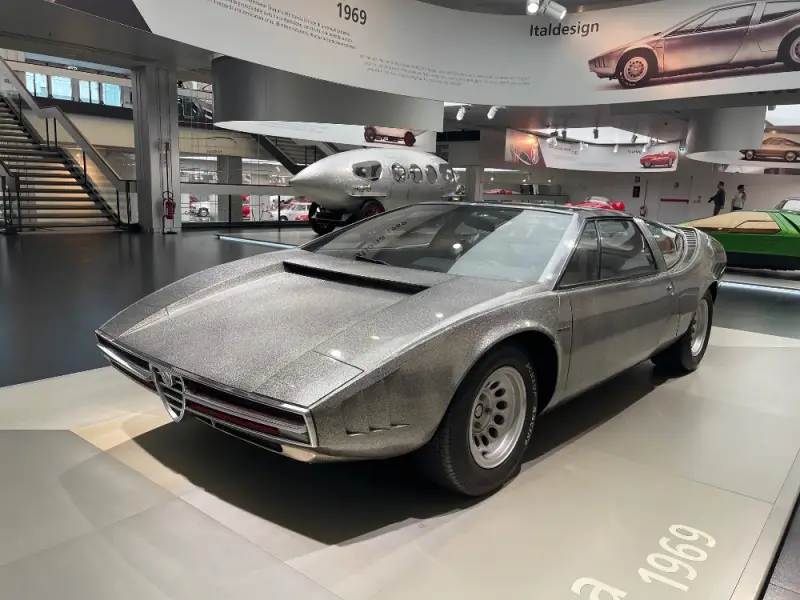
One of Italdesign’s early statements after Giugiaro and Aldo Mantovani established the company, the Iguana used Alfa Romeo 33 Stradale mechanicals but made the structure part of the design. Its steel frame was visible, and broad front and rear body sections hinged as complete assemblies. Large glass roof and rear-window panels brought more light into the cabin.
Shown in Turin in 1969, the Iguana mixed curved flanks with sharper upper surfaces, brushed-metal details and an iridescent finish. The original 1995cc V8 was paired with a six-speed manual; later, it was replaced by a larger V8 of the type used in the Montreal. Its low nose, prominent rear body and contrasting roof treatment foreshadowed ideas Giugiaro would revisit on the Maserati Bora.
1969 Alfa Romeo 33.2 Coupé Speciale by Pininfarina
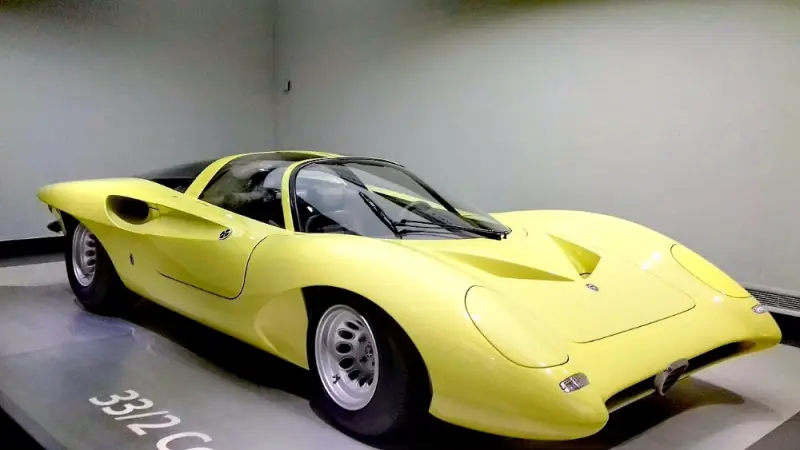
Leonardo Fioravanti returned to ideas from Pininfarina’s 1968 Ferrari 250 P5 when he designed the 33.2 Coupé Speciale around Alfa Romeo Tipo 33 chassis 750.33.115. Shown in Paris in 1969, the yellow prototype had a glazed cockpit, retractable headlights and hydraulically operated butterfly doors.
The relationship with the Ferrari study was clear, but the Alfa balanced a rounded upper body with sharper lower panels and a compact raised rear. It showed how an existing competition-car platform could become the basis for a very different kind of design experiment.
1971 Alfa Romeo P33 Cuneo by Pininfarina
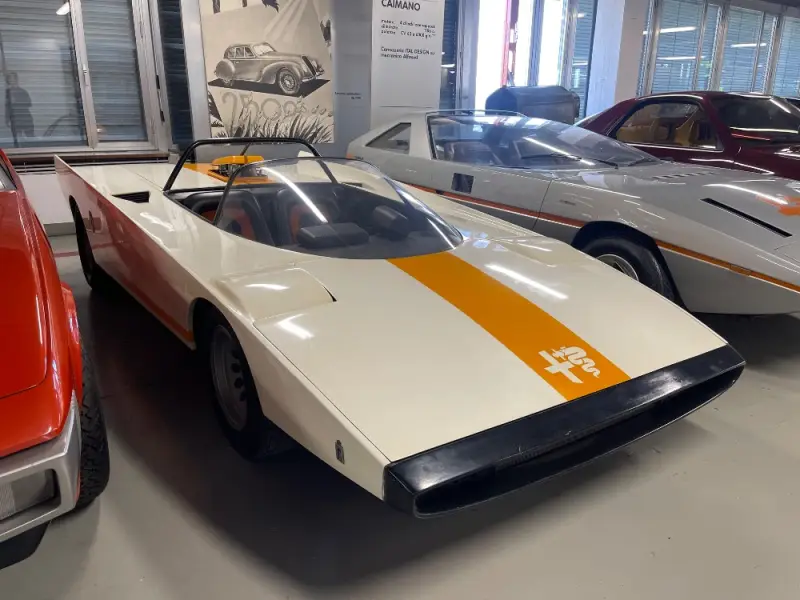
The Cuneo’s history is bound to an earlier Pininfarina design. In 1968, Paolo Martin created the P33 Roadster on Tipo 33 chassis 75033.108, with front canards and a large rear wing that also served as a roll-over structure and housed the oil radiator. Pininfarina later dismantled it and gave the chassis to Fioravanti, whose Cuneo appeared in Brussels in January 1971.
The replacement took the wedge idea to an extreme, with nearly straight lines, a shallow windscreen, no conventional doors, NACA ducts and a cut-off tail carrying six lights and eight exhaust outlets. Martin called it “the unfortunate work of engineer Fioravanti” in a 2024 interview with Magneto, recalling his anger at the Roadster’s dismantling. The Cuneo survives at Arese; Martin’s Roadster remains known through photographs, drawings and a wooden scale model.
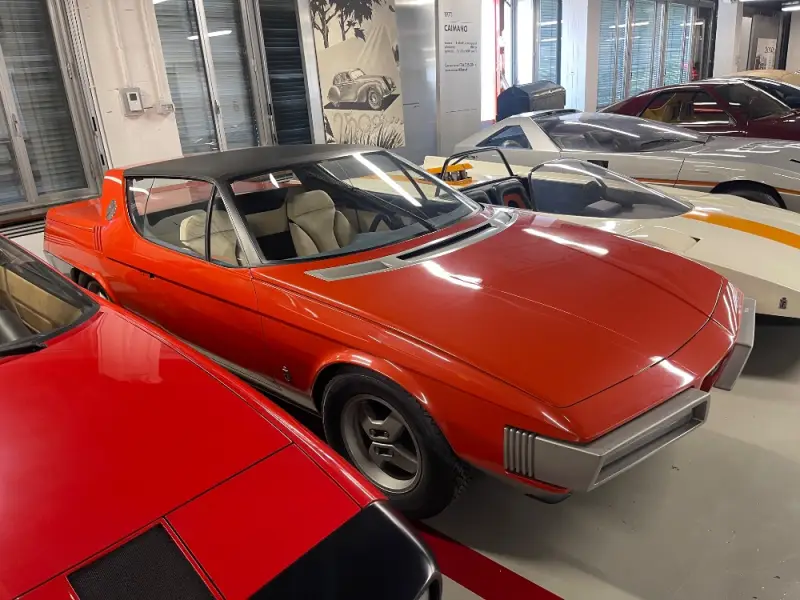
1971 Alfa Romeo Caimano by Italdesign
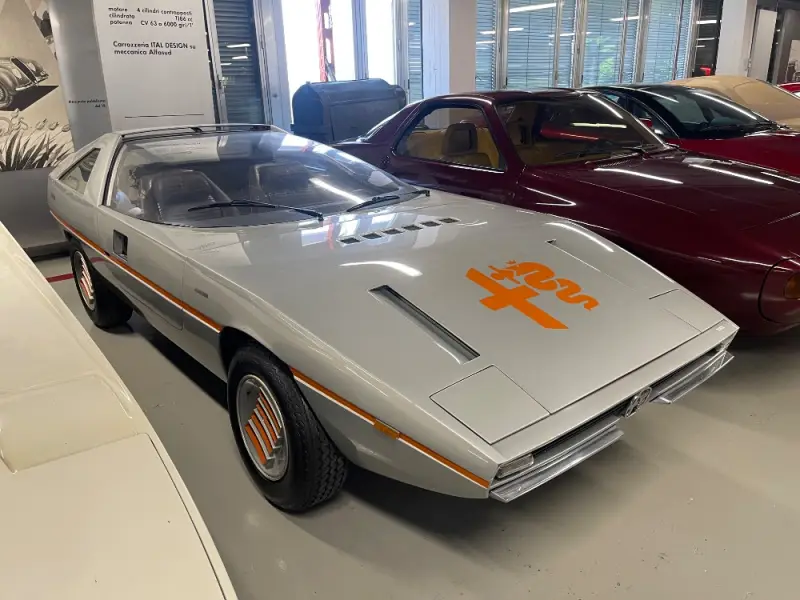
Giugiaro used the Alfasud’s front-wheel-drive platform and flat-four engine to imagine a car freed from production requirements. The Caimano, shown in Turin in 1971, had a wheelbase 205mm shorter than the Alfasud and a steering column angled for a reclined driving position beneath its low body.
Its single transparent canopy joined roof, windscreen and door sections, hinging from the bonnet. Small side windows provided ventilation and access without conventional doors. An adjustable spoiler formed part of the rear roll-over bar. Inside, rotating graduated drums replaced conventional instrument needles. Alfa Romeo’s brief made clear the Caimano was a dream car, with no production plan.
1975 Alfa Romeo Eagle by Pininfarina
As open-car design faced questions about rollover protection, Pininfarina proposed a Spider with a prominent structural bar. Aldo Brovarone’s Eagle used the Alfetta GT’s front-mounted twin-cam engine, rear transaxle and De Dion suspension, wrapped in a wedge-shaped body influenced by Alfa Romeo’s Tipo 33 TT/12 racer.
A removable roof panel allowed open-air driving while the rear structure sat behind the occupants. The cabin had digital instruments, a single-spoke steering wheel and a spare dashboard. With a 1.8-litre engine producing about 120bhp, the roughly 1000kg Eagle was credited with a possible 123mph top speed. Alfa Romeo continued with its existing open car instead, which remained in production until 1993.
1976 Alfa Romeo Navajo by Bertone
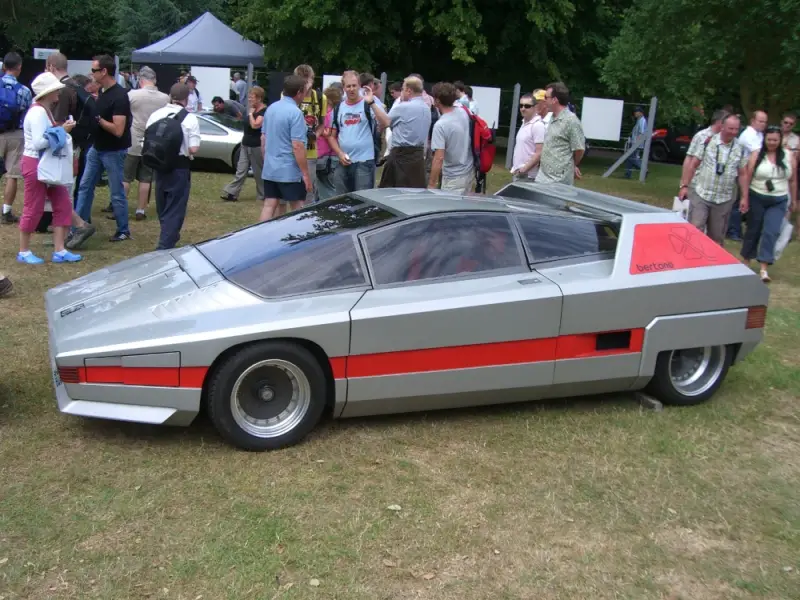
Gandini based the Navajo on a modified Tipo 33 Stradale chassis, lengthened to a 2430mm wheelbase. Its fibreglass body, shown at Geneva in 1976, pushed the Carabo’s wedge theme into more angular territory. Rectangular headlights slid horizontally from recesses in the front wings.
The Navajo also explored active aerodynamics, with front and rear spoilers that changed position with vehicle speed. A high rear wing sat on trapezoidal supports, and a digital instrument display reinforced the futuristic cabin. Gandini said science fiction informed the design; its shape has also been compared with the Alfa Romeo-branded Spinner craft in Blade Runner.
1983 Alfa Romeo Delfino by Bertone
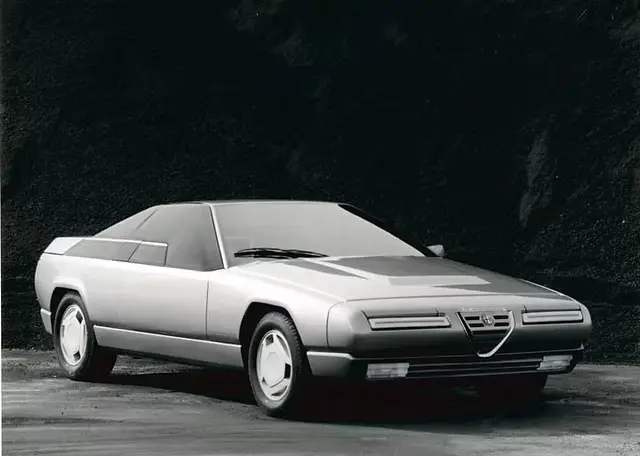
Bertone’s Delfino proposed a front-engined, rear-wheel-drive grand tourer using the Alfa 6’s mechanical base. Marc Deschamps, the studio’s design director after Gandini, presented it at Geneva in 1983. The long bonnet and compact cabin kept to familiar GT proportions, while close-fitting glass formed a nearly continuous greenhouse.
A raised boot softened the transition from roof to tail. Rather than revive the dramatic angles of 1970s concept cars, the Delfino explored a more restrained Italian GT: broad glazing, carefully integrated details and calmer surfaces.
1983 Alfa Romeo Zeta 6 by Zagato
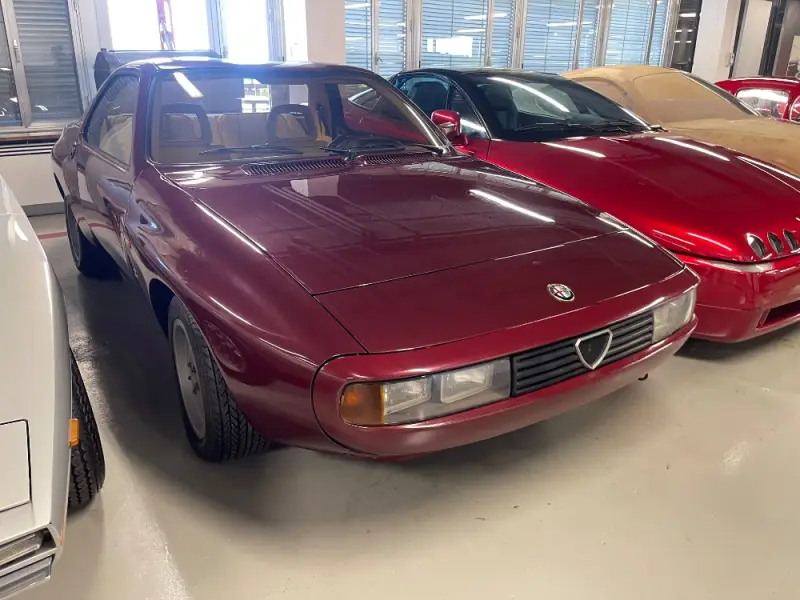
Zagato’s answer to Bertone’s Delfino was a curvier 2+2, based on two Alfa Romeo GTV6 chassis supplied with 2.5-litre Busso V6 engines. Giuseppe Mittino began the project as the AZ6 Sperimentale in 1979. The prototypes retained the GTV6’s transaxle and De Dion rear suspension, but replaced its angular body with rounded wings, a large glasshouse and Zagato’s double-bubble roof.
A circular door mechanism, opened by twisting a recessed disc, was an unusual touch. Two prototypes were built; the second appeared in Turin in 1984 with iridescent blue-green paint. Zagato explored a small production run, but the necessary investment never arrived. The project helped restore Zagato’s sporting reputation and anticipated later work, including the Aston Martin V8 Zagato.
1991 Alfa Romeo Proteo
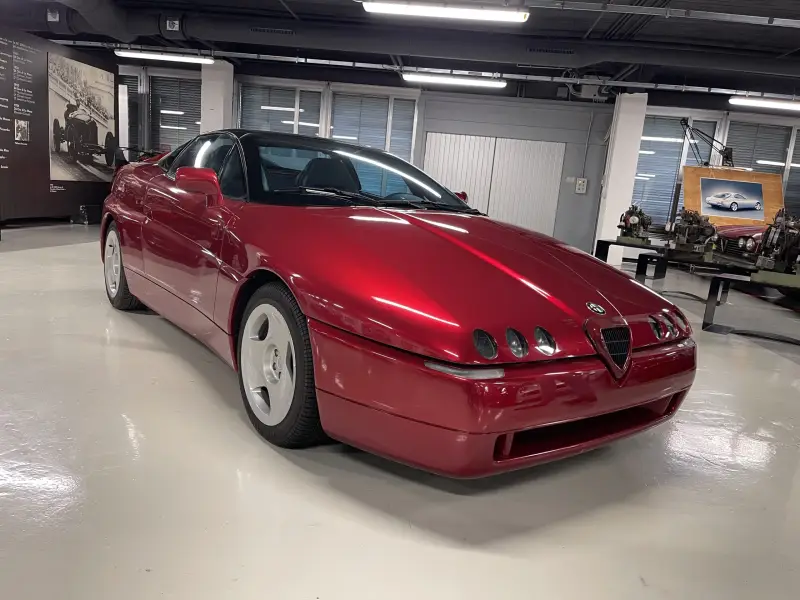
The Proteo was a functioning technology demonstrator, not just a styling proposal. Designed at Alfa Romeo Centro Stile under Walter de Silva and built by Stola, it appeared at Geneva in 1991. Its two-piece glass roof folded hydraulically beneath a rear cover in about 45 seconds, converting the coupé to a spider without using luggage space.
A shortened, reinforced Alfa Romeo 164 platform carried a 3.0-litre, 24-valve V6 producing about 260bhp, with four-wheel drive and four-wheel steering. Electronically controlled suspension and composite bodywork added to the specification. Its six recessed circular headlights and pronounced wheelarches previewed styling later associated with the GTV and Spider, though those production cars were already well into development. The folding roof stayed a concept; the Rosso Proteo paint colour reached production models.
1996 Alfa Romeo Nuvola
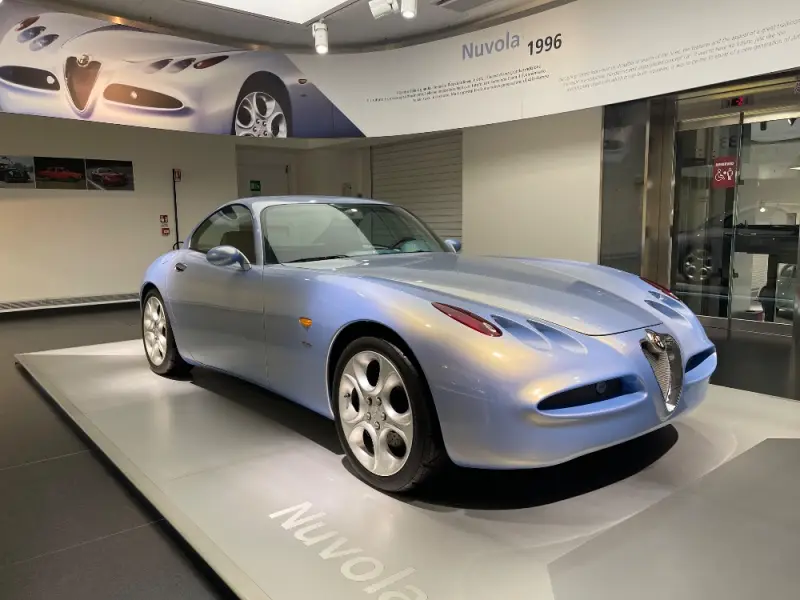
Nuvola’s proposal was to revive specialist Italian coachbuilding using a shared mechanical platform: a tubular spaceframe that independent coachbuilders could clothe in different bodies. Walter de Silva’s Centro Stile team developed the concept, led by Carlo Giavazzi, with Wolfgang Egger and Filippo Perini on exterior design. Stola completed the prototype in about five months.
A front-mounted 2.5-litre twin-turbo Busso V6 produced around 300bhp and drove all four wheels through a six-speed manual. Alfa Romeo quoted a top speed of about 174mph. Recessed round headlights and integrated bumpers sat alongside references to historic competition cars. The blue Azzurro Nuvola finish began when Fiat Group chairman Paolo Cantarella asked the team to look beyond its planned reds. The colour later appeared on road cars including the 156, 166 and 147.
1997 Alfa Romeo Scighera by Italdesign
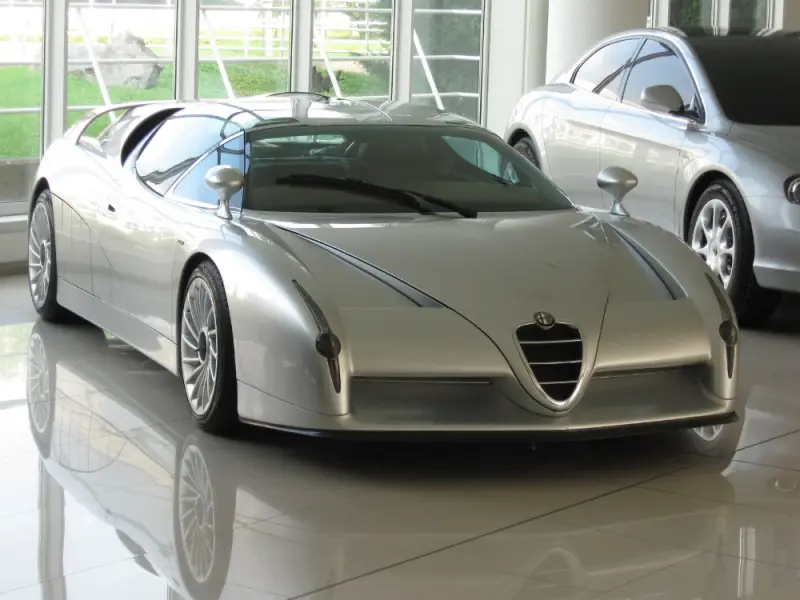
Italdesign built the Scighera in seven months as a road-usable supercar concept with competition technology. Fabrizio Giugiaro led the design under his father Giorgetto. A new aluminium structure with carbon-fibre elements carried hand-formed aluminium bodywork, rather than adapting an existing production chassis.
The longitudinally mounted 3.0-litre Busso V6 had twin turbochargers and produced 400bhp at 7500rpm. A six-speed sequential transmission with an electronically operated clutch sent power to all four wheels. A rear spoiler deployed above 140km/h; the doors had conventional lower sections and upper glazed parts that hinged upwards, allowing the glass to be removed for open-air driving.
Italdesign also proposed a Scighera GT with carbon-fibre panels for endurance racing. Neither version entered production, though the prototype ran under its own power.
2002 Alfa Romeo Brera by Italdesign
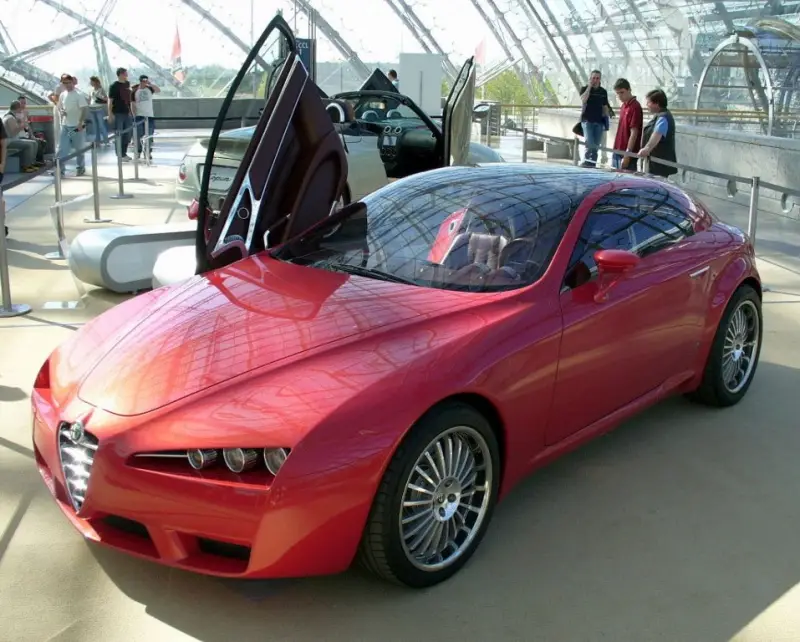
Giugiaro’s Brera was a personal statement about what an Alfa Romeo grand tourer could be. Revealed in Geneva in 2002, it used Maserati Coupé mechanicals: a front-mid-mounted 4.2-litre V8 producing about 400bhp and a six-speed transmission. Carbon-fibre bodywork and carefully judged proportions made the 2+2 more than a styling exercise.
Triple headlights sat in narrow openings that looked like side air intakes, while a patented door mechanism lifted the large doors up and out, needing 360mm of clearance. Michelin PAX run-flat tyres were another unusual feature. The concept was driven at events including Goodwood and won the Compasso d’Oro in 2004.
Production began in 2005, but the changes were substantial: the V8 and rear-wheel-drive layout disappeared, replaced by the 159’s platform and mechanical arrangement. Conventional doors replaced the concept’s lifting design. The production Brera kept much of its appearance, but its weight and less focused engineering prompted criticism. Giugiaro later said the changes upset the original design’s balance.
2003 Alfa Romeo 8C Competizione
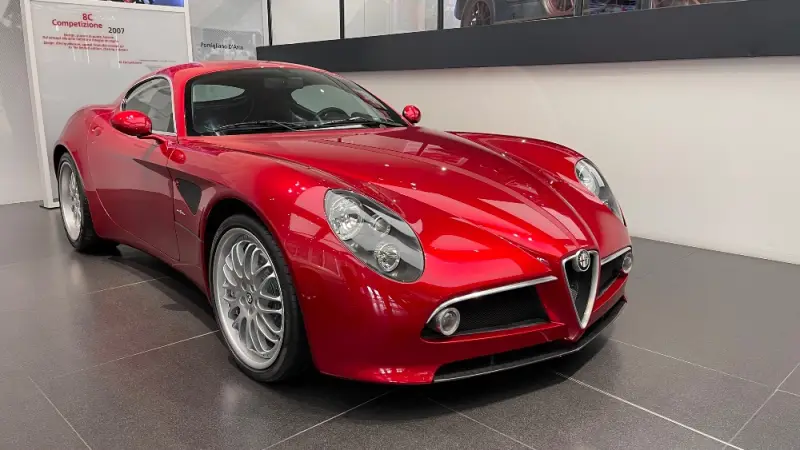
Designed in-house at Arese under Wolfgang Egger, the 8C Competizione aimed to reconnect Alfa Romeo with its competition heritage through a compact, front-engined V8 sports car. Daniele Gaglione’s design, shown at Frankfurt in 2003, used historic cues without copying one model: a nose reminiscent of the 33 Stradale, round tail-lights recalling the Giulia TZ and sculpted rear haunches. It measured 4278mm long and 1250mm high.
The concept’s carbon-fibre body enclosed a proposed supercharged 4244cc V8 producing more than 400bhp at 7000rpm, with rear-wheel drive and a six-speed manual transaxle. Alfa Romeo quoted 0–62mph in 4.5 seconds and a top speed above 186mph. The response secured a limited production run in 2006. The road car used a naturally aspirated 4.7-litre V8 and automated transmission while retaining much of the show car’s design.
2010 Alfa Romeo 2uettottanta by Pininfarina
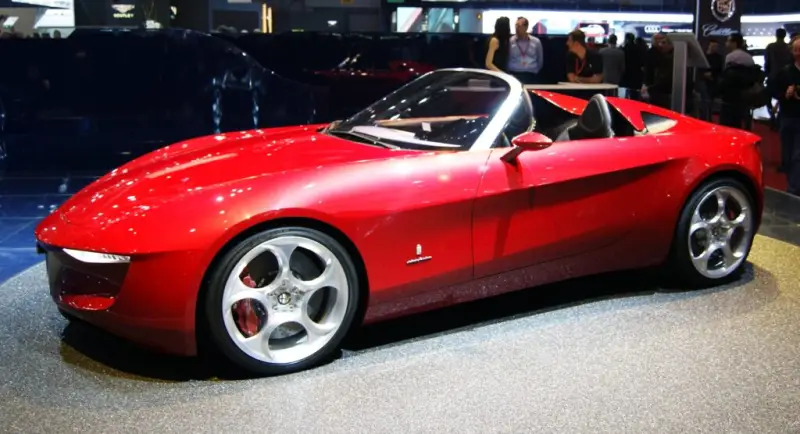
Pininfarina’s 2010 concept marked its 80th anniversary and Alfa Romeo’s centenary with a proposed modern Duetto. Lowie Vermeersch’s design kept the classic roadster’s long bonnet, rear-set cockpit and horizontal shoulder line, while adding slim LED headlights and floating horizontal elements in the Scudetto. Two sculpted rear humps formed roll-over structures and carried the seatbelt mounts.
The 2uettottanta measured 4213mm long, 1797mm wide and 1280mm high. Pininfarina proposed a longitudinal 1750cc turbocharged four-cylinder, referencing the 1750 Veloce Spider, with a dual-clutch transmission, carbon-ceramic brakes and Alfa Romeo’s DNA mode selector. The compact rear-wheel-drive Spider suggested a plausible production direction, but it remained a concept.
2022 Alfa Romeo Giulia SWB Zagato
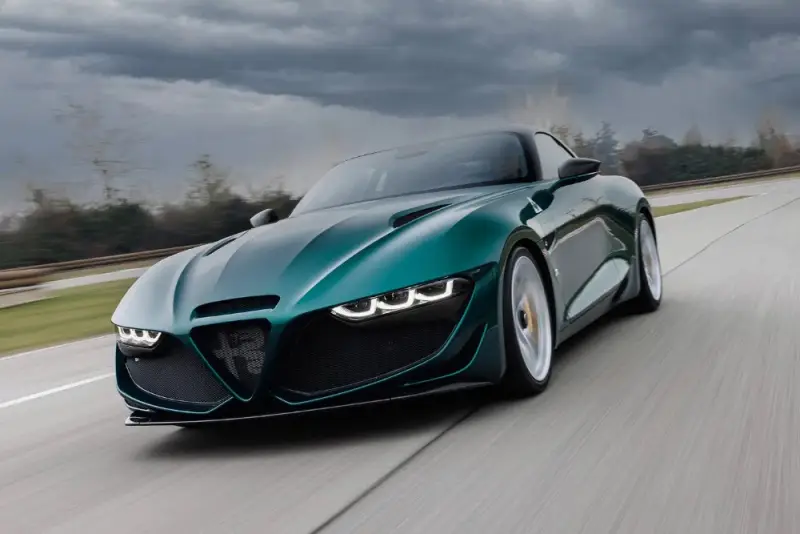
Commissioned by a German collector, the one-off Giulia SWB Zagato marked a century since the coachbuilder’s first Alfa Romeo collaboration on the Tipo G1 in 1921. Zagato designer Norihiko Harada worked with Alfa Romeo design chief Alejandro Mesonero-Romanos on the appearance.
The starting car was a manual Giulia Quadrifoglio. Zagato shortened its Giorgio platform wheelbase by 120mm and cut 140mm from the rear overhang, then added an entirely new carbon-fibre coupé body. The twin-turbo 2.9-litre V6 was brought to Giulia GTAm specification, producing 540bhp, while retaining the Quadrifoglio’s six-speed manual.
A double-bubble roof, cut-off tail and flowing flanks recalled the Giulietta SZ Codatronca. Six-element headlights nodded to the 1989 SZ and later Alfa Romeo designs, while a continuous rear light emphasised the clipped tail. Small-scale production was considered but didn’t follow; Alfa Romeo instead pursued the 33 Stradale programme.
What the Cuorerosso has to prove
Across these concepts, Alfa Romeo has used the show car to investigate far more than styling. The Disco Volante and B.A.T. series pursued airflow; Scarabeo and Proteo tested engineering; Carabo and Navajo stretched the wedge; the Brera and 8C showed how a concept could reach production, with varying degrees of fidelity.
The Cuorerosso sits closer to a design manifesto than a near-production prototype. Its hybrid V6, multi-mode instruments and more purposeful use of materials give it a concrete brief, while the promise of production influence from 2028–29 sets a timeframe for judging its impact. The key measure will be whether those ideas improve the cars Alfa Romeo actually builds: how they look, how their technology works in use and whether the driving experience lives up to the badge.