Chery Tiggo 7 Patent Points to Another Possible JSW SUV for India
Electric Vehicles Akshay Kulkarni 666 reads
The Tiggo 7’s Indian design filing adds to signs JSW could consider another Chery-based SUV, with a 1.6-litre turbo petrol engine among the reported possibilities.
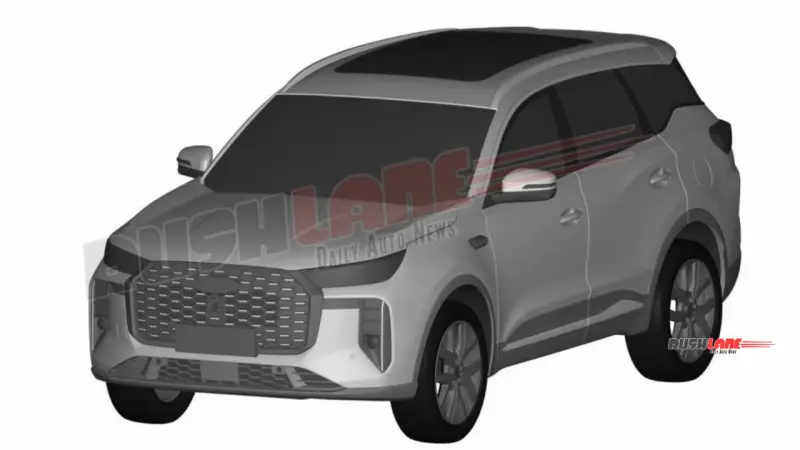
The Chery Tiggo 7’s design filing in India adds another model to the set of Chery vehicles that JSW could consider for its growing automotive plans. It doesn’t confirm a launch, local assembly or an India-specific specification. But alongside the Tiggo 7L filing and the reported testing of Jaecoo models, it makes the standard Tiggo 7 a vehicle to watch as JSW builds a presence beyond its MG Motor partnership.

JSW has partnered with China’s Chery Automobile for its first vehicles under the JSW Combat name, based on the Chery Jetour T2. The Jaecoo J5 and J7 are also expected to be assembled locally, and both have been spotted testing. The Tiggo 7 could broaden that potential line-up, though its route to market and final branding remain uncertain. Its filing alone doesn’t establish that JSW will sell it in India.
Two Tiggo 7s, with different dimensions
Chery has also filed the design of the larger Tiggo 7L in India. The two models share a family name, but the Tiggo 7L is described as the bigger, more upscale option. The standard Tiggo 7 measures 4,553 mm long and has a 2,670 mm wheelbase. The Tiggo 7L stretches to 4,655 mm, with a 2,720 mm wheelbase. That 102 mm difference in overall length and 50 mm in wheelbase puts the L model in a distinct position within the range.
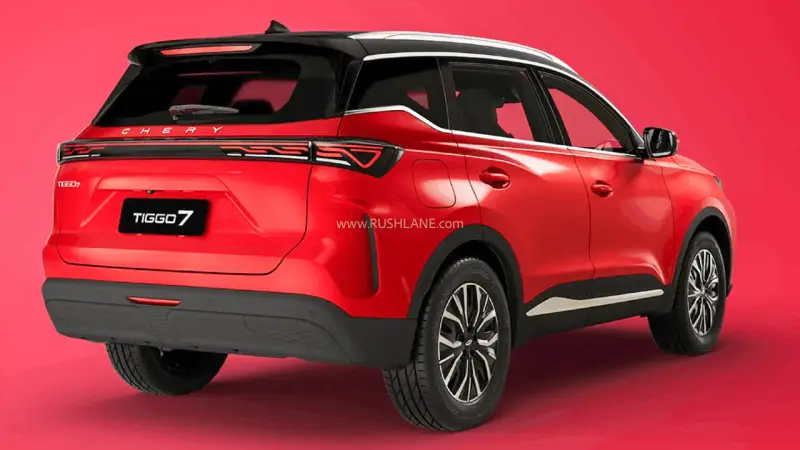
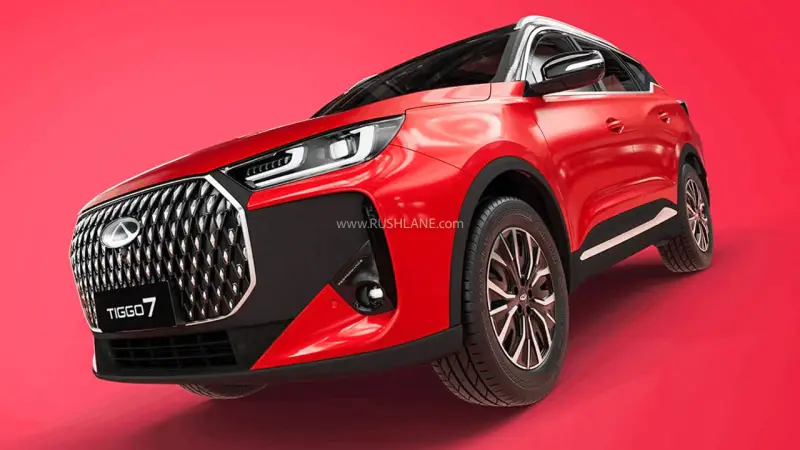
Their styling also points to different roles. The Tiggo 7L is sleeker and sportier in appearance, while the standard Tiggo 7 takes a squarer, more rugged approach. For buyers, that distinction could matter as much as the size gap: the standard car’s upright proportions give it a more substantial look, while the L’s longer body and smoother design suggest a more upmarket presentation. Those are visual cues, though; the filing does not establish how either would be priced or positioned in India.
Exterior details of the India filing
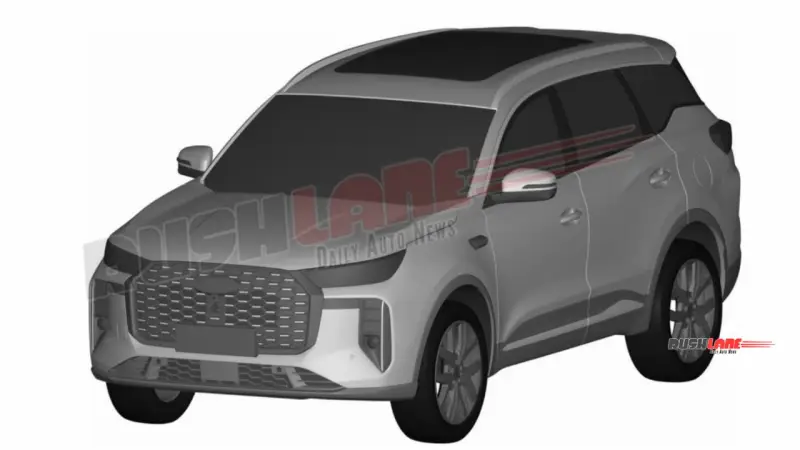
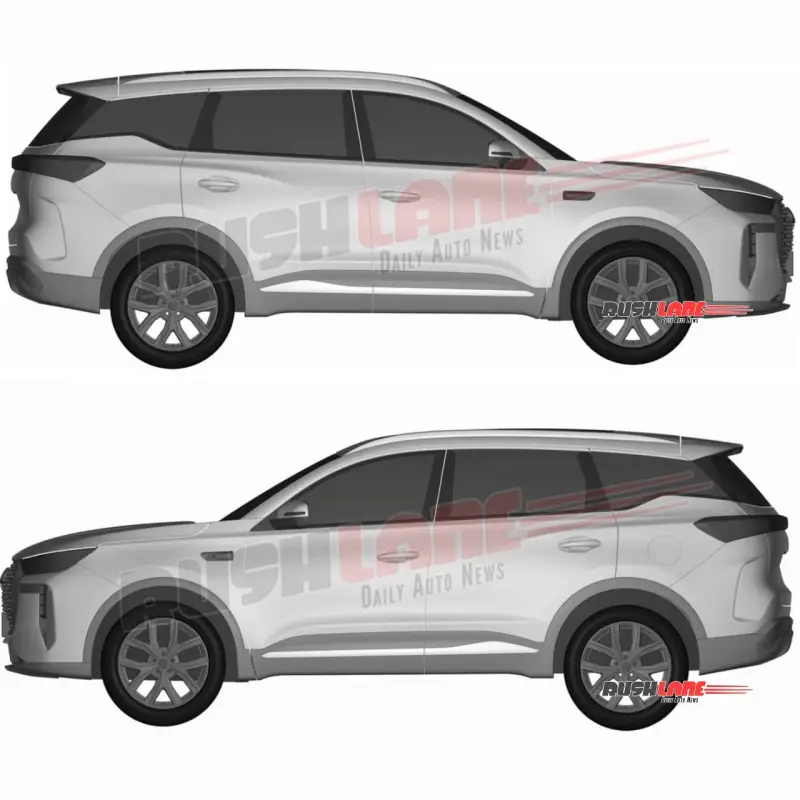
The filed Tiggo 7 design shows a broad grille with prominent chrome detailing and a Chery badge. Its main LED headlamps sit in conventional positions. The lower lighting arrangement appears different, with triple, ice-cube-style elements and a circular LED stacked vertically in the fog-light area. The front fascia also uses fewer black elements than the global version shown for comparison, giving the front end a cleaner, more polished look.
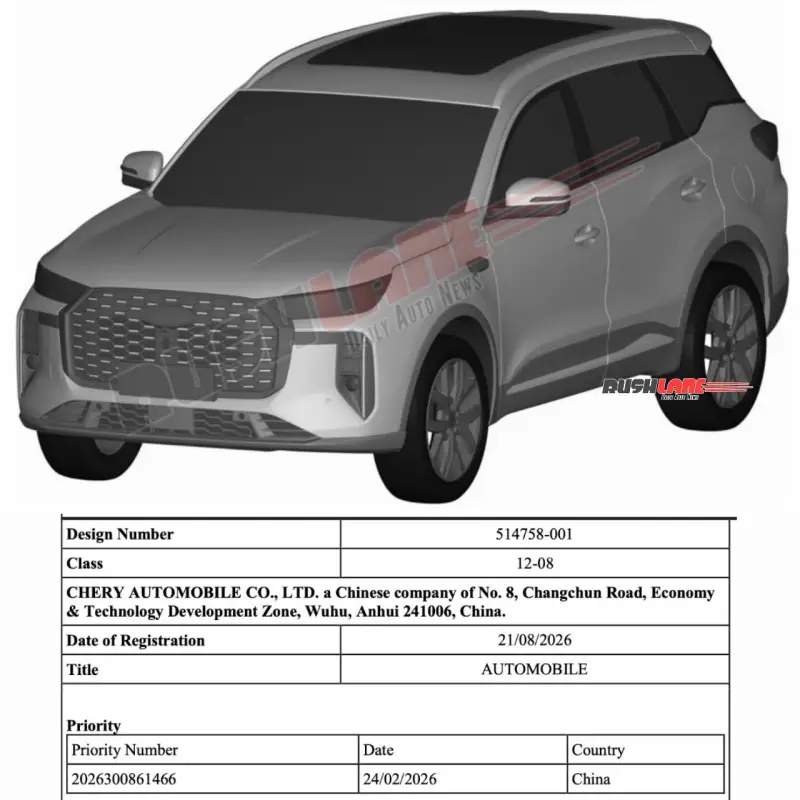
Other visible details include a relatively flat bonnet with pronounced creases, roof rails, conventional door handles and a large set of 19-inch wheels. A kink in the shoulder line behind the C-pillar gives the side profile a recognizable break before the rear. At the back, connected LED tail-lamps have a distinctive lighting pattern, while a roof spoiler and C-shaped bumper elements add visual definition.
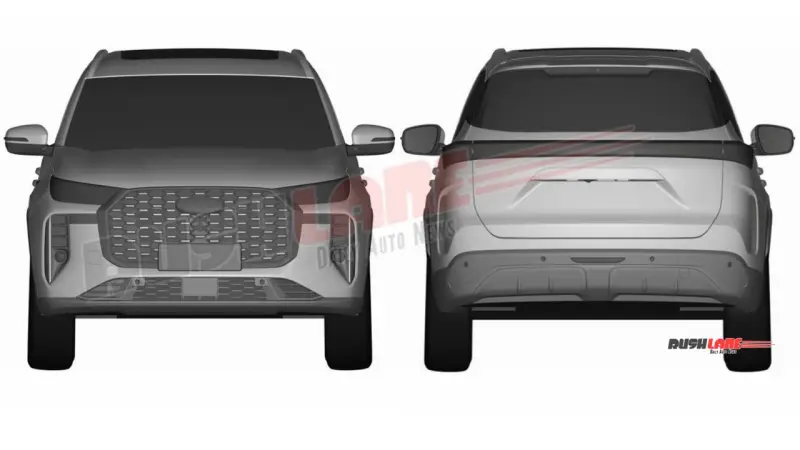
These details describe the design shown in the filing; they don’t confirm that every feature would carry over to a production model for India. Wheel size, lighting equipment and trim can vary by market and version. For now, the filing offers a useful indication of the vehicle Chery has placed on record, while leaving the eventual Indian specification open.
Cabin equipment and powertrain clues
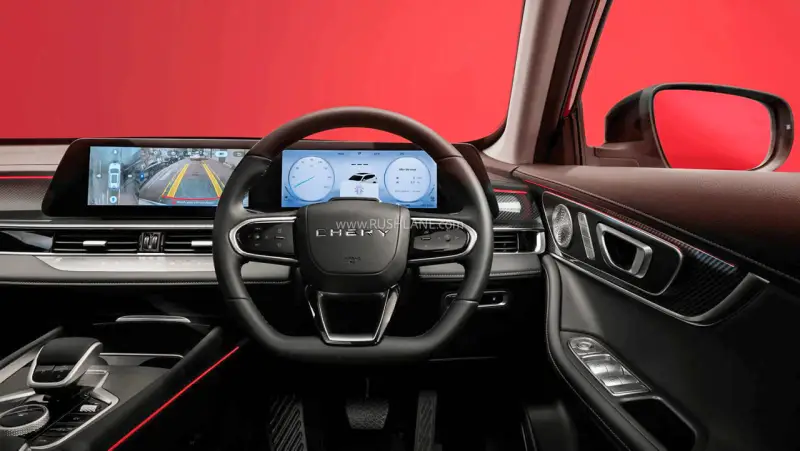
The pictured cabin has a layered dashboard built around two 12.3-inch displays in a single housing. A three-spoke steering wheel carries CHERY lettering, and the centre console sits high between the front seats. The listed equipment includes ambient lighting, a panoramic sunroof, dual-zone air conditioning, heated and ventilated seats, a 50W wireless charging pad and a Sony audio system. The reported safety and driver-assistance equipment includes eight airbags and ADAS. The vehicle is also listed with a five-star Euro NCAP rating.
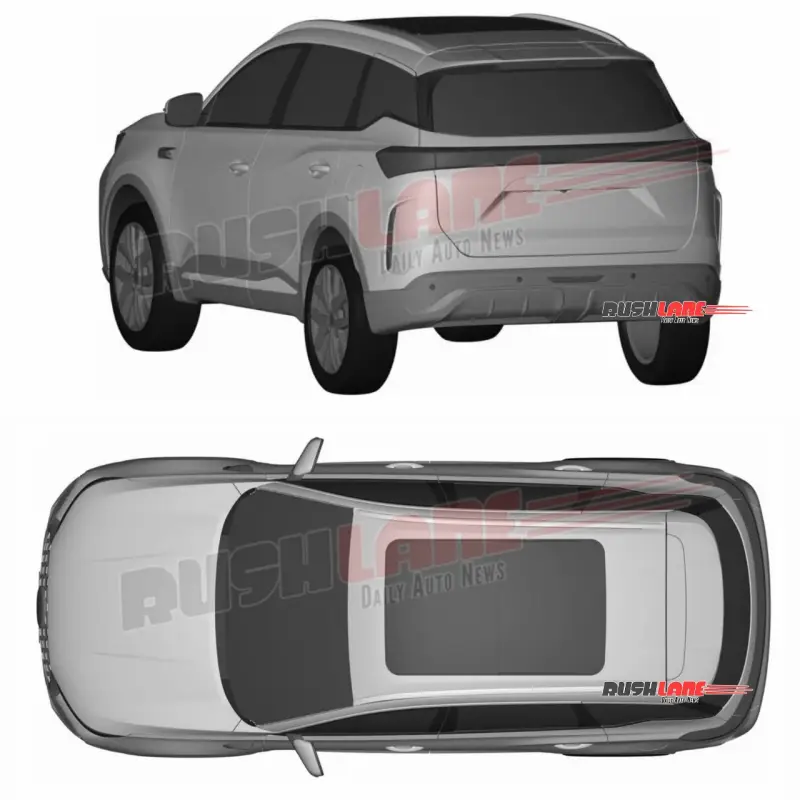
One fuel-filler door is visible, which suggests the pictured design is for a petrol version rather than a plug-in hybrid. The reported engine possibility is a 1.6-litre turbocharged petrol unit producing 147 PS and 275 Nm, paired with a seven-speed dual-clutch transmission. Boot capacity is stated as 484 litres. These figures offer a starting point for assessing the package: the output and transmission describe one possible powertrain, while the boot volume gives buyers a practical measure of luggage space. They shouldn’t be treated as confirmed Indian specifications.
What to watch next
The Tiggo 7 would enter a busy SUV segment if JSW chooses to bring it to India, where the Tata Harrier and Mahindra XUV7XO are named as potential rivals. The dimensions, equipment list and engine details suggest the areas on which a comparison would turn: cabin space, usable boot capacity, powertrain choice, features and the final price. No Indian price, range of variants or launch timing has been established here, so a direct value comparison isn’t possible yet.
For now, the Tiggo 7 filing is a sign of possible product interest, not a confirmation that the model is coming to showrooms. The clearest next clues would be local testing, a production announcement or details of the version JSW might assemble. Until then, the Tiggo 7’s measurements and global equipment provide context, while its Indian powertrain, trim and market position remain open questions.