Waymo Robotaxi Tries to Pass California Highway Traffic Break
Electric Vehicles [email protected] (Collin Woodard) 324 reads
A Waymo appeared to drive toward a California traffic break before patrol cars blocked its path, raising questions about how robotaxis handle unusual road situations.
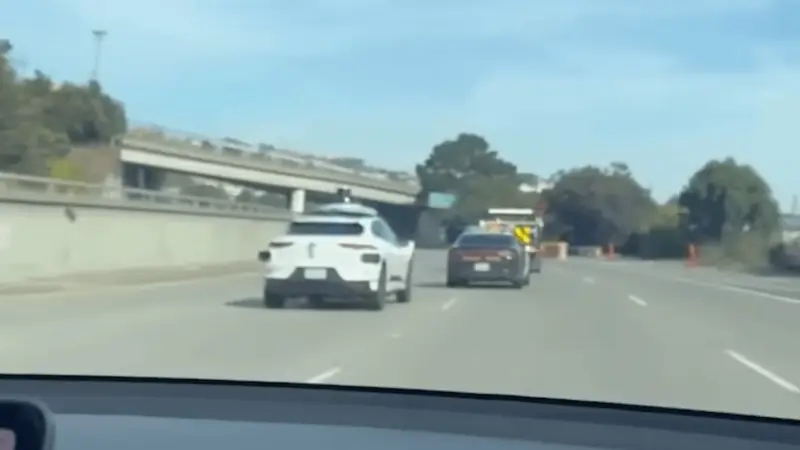
A Waymo robotaxi’s response to a California highway traffic break shows why autonomous driving has to work beyond ordinary lane keeping. In video shared with ABC7 News, the car appears to move toward the left side of a gap in traffic while two patrol cars are slowing vehicles ahead. The officers maneuver to block it from passing.
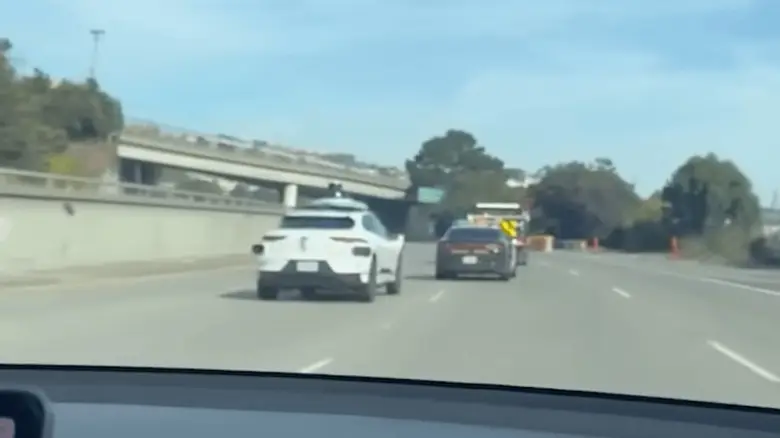
The traffic break was being used because a construction vehicle was ahead and workers were standing on the freeway, according to the account of the incident. The footage doesn’t establish what the Waymo detected, how its software classified the scene or why it continued toward the opening. It does show a situation where a routine driving maneuver—choosing a lane and following the road—was not enough. The vehicle needed to recognize that the patrol cars were controlling traffic and that the apparent path forward was closed.
A road scene that depends on context
A traffic break is a temporary way to slow freeway traffic. Here, the two patrol cars moved across lanes to prevent vehicles from continuing toward the work area. For a human driver, their position and movement provide a clear signal to wait. For an autonomous vehicle, interpreting that signal requires more than identifying cars or tracking lane markings: it must infer what those vehicles are doing and adjust its route accordingly.
That distinction matters because unusual scenes often arrive with little warning. A robotaxi may encounter traffic control, roadwork, a blocked lane or people working close to moving traffic in the same trip. The system has to connect what its sensors detect with the right driving response. A vehicle that sees a gap but misses why it has opened could make a poor decision even if it has mapped the road and detected the cars around it.
The clip alone can’t show whether this was a brief software error, a difficult interpretation of the patrol cars’ movements or something else. Nor does it establish the vehicle’s speed. What it does capture is a potentially risky attempt to proceed into a space the patrol cars were moving to close. The footage doesn’t show a collision or establish what happened after the vehicles blocked the Waymo.
Driverless service puts the response in focus
There was no driver in the robotaxi to pull over or cite. That shifts attention to how the automated system handles the encounter and what happens when it cannot confidently determine whether the route is clear. A human driver can read gestures, vehicle positioning and the broader scene together. An autonomous system has to make that judgment through its sensors and software, then either proceed or stop.
Waymo’s vehicles use sensor arrays, and the company’s robotaxis have taken many passengers to their destinations without reported problems. That experience is relevant, but it doesn’t make every unusual road situation straightforward. A system can perform well in common conditions and still need improvement in a less familiar interaction. For passengers and other road users, how a vehicle behaves around temporary traffic control is part of the service’s practical safety record.
Comparisons with other driverless systems don’t resolve what happened here. One system’s shortcomings don’t make another system’s mistakes acceptable, and the clip provides no direct comparison with a human driver or another robotaxi. The useful question is narrower: did this vehicle recognize that the patrol cars were holding traffic back from a work area, and did it respond appropriately? The available footage raises that question without showing the software’s internal decision or the company’s account of the event.
What to watch in future operations
For a driverless ride service, roadwork and traffic control are not edge cases in the sense of being irrelevant. They are part of the real operating environment. Vehicles need to respond when the usual flow of traffic changes, especially where workers are near the roadway. A cautious stop may delay a trip; continuing when traffic is being held back can create a more serious problem. The system’s job is to distinguish those situations reliably.
The practical takeaway is that sensor equipment alone doesn’t answer whether a robotaxi can manage a complicated scene. The important evidence is how it acts: whether it recognizes the reason traffic has slowed, respects a blocked path and avoids pressing forward when the situation is unclear. More information about the incident could clarify why the Waymo approached the opening, but the video already illustrates the challenge. Autonomous driving has to account for the meaning of what’s happening on the road, not just the vehicles and lines it can see.