007 First Light’s Cars Make Bond’s World Feel Playable
Electric Vehicles [email protected] (Daniel Golson) 1,007 reads
From a battered Aston Martin DBS to a weaponized Valhalla, First Light uses cars and work vehicles to make Bond’s mix of restraint and spectacle playable.
007 First Light understands that Bond’s cars matter most when they do more than look good. IO Interactive uses a carefully chosen mix of Aston Martins, understated sedans, off-roaders and unlikely work vehicles to shape the pace of its story. Some sequences let players race and improvise; others put them behind the wheel for a quiet conversation. The effect is a Bond adventure in which driving helps establish character and mood, not just provide a break between action scenes.
That range was a goal from the start, according to art director Rasmus Poulsen and audio director Dominic Vega, who also directs live content and missions. “We knew from the get-go that we wanted as wide a range of driving experiences as we could manage to squeeze in the game,” Poulsen said. The result takes in both familiar Aston Martin fantasy and cars whose appeal comes from being ordinary, specific and right for the moment. Some of the game’s most memorable vehicle sequences, in fact, involve trucks rather than sports cars.
The game’s handling leans toward arcade fun, even when its vehicles look and sound convincing. Players are encouraged to keep the throttle down, use the handbrake and learn the route well enough to make its jumps and turns. The missions still ask for some driving skill, but the priority is pace and spectacle. In quieter sections, the wheel becomes a way to inhabit a scene and hear characters talk, rather than a tool for chasing a target.
A battered DBS sets the tone
One of the first driving scenes gives Bond the keys to a 2006 Aston Martin DBS during his training to join the revived 00 program. It’s the model associated with Casino Royale and Quantum of Solace, but this example is a long way from showroom condition. Bond’s colleague calls it a classic and recalls that it has seen real action. The battered bodywork, held together with duct tape and zip ties, backs up the description.
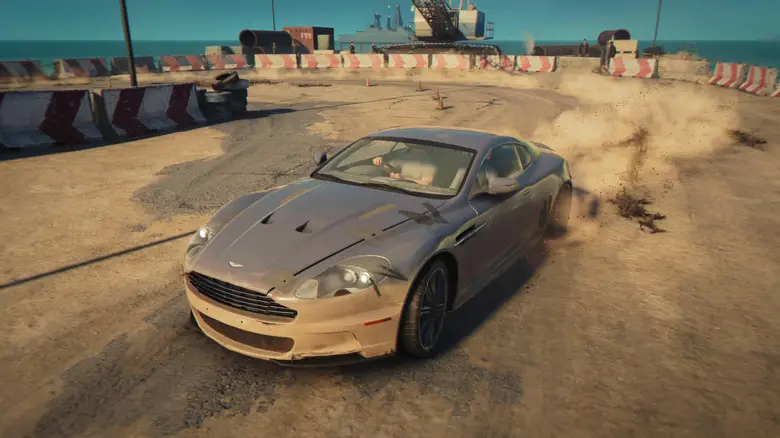
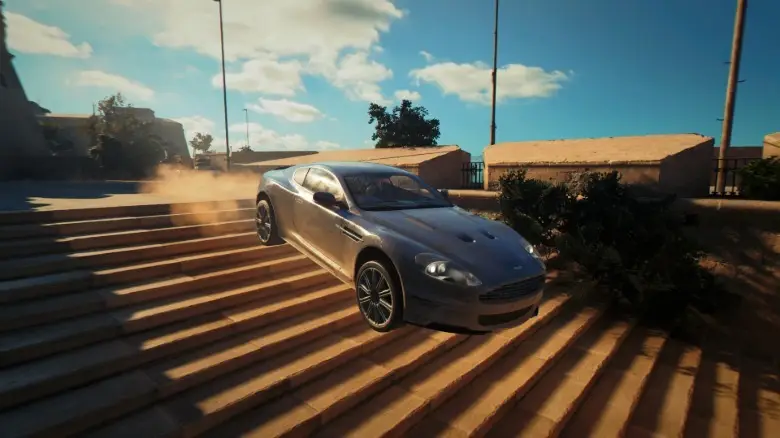
Bond takes the DBS around a training course, crashing through boxes and jumping down staircases. The sequence is brief, but it gives players an early taste of the game’s approach: recognisable car history, loose handling and stunts that feel made to be played rather than watched. The car choice also points back to the Daniel Craig films, where chases often felt rougher and more physical than the polished set pieces associated with earlier Bond eras.
The contrast between the car’s battered state and its famous lineage is a neat introduction. It makes the DBS feel like a piece of Bond history that has been put to work, rather than a pristine exhibit. And because the game asks the player to drive it, the reference lands through action instead of a passing namecheck.
The quiet drive matters, too
A few missions later, Bond and fellow trainees arrive at the Grand Carpathian Hotel in Slovakia in a 2007 Jaguar XJ. Bond is dressed as a chauffeur, and the scene plays out at a measured pace on a winding mountain road. There’s no race to win and no shortcut to find. The car carries the team toward the hotel while they discuss the mission and fill in the story.
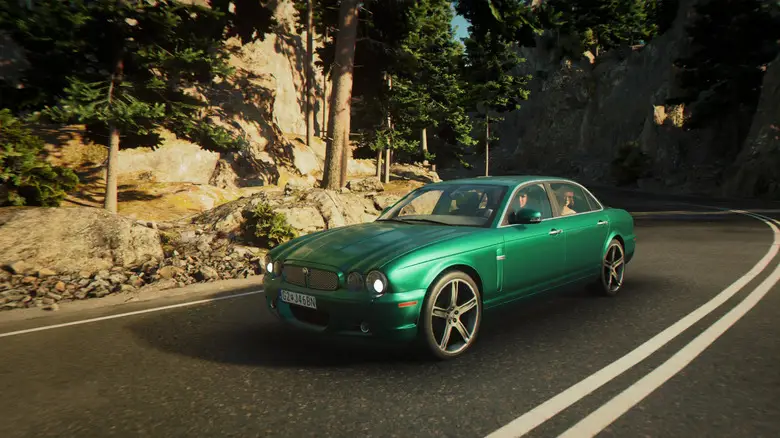
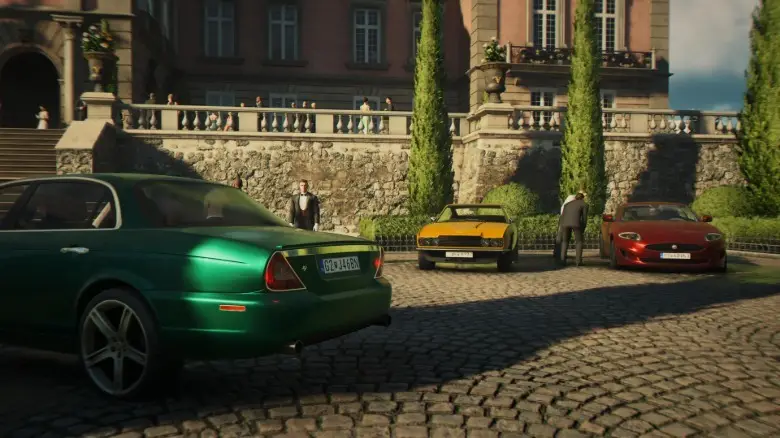
That kind of playable transition is a smart fit for a game built around action. A conventional cutscene could deliver the same information, but driving gives the player time to take in the setting and remain present while the conversation unfolds. It’s the car equivalent of a walking dialogue scene: a controlled stretch of movement that gives the characters room to speak. With photo mode now available, the slow drive also offers a chance to stop and frame the XJ against the mountain road.
Poulsen said the team wanted the vehicle cast to include what he called “sleeper cars” alongside the expected high-profile machines. The XJ fits that brief. It’s not an exotic supercar or a vintage showpiece, but a particular kind of understated luxury sedan. During a visit to Jaguar Land Rover’s headquarters in Gaydon, the team looked through the heritage collection, restoration facility, prototypes and rare cars, including the XJ220. They settled on this XJ because it suggested old money without looking flashy or old enough to be a period piece.
The selected car has a later facelift, green paint over a cream interior and five-spoke wheels. That level of specificity gives it a place in the story’s visual language. It also reflects the developers’ wider aim: satisfy players who recognise the expected badges, while rewarding those who notice why a less obvious model suits the scene.
Jaguar Land Rover and Aston Martin were involved early in development, Poulsen and Vega said. For Vega, the Bond vehicle lineup works like a carefully assembled ensemble. The game runs for around 18 hours, so the developers wanted its cars to carry the same sense of selection that a film’s vehicle cast can. The XJ is one of the quieter choices, but it helps make the world feel considered.
The same principle applies in Mauritania, where Bond and his mentor travel in a modified Land Rover Defender. Players take the SUV across the terrain and do some light rock crawling before reaching a city built into a ship graveyard, ruled by Bawma, played by Lenny Kravitz. The Defender helps introduce the place and the people before the mission turns more intense. Bond later gets back behind the wheel for another stretch of exploration, then escapes with help from a Series II pickup.
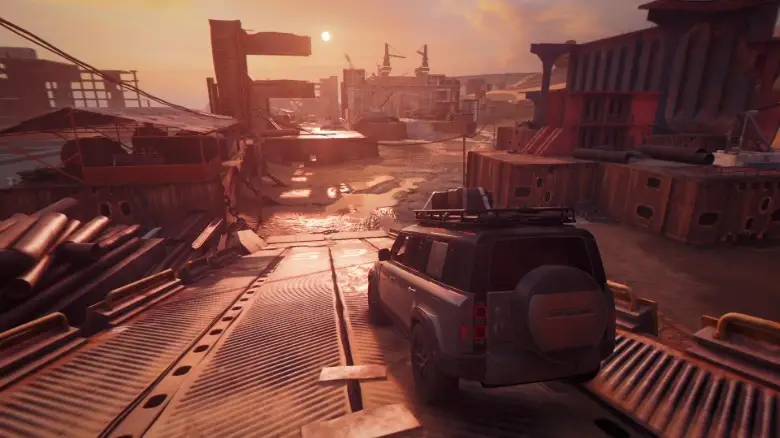
These scenes give the vehicles a practical role in the storytelling. They take Bond through locations and let the game ease into what comes next. The quiet driving sections may not deliver the immediate rush of a chase, but they help the action feel like part of a wider journey.
Classic Aston Martin, all-out chase
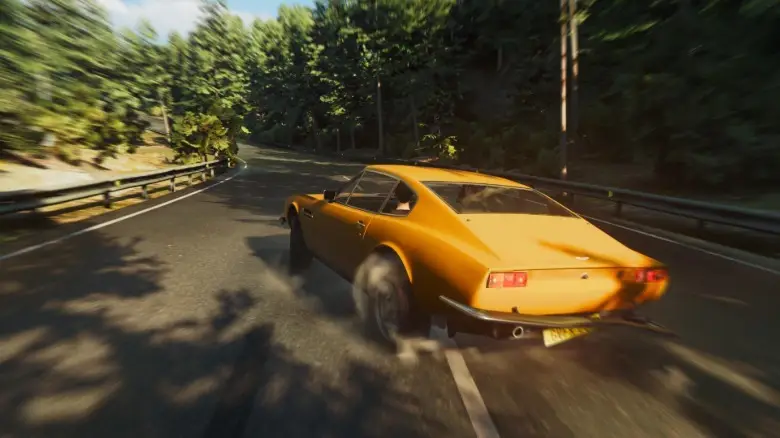
The hotel mission shifts gears when Bond pursues someone who has taken a second-generation Jaguar XKR. He breaks into and hotwires a Bahama Yellow 1970 Aston Martin DBS, a model linked to On Her Majesty’s Secret Service and a colour associated with The Persuaders. A mysterious passenger joins him, and Bond starts the chase with a flirtatious exchange before the driving takes over.
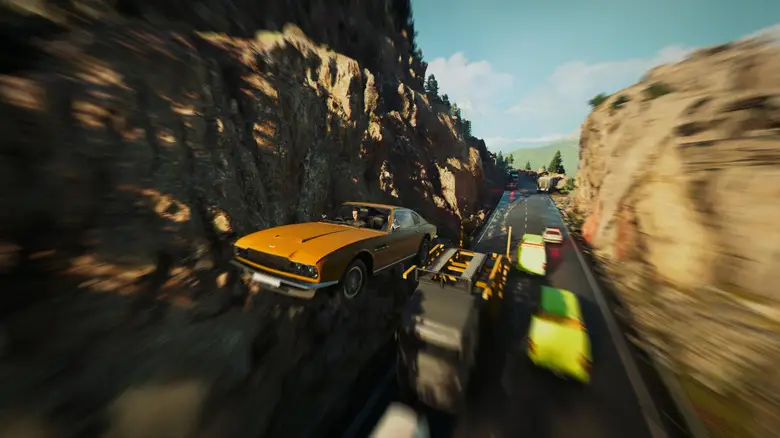
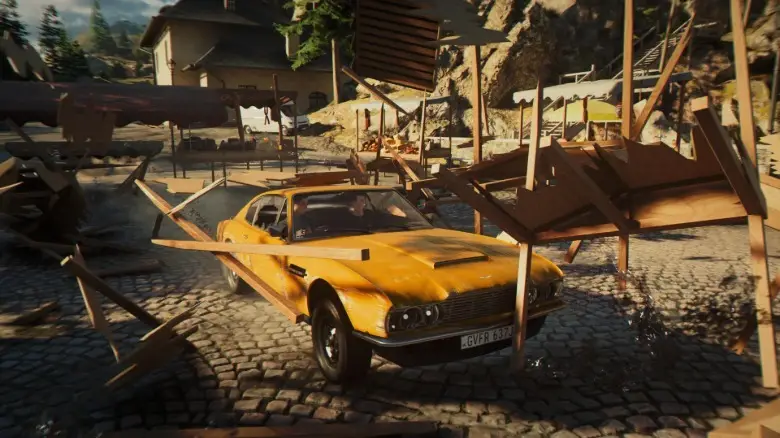
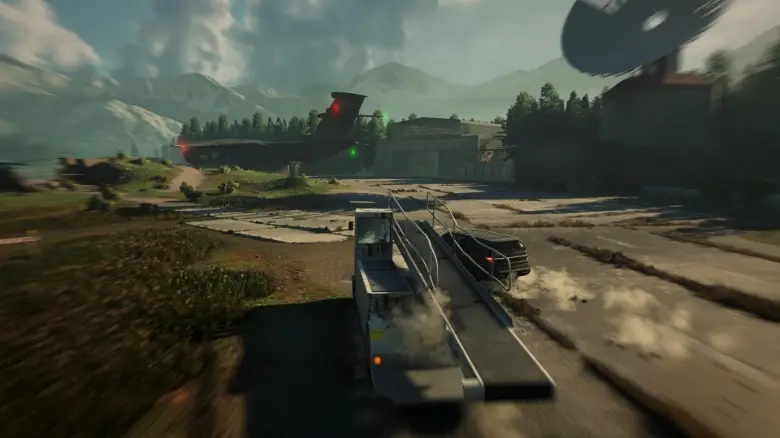
The route is laid out, but players have several chances to make it their own. They can cut across a muddy field to get around logging trucks, jump canals and drive through a farmer’s market. Traffic and other obstacles make the pursuit demanding at times. The big payoff comes when Bond drives the DBS onto a transport truck and uses it as a ramp. It’s an audacious stunt, and the car’s damage model helps sell the cost: by the end, the Aston is badly beaten up even if the player tries to drive carefully.
The sequence also shows how the game layers one vehicle moment onto another. The chase ends, but Bond immediately faces a firefight at an airfield. He takes control of an airport stair truck, uses it to reach the wing of an escaping cargo plane, then fights aboard as it takes off. The escape continues with Bond falling from the plane and trying to avoid debris while locating a parachute. The player stays in control through much of the escalating sequence.
Cars also function as part of the environment during combat. When more enemies arrive by vehicle, players can shoot at their cars and damage them until fuel or oil leaks make them easier to blow up. Some vehicles can be hacked to trigger alarms or activate equipment such as smoke screens. Vega said those interactions nod to gadgets that appear in Bond films but rarely get a chance to do anything on screen. Here, the player can put them to use.
When the work trucks take over
Two of the game’s standout vehicle sequences don’t centre on cars at all. In London, Bond commandeers a garbage truck and drives it through the streets. Later, he takes over a huge mining truck in a quarry in Vietnam to escape and help his friends. Both are short sections within longer missions, but their size and blunt practicality make them feel like signature Bond moments.
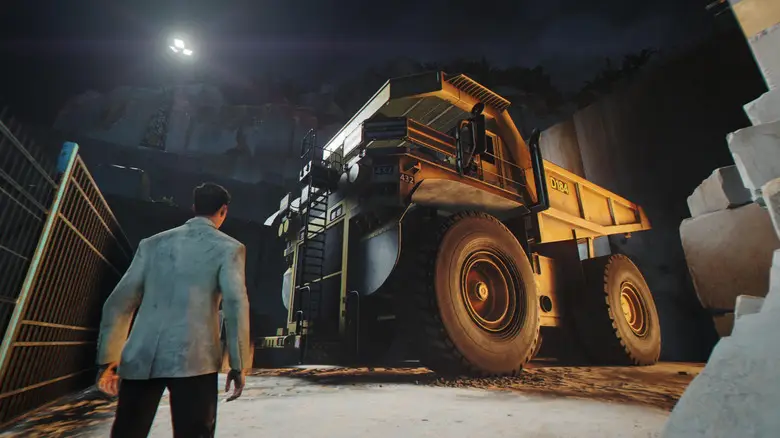
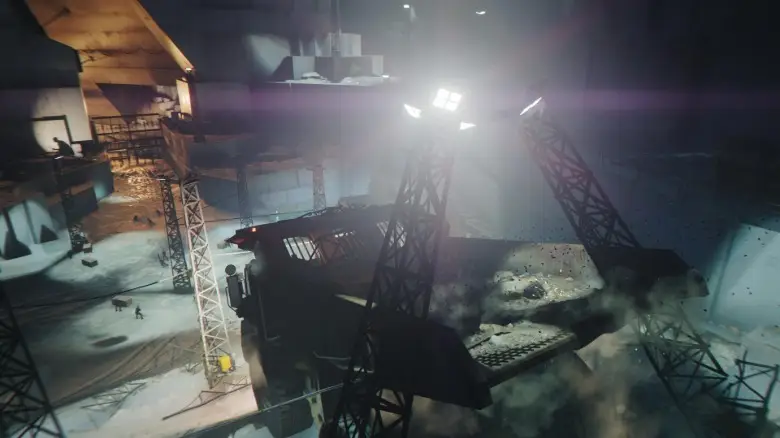
The mining truck sequence grew out of the level as it was being built, Vega said. Developers had placed the vehicles in the quarry to establish its setting; the idea of letting Bond drive one followed from the team’s instinct to keep adding to a promising moment. Poulsen described it as an idea that gained momentum as the developers saw the player moving through the space. The trucks first act as part of the scenery, quietly suggesting what might be possible before one becomes the solution to the escape.
That approach suits the game’s focused design. First Light isn’t open world, and players aren’t presented with every vehicle they could imagine driving. Poulsen said the team chose a specific group of vehicles and used the level to build anticipation around them. A truck can appear in the background, become part of the setting and eventually turn into the thing Bond needs. The payoff works because the game has already guided attention toward it.
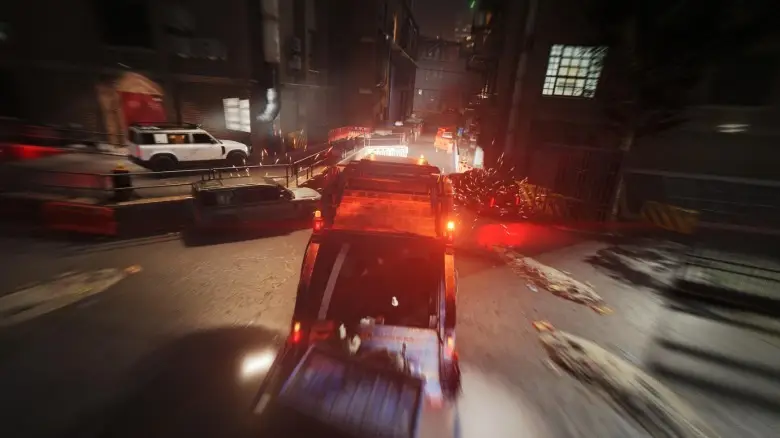
The garbage truck escape takes longer to set up. Vega described resourcefulness as one of Bond’s defining traits, and the mission builds toward a moment where he pushes straight through the obstacles in his way. That idea was present in the script: Bond would get into the truck in an unexpected fashion and use it to make a direct path through the city. Vega sees that simple, determined route as a strong expression of the character across several Bond eras.
The mission begins with a deliberate frustration. Bond sits in London traffic in a Range Rover SV, talking with his boss. The player can’t simply shove other cars aside; a parking sensor warning appears, and the game guides the Range Rover back into its lane. Vega said the scene is meant to put Bond in the mood of a Londoner who has been told to stand down and has been left running errands in a powerful SUV.
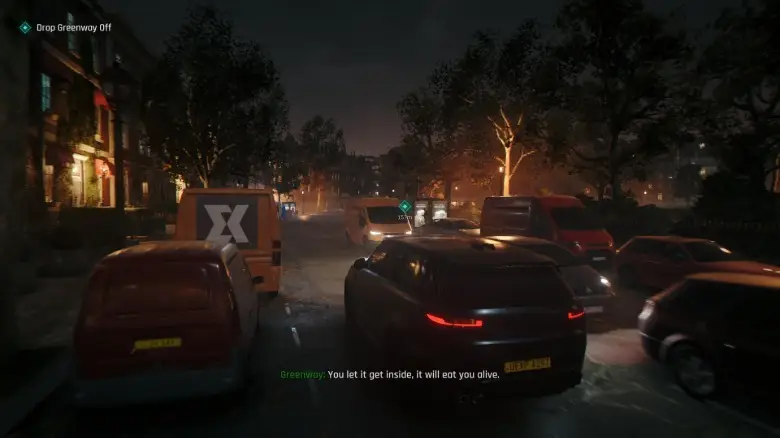
That restraint makes the later release more satisfying. After roughly an hour and a half, the player finally gets to hurl the garbage truck through the wall and keep going. The contrast is the point: Bond begins stuck in traffic, unable to use the Range Rover’s power, then gets an improbable vehicle that lets him turn frustration into forward motion. It’s a simple change in pace, but a carefully staged one.
Q’s Valhalla is a delayed reward
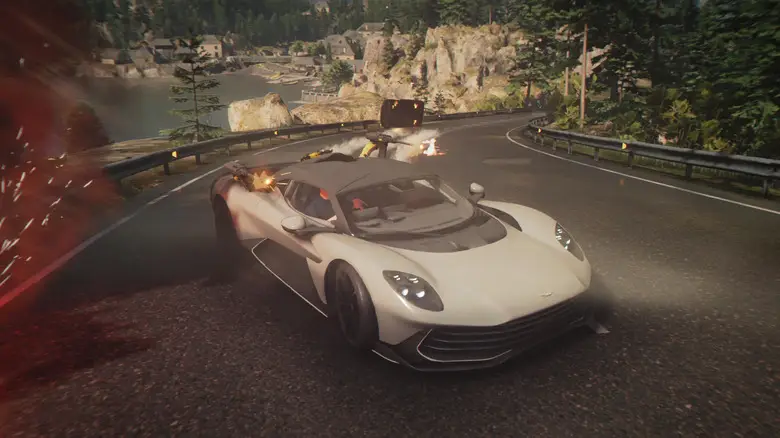
The Aston Martin Valhalla is the game’s obvious hero car, yet Bond can’t drive it when it first appears. At an early visit to Q’s lab, the car sits under a cover while robots work on it. Q doesn’t hand over the keys. Bond isn’t yet a full 00, and the car is being prepared for another agent.
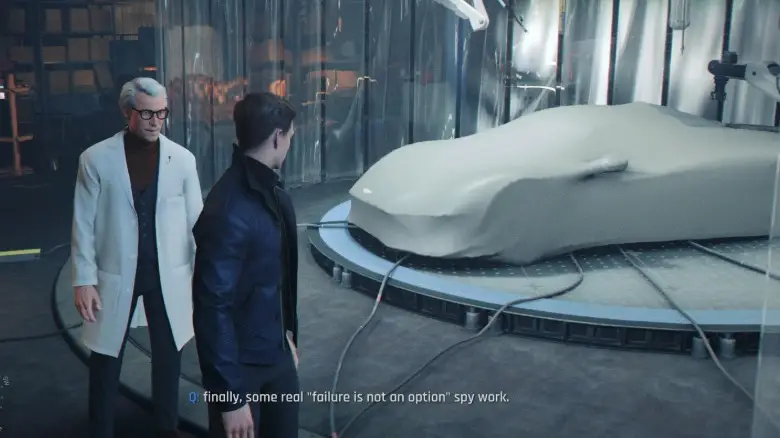
Vega said that delay helps put the player in Bond’s position. The relationship between Bond and Q involves giving Bond the tools he needs while holding something back. Letting players see the Valhalla before they can drive it turns the car into a promise. For much of the game, the natural question is when Bond will finally get a turn at the wheel.
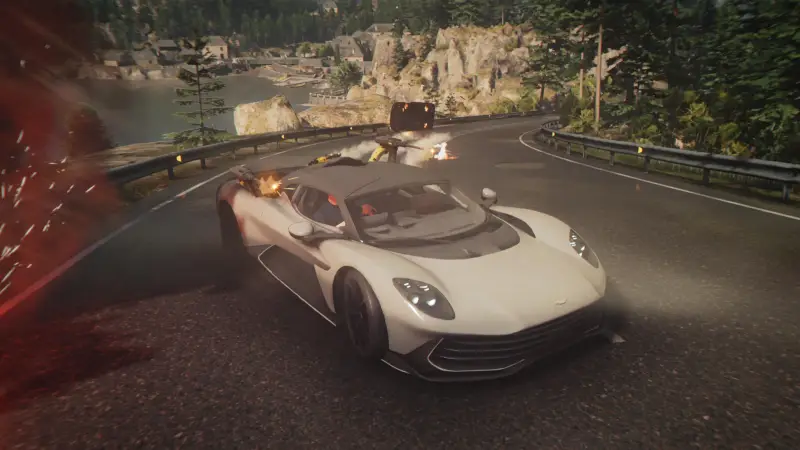
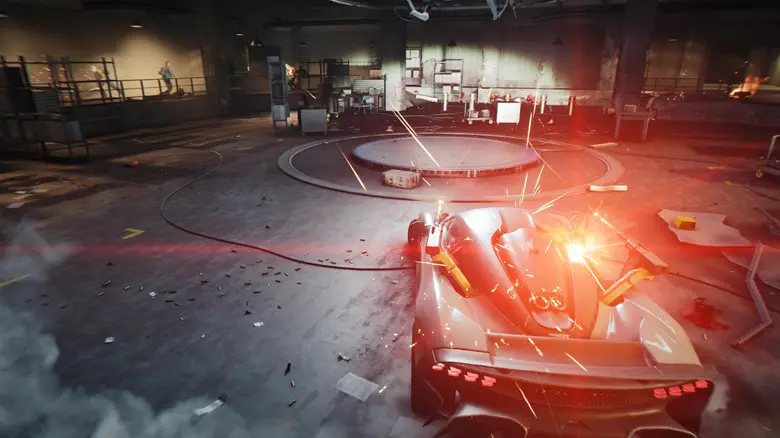
That moment arrives late, when Bond escapes a siege on the lab in the Valhalla. He uses its machine guns and rockets while spinning through the room, taking out enemies and wrecking the surroundings. The playable part is short, then gives way to a cutscene with comic business involving the car’s voice assistant. It’s a compact burst of chaos, but it pays off the long wait.
The developers started work on the Valhalla before the production car was ready, using CAD files from Aston Martin to build their version. The design challenge was to balance credible detail with the exaggerated fantasy expected of a Bond gadget car. Because the game uses a third-person camera behind Bond and the vehicle, putting weapons in the headlights or front end would make them difficult to see. The Valhalla’s short, low nose also left little room for that treatment.
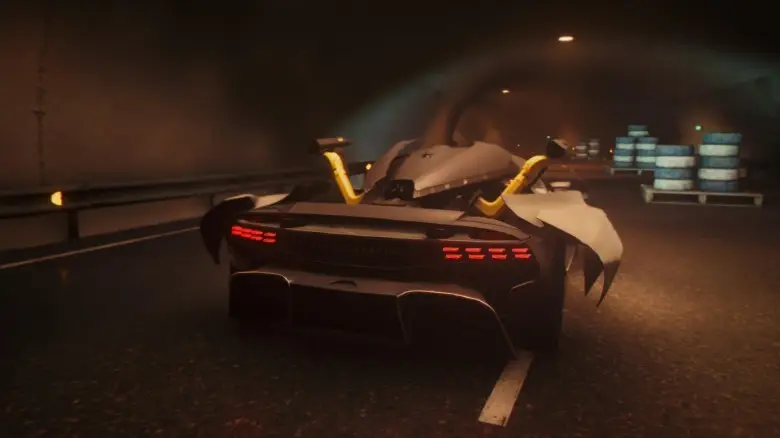
Instead, the team concentrated on the rear bodywork. Concept artists explored ways for the panels to open or fold, with some designs taking inspiration from a beetle’s wings. The finished concept has the rear quarter panels swing out at an angle to reveal an auto-aiming machine gun on an arm on either side. Aston Martin reviewed the proposals, and Poulsen said the company approved the direction after seeing how the team had considered the car’s shape and internal space.
The result is an especially clear example of the game’s vehicle design priorities. The weapons need to read from the player’s camera, and their deployment should feel like an extension of the Valhalla’s form. The details are deliberately fantastical, but they have been placed with the car’s proportions in mind.
The Valhalla gets its driving time
For players who want more time with the Aston, the Valhalla Protocol DLC adds tactical simulation time trials on a course designed for the car. Players can run it with weapons and obstacles switched on or stick to the time trial challenge. With weapons active, machine guns and rockets can take on obstacles, drones and other vehicles, giving the course a heightened, arcade-like feel that recalls Bond games such as Spy Hunter.
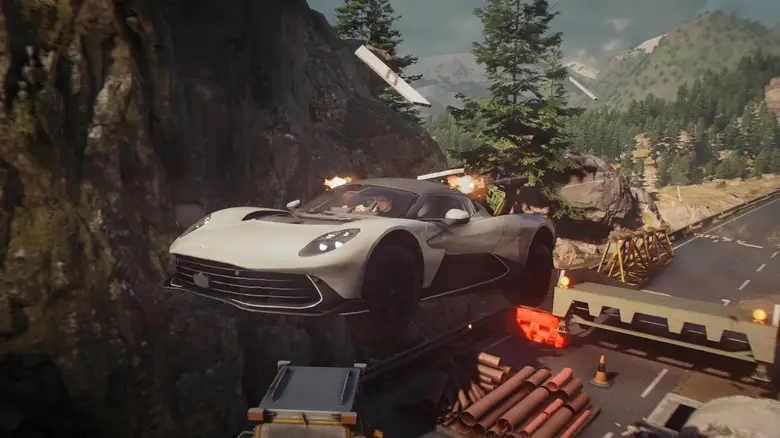
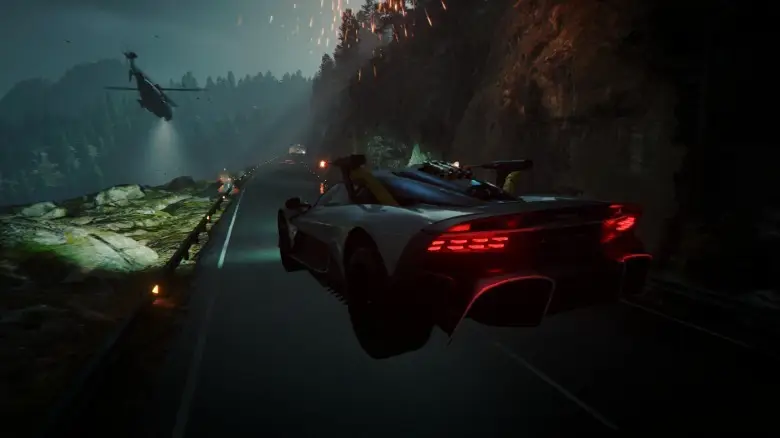
The weapons-off run still asks for precision. Ramps and other features on the road complicate attempts to reach the best time targets, so the challenge isn’t simply to keep the accelerator down. The DLC gives the Valhalla the sustained driving role the main story holds back.
Vega said the team had planned that follow-up early. The Valhalla’s brief appearance in Q’s lab was designed to build expectation, and the playable sequence there was meant to be a climax to the gadget experience rather than a full chase. The story’s final pursuit is personal, he explained, so a large car chase would have felt wrong at that point. The post-launch trials provide a different place for players to enjoy the car’s speed and equipment.
The game also gives the Valhalla a fuller Bond role than it received in No Time to Die. Aston Martin showed the concept in early 2019, and the car was initially expected to have a larger part in Daniel Craig’s final Bond film. The movie was due in April 2020 and eventually arrived in September 2021, after Aston had shown a production version of the Valhalla with a substantially different design and powertrain from the concept. In the released film, the concept appears briefly in the background of Q’s lab.
First Light makes that earlier glimpse into a playable idea. The car’s delayed introduction, its brief lab escape and the later time trials each serve a different purpose: anticipation, story payoff and sustained driving. Together, they give the Valhalla more room to make an impression.
Vehicle choices hint at Bond’s wider appeal
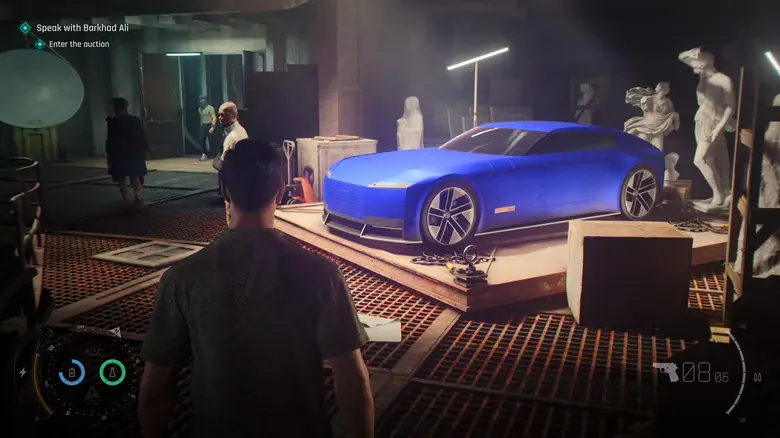
The game’s vehicle cast also includes a bright blue Jaguar Type 00 concept, seen when Bond walks through the ship graveyard with Bawma. Poulsen said the team saw a Type 00 prototype while visiting the Jaguar Land Rover design studio, an experience he described as a dream for a car enthusiast. The appearance is brief, but it puts a striking design into Bond’s world without turning the moment into a chase.
Poulsen and Vega also pointed to film chases that show how varied a Bond vehicle scene can be. Poulsen singled out the opening of Quantum of Solace for its tense, choppy rhythm. Vega favoured the GoldenEye sequence where Bond drives with Caroline, an MI6 employee tasked with assessing him. For Vega, the scene works through dialogue as much as driving: the exchange turns a chase into a conversation, with a low-key setting and a playful dynamic.
He also praised the contrast in GoldenEye between precise driving and the later spectacle of a tank pushing through a wall. Bond’s vehicle scenes can move from careful handling to sheer force, and the gap between those modes is part of their appeal. Vega’s fondness for gondolas and hovercrafts points to the same quality: the vehicles don’t always need to be plausible choices to be memorable.
That balance is where 007 First Light is strongest. The battered DBS, the chauffeur-driven Jaguar, the Defender and the Range Rover ground the game in recognisable vehicles and settings. The yellow DBS chase, the garbage truck and the mining truck then push into bigger, less expected set pieces. The Valhalla connects those sides through a car that looks like a familiar Bond fantasy but gets its own carefully staged reveal.
For players who care about cars, the details make the vehicle lineup worth watching. For everyone else, the changing pace is what carries the experience: quiet drives give characters room to talk, while a work truck can become the best vehicle in the mission at exactly the right moment. The game’s Bond feeling comes from that surprise as much as from its Aston Martins.