JLOC Weighs Lamborghini Huracán and Temerario Options for 2027 SUPER GT Season
Electric Vehicles Jamie Klein 962 reads
JLOC plans to buy its first Temerario but hasn’t decided whether to race it, as Huracán support continues into 2027.
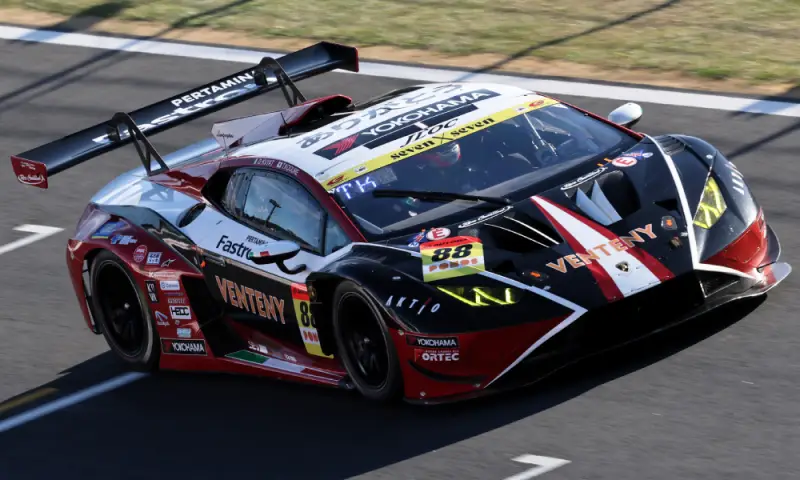
Photo: SUPER GT
JLOC has secured a place in Lamborghini’s Temerario production queue, but buying the new GT3 car won’t automatically put it on the team’s SUPER GT grid. Team boss Isao Noritake is still weighing a move from the familiar Huracán GT3 EVO2, with Lamborghini’s continued support for that model giving the team another season to consider its options.
JLOC’s decision could shape its lineup as well as its car choice. The team could keep running two Huracáns or split its effort between a Huracán and a Temerario. Noritake expects to discuss the alternatives with Lamborghini during a trip to Italy, where he also wants an update on how the Temerario is developing.
Familiarity versus a new car
JLOC has years of experience with the Huracán platform, and Noritake sees that knowledge as a practical advantage. He says the team’s mechanics know the EVO2 “inside out” and describes the car as fully matured. A familiar package can give a team a well-understood starting point when preparing and maintaining its cars; switching to a newer model means learning a different platform while assessing its pace.
Noritake also believes the Huracán remains capable when run to SRO standards, despite what he described as recent discussion about balance of performance. “There’s been a lot of noise lately regarding the BoP, but I still believe that if we run the [Huracan] according to SRO standards, it has more than enough potential,” he said.
That confidence matters because Lamborghini’s plan to transition to the Temerario had initially raised the prospect that factory support for the Huracán would end after 2026. Lamborghini motorsport boss Andrea Reggiani has since confirmed that support will continue in 2027, including technical assistance and spare parts. That gives JLOC the option of extending its current approach while it evaluates the incoming car.
The Temerario is already showing progress, according to Noritake, who said it appears to be getting faster as development continues. Still, a car’s pace during development is only one part of the decision for a team. JLOC also has to judge whether and when the new model fits its plans, while taking account of the experience it has already built around the Huracán.
The Temerario is in the team’s plans, but its role isn’t set
Noritake says JLOC will buy a Temerario and that delivery arrangements are in place. The team’s position in the production queue has been established, and its first example is expected in the coming months. Whether that car races is a separate question: Noritake says he is still considering whether to put it into competition.
His meetings in Italy are the next point at which that choice may become clearer. “I suppose that’s when we’ll figure things out — I’m sure Lamborghini has its own thoughts as well,” he said. He plans to check the car’s current status and discuss the team’s next steps with the manufacturer. Until then, the purchase commitment signals interest in the Temerario, while the 2027 race program remains open.
The practical choice is therefore not simply between an old car and a new one. JLOC can keep a proven Huracán in service with support available, bring in a Temerario, or field one of each. Those paths carry different demands for a team already familiar with the EVO2 and still tracking the newer car’s development. Noritake hasn’t said which configuration JLOC will choose.
Kvyat’s 2027 place is also unresolved
The car decision is tied to the driver lineup. Lamborghini has said that access to one of its factory drivers, such as Daniil Kvyat, would depend on JLOC adopting the Temerario. Noritake didn’t commit to bringing Kvyat back for 2027, saying his contract with Lamborghini means the question needs to be discussed with the marque.
Kvyat joined JLOC for his first season of GT3 competition and helped the team end a two-year wait for a win. He and Takashi Kogure took victory at the Motegi season-ending double-header, lifting JLOC to fourth in the GT300 standings. Noritake praised Kvyat’s pace and consistency, saying that he gets faster with more time behind the wheel and that his lap times have been “incredibly consistent.”
The team boss also said he wished he could have given Kvyat a better car in which to show his ability. He noted that Kvyat had been surprised by aspects of the GT300 category, a comment that points to the adjustment involved in moving into the series from other racing.
Kvyat, 32, hasn’t settled his own plans either. He said he enjoys racing in Japan and called the competition strong. After learning the circuits during his first year, including Motegi, he said he would welcome another season but needs to consider his options.
JLOC’s next decision will connect its car choice with its access to a factory driver. For now, the team has a confirmed path to acquiring the Temerario, continued support for the Huracán and no public commitment to either model for 2027. Noritake’s meetings in Italy should help establish whether JLOC brings its established EVO2 experience forward, begins racing the new car, or runs both.