A.P. Moller Capital Adds Portek and Euroports to Its Port Portfolio
Electric Vehicles Stuart Chirls 624 reads
The proposed deals add seven Portek terminals and a majority stake in Euroports, expanding A.P. Moller Capital’s reach across three continents.
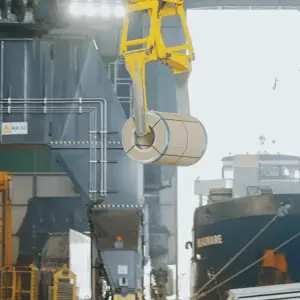
A.P. Moller Capital’s proposed purchases of Portek International and a majority stake in Euroports would broaden its port holdings across Europe, Africa and Asia. Together, the businesses add container, vehicle, multipurpose, bulk and breakbulk operations, giving the Danish investment manager a wider role in the infrastructure that serves industrial and agricultural supply chains.
The two agreements were reached less than three weeks apart. On October 15, A.P. Moller Capital agreed to buy all of Singapore-based Portek from Japan’s Mitsui & Co. through its Emerging Markets Infrastructure Fund II. On September 28, it had agreed to acquire control of Euroports through a separately managed investment vehicle. Financial terms for either transaction were not disclosed, and both remain subject to closing conditions and approvals.
Two different terminal networks
Portek brings interests in seven terminals spread across Algeria, Gabon, Indonesia, Latvia, Malta and Vietnam. Its operations cover containers, vehicles and multipurpose cargo, alongside port engineering and maintenance services. That mix gives the business exposure to both terminal activity and some of the work needed to keep port facilities operating.
For A.P. Moller Capital, Portek’s footprint would add operating businesses across three continents. The company’s local teams and varied cargo operations offer a different profile from a portfolio centered on one port or one commodity. Its range of locations also means that the value of the addition rests on multiple individual trade flows and operating markets rather than a single hub.
“Portek is a strong fit with our investment strategy and active owner philosophy,” said Semih Gokmen, a partner at A.P. Moller Capital. He described it as an established operator with a diversified portfolio serving important trade flows, supported by experienced local teams.
Euroports adds a larger European network focused on bulk and breakbulk. The proposed majority stake would bring more than 50 deep-sea and inland terminals in 10 European countries and China into the group’s portfolio. Euroports handles more than 70 million metric tons a year, serving supply chains connected to agriculture, manufacturing and other industries.
Among its named locations are Antwerp-Bruges in Belgium, Rostock in Germany, Venice in Italy and Port-la-Nouvelle in France. Its combination of seaports and inland terminals gives it reach beyond coastal facilities, connecting cargo handling with inland logistics. For customers moving bulk materials, that network can matter at more than the point where cargo arrives by ship: storage, transfer and onward movement are also part of the chain.
Expansion through operating companies
The transactions extend a strategy of building exposure to essential trade infrastructure by taking stakes in established operators. They follow A.P. Moller Capital’s investment in Spanish port and logistics company Berge. The approach puts the manager alongside businesses with existing terminal operations, customer relationships and local operating teams, while adding capacity in different regions and cargo categories.
Euroports’ current shareholders include Belgian investment institutions SFPIM and PMV, which will remain shareholders under the proposed ownership arrangement. The incoming group plans to support management as it expands Euroports’ activities, geographic footprint and customer base. The stated plan is to retain the company’s existing governance framework and strategic direction, with management continuing to lead its development.
A.P. Moller Capital chief executive Kim Fejfer framed the Euroports deal around the role of dependable supply chains and trade flows in supporting economic activity. He pointed to the company’s infrastructure as serving European industry, food systems and manufacturing. The breadth of Euroports’ cargo and terminal network makes that connection tangible: its facilities handle materials moving through several sectors, rather than serving only container shipping.
How it fits with Maersk’s port presence
The wider A.P. Moller group already has a U.S. port presence through Maersk subsidiary APM Terminals, which operates container terminals in Los Angeles, Elizabeth, New Jersey, Mobile, Alabama, and Miami. APM Terminals has also made an initial $500 million investment commitment for development at Louisiana Gateway Port.
Those container terminal interests provide context for the new agreements, though Portek and Euroports broaden the portfolio into additional cargo types and operating regions. Portek’s vehicle and multipurpose facilities and Euroports’ bulk and breakbulk network complement a container-focused footprint. The proposed Euroports stake, in particular, would add a large European terminal system with inland as well as deep-sea sites.
The deals would therefore increase the scale and variety of infrastructure managed across the group’s port-related holdings. For shippers and cargo owners, the practical significance will depend on how the businesses operate after closing: terminal capacity matters alongside the services, connections and local execution that move goods through each network. With terms undisclosed and both transactions still conditional, the next concrete measure will be whether the proposed ownership changes close and how management carries out the planned expansion.