Five U.S. Factory Projects Top $1.6 Billion, Adding Capacity for Trailers, Cooling and Beverages
Electric Vehicles Noi Mahoney 647 reads
Five manufacturing projects across five states represent more than $1.6 billion in disclosed investment, with new capacity for transport equipment, cooling systems and drinks.
More than $1.6 billion in disclosed factory investment is spread across five projects in Illinois, Texas, Georgia, Kentucky and Arkansas. The mix matters to freight and vehicle businesses: it includes commercial trailers, school buses and large cooling equipment, alongside beverage production and distribution. Three projects account for more than $1.5 billion and plan a combined 5,625 jobs.
The projects are at different stages. Factories in Kentucky and Arkansas have opened, while the Illinois and Texas plans are expanding or still in development. Their operating schedules will determine when new production translates into sustained flows of materials, components and finished goods.
Transport equipment leads the investment total
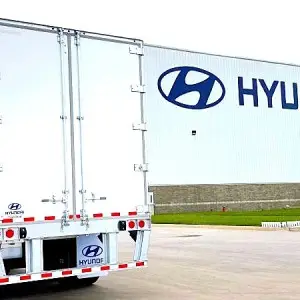
Hyundai Translead has raised its planned investment in two Will County, Illinois, facilities to $600 million, up from more than $450 million announced in March. Its planned hiring has also increased, from 2,500 to 3,750 full-time positions. The revised total includes an additional $150 million for a third production shift, which accounts for 1,250 of the added jobs.
The company makes dry van and refrigerated trailers, truck bodies and flatbeds. It hasn't identified which products will be built at the Illinois sites, so the precise mix of freight and supply needs remains unclear. More production capacity could mean added demand for materials and components, followed by outbound trailer shipments, but the scale and timing will depend on the product lines selected and the pace of the ramp-up.
Hyundai Translead says customer interest in the Illinois operations is growing and that the extra capacity is intended to serve the transportation industry as it recovers. For truck operators and suppliers, the shift from two to three production shifts is the more concrete change: it points to a larger planned workforce and a higher production ceiling than the company's earlier plan.
Carrier Global plans to invest more than $600 million over the next three years in a manufacturing and engineering center at AllianceTexas in Fort Worth. The site will cover more than 1 million square feet and is expected to begin operations in 2027. Carrier plans 1,500 jobs there.
The plant is slated to make air-cooled and water-cooled commercial chillers, used in data centers, hospitals, schools and industrial facilities. The project also includes engineering laboratories and workforce development programs. Carrier links the expansion to demand for energy-efficient cooling and a record backlog in its commercial heating, ventilation and air conditioning business. Its combination of production and engineering space gives the Texas site a broader role than a factory floor alone, though the company hasn't provided output targets.
Georgia plant adds four school bus power options
Blue Bird plans to spend about $300 million on a school bus factory in Fort Valley, Georgia, and create 375 jobs over three years. The company will convert a former motorhome manufacturing site at 401 Wanderlodge Way into a 1-million-square-foot facility. Construction is scheduled to start in the first quarter of 2027.
The plant is planned to produce Type C school buses with diesel, gasoline, propane and electric powertrains. That range gives the facility a place in several segments of the school bus market, although no planned production volumes or split among powertrains have been disclosed. Blue Bird, founded in 1927, already employs more than 1,900 people in Georgia.
Kentucky and Arkansas factories are open
Niagara Bottling has opened a $141 million beverage facility in Elsmere, Kentucky. The 436,000-square-foot site at the C5 Airport East Logistics Center combines production and distribution operations, with 60 full-time jobs planned. The investment was first announced in September 2024 and has since grown by more than $11 million. Construction began in early 2025 on a 52-acre property developed by CORE5 Industrial Partners.
Niagara makes bottled water and other drinks for retailers and consumer brands, including sparkling and flavored water, sports drinks and ready-to-drink beverages. Bringing production and distribution together at the site may support outbound shipments of several product types, though the company hasn't provided production or shipment volumes.
Primo Brands opened a 200,000-square-foot factory in Hot Springs, Arkansas, on Oct. 14. It's the company's first new manufacturing facility since Primo Brands was formed through a 2024 merger. The company describes its spending as a multimillion-dollar investment but hasn't disclosed an exact amount or the number of jobs created.
The factory will produce Mountain Valley spring and sparkling water. It has a high-speed retail line, two large-format production lines, and dedicated warehouse and logistics space. Primo says the added capacity is intended to meet higher demand for premium bottled water and support distribution to retailers, restaurants and consumers nationwide. Its larger-format lines and warehouse make the site relevant to both production and distribution, although no capacity figures are available.
What the projects mean for freight
The five sites span different goods and operating models, from heavy transport equipment to packaged drinks. That variety makes the total investment a useful marker of planned manufacturing activity, but not a direct measure of freight volume. Hyundai Translead and Carrier have the largest disclosed plans; Niagara and Primo have facilities already open, while Blue Bird's build is scheduled to start in 2027.
For carriers and suppliers, the practical signals to watch are plant start dates, hiring progress, product mix and production rates. Those details will show when announced capacity begins generating regular inbound loads and outbound deliveries. For now, the projects point to a wider base of U.S. production, with the clearest near-term distribution additions coming from the two beverage facilities already operating.