Amazon’s First North American Union Contract Takes Effect at a British Columbia Warehouse
Electric Vehicles John Kingston 343 reads
A three-year imposed contract sets pay and severance terms at Amazon’s Delta facility, while leaving several workplace rules unchanged.
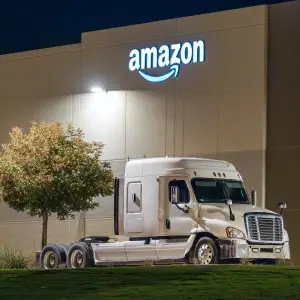
Amazon’s first collective agreement with a union in North America covers workers at its Delta, British Columbia, fulfillment center. The three-year contract, set to run through November 2029, came after an arbitration process rather than a negotiated settlement. Its terms bring a new labor arrangement to one Amazon facility while leaving several existing workplace rules in place.
The contract’s path is central to the dispute over what the deal represents. Unifor says workers secured a first contract after the British Columbia Labour Relations Board recognized Unifor Local 114 and ordered binding arbitration. Amazon says the process moved ahead without workers’ ballots being counted, including ballots from a later effort to remove the union. The company has said it will continue to challenge the decisions.
Pay rises over the contract term
Unifor says hourly wages at the Delta site will reach CA$29 by the end of the contract. Amazon’s account gives the schedule: no wage increase in the first year, followed by increases of 3.25% in October 2027 and 3.5% one year later. Those figures describe different aspects of the pay outcome: the union states the eventual hourly rate, while Amazon identifies the timing and size of the increases.
The deal also provides severance protections of up to 18 weeks, according to Unifor. Employees with 10 years of service will receive an additional week of vacation. Amazon says the contract leaves health benefits unchanged, along with the way attendance is measured. It also does not create a right to transfer to another warehouse.
Temporary and seasonal employees remain under their existing arrangements, Amazon says. That provision matters in a large warehouse workforce, where the distinction between regular and contingent employment can affect who receives the contract’s protections. The available details do not specify how many workers are covered or give a full breakdown of their pay bands, so the stated CA$29 rate should be read as the end point cited by Unifor rather than a starting wage for every employee.
Arbitration followed a contested organizing process
Unifor says the provincial labor board recognized the union in July 2025 after finding that Amazon had hired additional staff to hinder organizing and had conducted an extensive effort against unionization. The following month, the board ordered binding arbitration, concluding that Amazon’s conduct had affected the parties’ ability to reach an agreement, according to the union.
Amazon’s account begins with the organizing effort in 2024. J. Ofori Agboka, the company’s vice president of People Experience and Technology, wrote that Unifor said it had enough worker support to seek a union vote. Amazon says a board officer disagreed with that assessment, but the board ordered a vote. The results were not disclosed, according to Agboka.
After the board recognized Unifor, Amazon appealed, arguing that employees’ views should be heard. The company says the representation decision remained in place and that a later effort to decertify the union also produced no disclosed results. Amazon has further said that a legal action brought by workers opposed to the union had not advanced in the British Columbia Supreme Court.
Mediation did not produce a settlement, Amazon says. The board then directed the parties to arbitration, leaving an arbitrator to determine the contract’s terms. That process explains why both sides refer to the result as an agreement even though the terms were not reached through ordinary bargaining. The two accounts differ sharply on the fairness of the process, but agree that arbitration produced the three-year contract.
A first contract amid other unresolved efforts
The Delta deal stands apart from other organizing efforts at Amazon facilities in North America. Workers at a Staten Island warehouse formed a Teamsters-affiliated union after a grassroots organizing effort in 2022, but Amazon has refused to bargain with that unit. The dispute has proceeded in federal court. Organizing efforts at other facilities, including Bessemer, Alabama, have not produced a comparable contract.
Separate union efforts have also focused on delivery workers employed by Amazon’s Direct Service Providers. Those workers are employed by delivery companies rather than Amazon, and efforts to organize them have not generally resulted in recognition by those companies. One California provider recognized a union, but Amazon later ended its contract with that provider. The workers have sought to have Amazon treated as a joint employer alongside the delivery companies, a question that remains part of the broader labor dispute.
Unifor, formed more than a decade ago through the merger of the Canadian Auto Workers and the Communications, Energy and Paperworkers Union of Canada, describes itself as Canada’s largest private-sector union. Its Delta contract gives the union a tangible workplace agreement with Amazon, while the terms preserve existing arrangements in several areas that can shape daily work.
For employees and other Amazon workers watching the outcome, the practical details are the staged wage increases, the added vacation for long-serving staff and the severance protections. The central question now is whether the contract remains in place as Amazon pursues further challenges. For its stated three-year term, the Delta facility will operate under an arbitrator-set agreement that marks a first for Amazon in North America.