Amazon Union Bargaining Dispute Puts Staten Island Warehouse Back in Court
Electric Vehicles John Kingston 468 reads
Amazon is challenging an order to bargain with the Teamsters over its Staten Island warehouse, while a separate dispute over delivery contractors remains open.
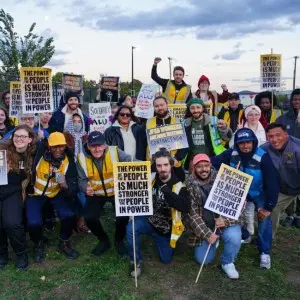
Amazon’s dispute over worker representation at its Staten Island warehouse has reached another court stage, with the company challenging an order to bargain with the union that won representation there. The case now turns on how the Fifth Circuit handles Amazon’s challenge to the certification process and a separate request for an added remedy.
The dispute concerns JFK8, where workers backed an independent union effort four and a half years ago. That union later aligned with the Teamsters as ALU-International Brotherhood of Teamsters Local 1. In April, the National Labor Relations Board ordered Amazon to negotiate with the union over a contract covering the warehouse workers.
Amazon and the Teamsters filed briefs in the Fifth Circuit on October 16. Their filings take sharply different approaches: Amazon concentrates on the board’s authority and the path it took to obtain court review, while the union’s 115-page brief revisits the history of the Staten Island organizing effort and its long-running disputes with Amazon.
Amazon’s route to court
Amazon says it has not bargained because it is seeking court review of the union’s certification and the April bargaining order. The company argues that an employer cannot directly ask a court to review a certification decision. Instead, Amazon says, it must refuse to bargain, face an unfair labor practice finding, and then challenge the certification as part of its appeal. That process is known as a test of certification challenge.
The company’s position makes the refusal to bargain part of the route to judicial review. A post on NLRB Edge, a blog written by Matt Bruenig, said the board had rejected Amazon’s arguments because the representation issues had already been, or could have been, raised in the underlying proceeding. The board also found no newly discovered evidence or special circumstances to justify reconsideration.
The two sides even differ on whether the Fifth Circuit needs to hear oral arguments. The union says the court could rule on the filings alone, but adds that oral arguments might help it address the issues. Amazon agrees that the case can be decided without them.
The union’s request for an added remedy
Alongside the bargaining order, the union has asked the court to require Amazon to read workers a notice describing their rights under the National Labor Relations Act at a meeting it calls mandatory. The board’s General Counsel had recommended such a reading, but the full board declined to impose it.
Amazon opposes the request on three grounds. It argues that the added remedy has no precedent in this kind of certification challenge, that the union has not shown it is warranted, and that it could become irrelevant if the Staten Island certification is set aside. The company also says the union’s effort involved threats, coercion and intimidation, and describes its result as narrow. The union has characterized its margin as nearly 11% of ballots cast.
The union argues that the court should not set aside the result if it accepts Amazon’s reasoning. Instead, it says, the matter should return to the board so it can provide further rationale for its decision. The remedies issue therefore sits alongside the broader question of whether Amazon must bargain.
A rare loss for Amazon
JFK8 remains a notable case for Amazon because it is the only facility where the company has lost an organizing drive. A later attempt at a separate Staten Island facility failed. Workers at Amazon’s Bessemer, Alabama, facility also rejected a drive in 2021, led by the Retail, Wholesale and Department Store Workers Union rather than the Teamsters.
Those different outcomes frame the stakes at JFK8 without resolving the current dispute. The Staten Island result produced a recognized bargaining relationship that Amazon continues to contest, while the other efforts ended without the same result. The Fifth Circuit’s decision will address the current challenge and the union’s request for an added remedy.
Delivery contractor dispute continues
A separate Teamsters dispute with Amazon remains before the board. It concerns an April agreement between Amazon and the board’s General Counsel that ended a proceeding in Los Angeles before it reached the full board. The proceeding had produced a finding that Amazon was a joint employer with a delivery service provider, one of the independently owned companies that delivers Amazon orders.
Amazon has long maintained that its delivery service providers are independent businesses. The Teamsters argue that Amazon’s level of control over those companies makes it a joint employer with them. That question matters to how Amazon organizes its delivery operations, since a joint-employer finding could significantly affect the company’s labor structure.
The Teamsters’ lawyers called the agreement an “ambush settlement agreement” when it was made. The docket has been mostly quiet in recent months; its latest substantive entry is a letter from Teamsters attorneys urging that the proceeding be reinstated. They argued that accepting the agreement would amount to the board yielding to corporate interests at workers’ expense.
The two cases now present different questions: whether Amazon must bargain with the Staten Island warehouse union, and whether its role in delivery operations supports a joint-employer finding. The next developments in both will show how far those disputes extend beyond JFK8.