Truck Inspections Find Brake Failures, Driver Violations Across Several States
Electric Vehicles Noi Mahoney 850 reads
October truck checks found 494 violations in North Dakota and sidelined drivers and vehicles in Arizona and California.
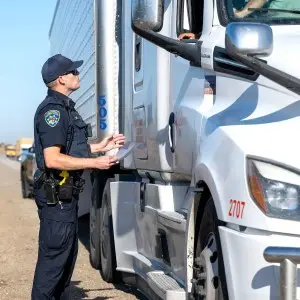
Recent commercial truck checks found problems that ranged from failed trailer brakes to improper lane use and driver qualification issues. The results offer a practical reminder for fleets: inspection exposure can come from basic maintenance lapses as well as driving behavior and recordkeeping.
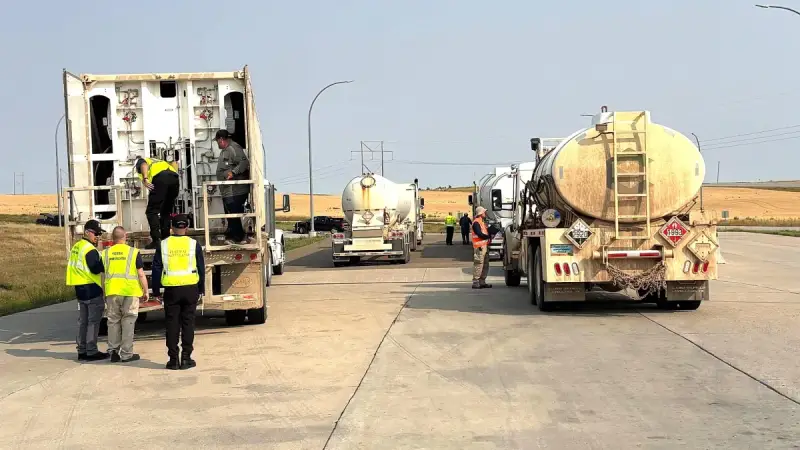
The largest reported single-day tally came from Williston, North Dakota, where inspectors recorded 494 violations. In Arizona, a separate truck inspection uncovered a trailer with no functioning brakes after a roadside stop prompted by reports of speeding and unsafe lane movement.
Different counts measure different outcomes
Inspection totals, violations and out-of-service findings describe separate things. One vehicle inspection can uncover several violations, and a count of out-of-service violations does not necessarily equal the number of trucks or drivers removed from the road. The reported results show why those measures need to stay distinct when comparing operations.
| Location | Inspections | Reported findings | Out of service |
| Flagstaff, Arizona | 263, plus 195 weight checks | 80 Commercial Vehicle Safety Alliance decals issued | 110 drivers and vehicles combined |
| Williston, North Dakota | 109, including 20 hazardous materials checks | 494 violations; 27 citations and 20 warnings | 122 out-of-service violations |
| Newhall, California | Not reported | 279 citations | 28 vehicles and 13 drivers |
| Garden Grove, California | 90 | 90 violations and 55 citations | 9 vehicles; 8 were towed |
| Eastern Kentucky | 1,030 during September | 612 violations; 119 hazardous materials inspections | 79 vehicles |
The Flagstaff operation ran for three days, Oct. 6-8, along Interstate 40 near the city. It was part of the Arrive Alive Arizona commercial vehicle enforcement initiative. The 110 drivers and vehicles removed from roadways were reported as a combined figure, while the 80 decals went to trucks that met inspection requirements.
In Williston, federal, state and local inspectors conducted 109 commercial vehicle inspections, including 20 hazardous materials checks. The operation produced 122 out-of-service violations, but no count was given for the individual drivers or vehicles affected. That distinction matters: the finding count should not be read as 122 trucks sidelined.
Arizona stop exposes a failed brake system
On Oct. 8, a trooper stopped a commercial truck on Interstate 10 near Bapchule after reports that it was speeding, nearly hitting other vehicles and drifting out of its lane. Inspectors found seven broken trailer crossmembers, about five feet of damaged lower rail, severed electrical wiring and air lines that were not properly connected.
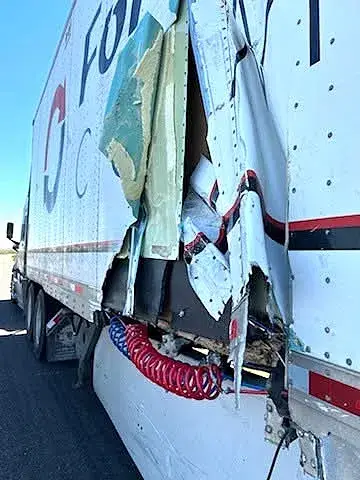
A severed air line left every trailer brake inoperative. The driver also did not have a required logbook, and both the driver and semitrailer were placed out of service. That combination shows how a roadside stop can reveal defects across several systems at once: structural damage, electrical problems and a brake failure tied to the air supply.
A separate Phoenix-area stop on Sept. 29 began with a missing mud flap and a driver not wearing a seat belt. The inspection then found a logbook that incorrectly recorded the driver as resting in the sleeper berth while operating the truck. Authorities also determined that the driver lacked a valid commercial driver’s license and could not operate a commercial vehicle after failing a prior drug test. The driver was cited and placed out of service.
Arizona troopers also took action against five trucks using the left lane in an active construction zone on Interstate 10 in Pinal County on Oct. 8, where commercial vehicles were required to stay in the right lane. The trucks travelled in the restricted lane for between 1.5 miles and more than four miles, disrupting traffic flow through the work area.
California checks focused on driving and equipment
California Highway Patrol officers issued 279 citations during an Oct. 13 operation in Newhall. The listed violations included mechanical defects, improper lane use, speeding and unauthorized freeway stops. Inspectors placed 28 commercial vehicles and 13 drivers out of service.
That same day in Garden Grove, officers completed 90 inspections and recorded 90 violations, issuing 55 citations. Nine vehicles were placed out of service, and eight were towed. The figures show a direct operational consequence of inspection findings: a vehicle with a defect serious enough to sideline it may also need towing before it can return to work.
In Merced County, CHP teams carried out a coordinated operation on Oct. 8 after complaints about speeding, improper lane use and unsafe lane changes. The effort involved the Merced Area office, the Chowchilla River Commercial Vehicle Enforcement Facility and the Central Division Mobile Road Enforcement team. No inspection or citation totals were released.
On Oct. 2, CHP officers cited a truck driver after seeing a tractor-trailer travelling 71 mph northbound on U.S. Highway 101 near Bailard Avenue in Santa Barbara County.
Kentucky totals cover a full month
Kentucky State Police reported 1,030 commercial vehicle inspections across its 25-county East Region during September. The checks found 612 violations, placed 79 vehicles out of service and included 119 hazardous materials inspections. The results were released Oct. 17.
The Kentucky figures cover a month, while several of the Arizona and California results describe single operations. They therefore show the breadth of reported enforcement activity, but they are not a like-for-like measure of violation rates across states. For operators, the concrete takeaway is to keep equipment, driver qualifications and required records in order: each featured operation found issues in one or more of those areas, and serious defects can take both a driver and vehicle off the road.