Abby Wingett’s Goodwood Revival Debut Ends in a Crash, but She’s Already Planning a Return
Electric Vehicles Elliott Hughes 341 reads
After years of work bringing her 1962 Elfin to Britain, Abby Wingett’s Revival debut ended in a practice crash. She’s set on coming back.
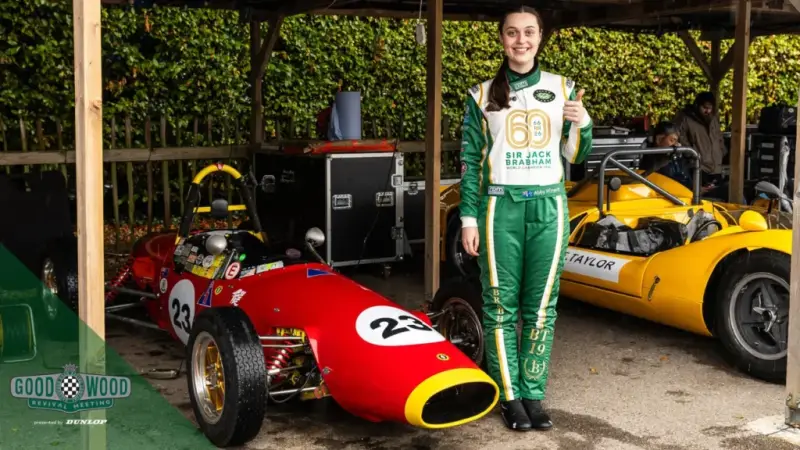
Abby Wingett’s first Goodwood Revival was years in the making, and a practice crash stopped her from taking the start. The 25-year-old Australian had spent more than nine months planning and raising support to bring her 1962 Elfin Formula Junior from Australia to Britain. After arriving at the circuit, she was injured in a crash the day before the Chichester Cup. Her car was damaged, too, leaving her with an unwelcome end to a debut she’d worked hard to reach.
When Wingett spoke about it at the 2026 Revival, she was walking with a limp and had several stitches in her foot. Her spirits, though, were high. The possibility of racing again was enough to bring a smile: “If they could have fixed the car last night, I would have put my race boot on, whether it hurt or not, and got back out there for the race.”
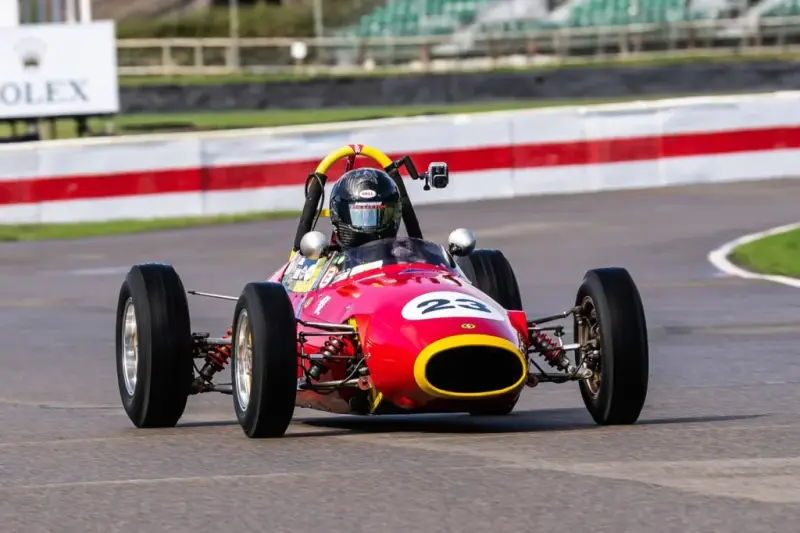
The Chichester Cup brings pre-1963 Formula Juniors together on the Goodwood Motor Circuit. Wingett’s own racing at home has been against a much smaller Formula Junior field: she competes against two other cars in Australia. Seeing almost 30 cars assemble at Goodwood made the scale of the event part of the experience. Her Elfin was also the only Australian-built car in the field.
A long trip for a small single-seater
Getting the Elfin to Britain took planning, fundraising and sponsorship. Shipping alone cost around $20,000. The car left Australia in May and reached the UK in August, where fellow historic racing enthusiasts helped store and prepare it before the Revival. That support mattered at both ends of the trip: the car needed a place to stay and work before it could reach the circuit, and, after the crash, people helped load it back onto its trailer.
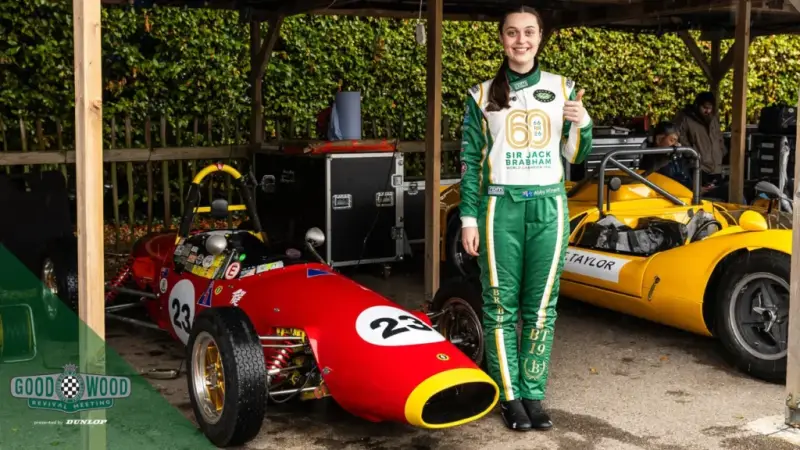
For Wingett, the arrival at Goodwood carried more weight than simply completing an ambitious international journey. Sitting on the dummy grid before the crash, she remembered thinking: “Oh my gosh, I’ve made it.” That moment captured the effort behind getting herself and the car there, even before she could measure the weekend by laps completed or race results.
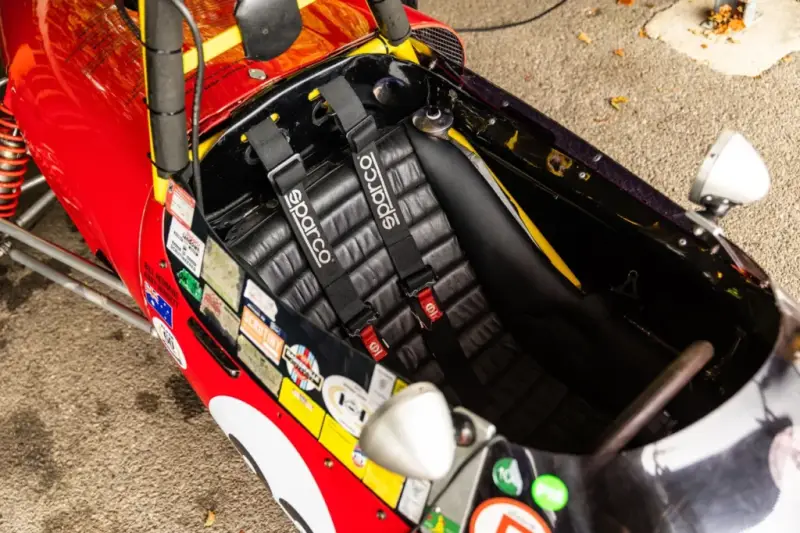
The Elfin is a compact piece of Australian racing history. Designed by racing driver and engineer Garrie Cooper, it belongs to a group of just 20 Formula Junior and Catalina cars built by Elfin from 1961 to 1964. The rear-engined car uses drum brakes and a naturally aspirated four-cylinder engine producing around 90bhp. Its kerbweight is 350kg.
Wingett has raced this car for four years. She says she could barely change gear when she first climbed aboard; now, she feels at one with it. That familiarity helps explain why a damaged car was such a blow: the Elfin is not just the machine she brought across the world, but the car she has learned to drive over years of competition.
A family route into racing
Motorsport was already part of Wingett’s family. Her grandfather raced speedway, her father competed, and her brother and sister later took part in the sport. Wingett has shared a Mini with her brother at the Historic Leyburn Sprints in Queensland. Still, she didn’t set out to follow them into racing.
As a teenager, she was a competitive swimmer. Chronic fatigue at 16 forced her to stop. Her father suggested motorsport, and she began entering hillclimb events. She took to them quickly: “I just fell in love with it.” Circuit racing soon became the goal. At a race meeting, she told her father she wanted to trade hillclimbs for laps around a circuit. Since then, her experience has included a Hyundai Excel and a range of historic cars.
Her Revival appearance also connected her to Sir Jack Brabham’s legacy. The 2026 event marked 100 years since Brabham’s birth and 60 years since his 1966 Formula 1 World Championship. Wingett works for Australian automotive firm Repco, whose engines powered Brabham to that title. She regularly sees his championship-winning BT19 at the company’s headquarters and commissioned a racing suit in his honour. “I felt proud to be here representing Australia and Sir Jack,” she said.
Community, access and another attempt
The support around the crash left a strong impression. Historic racing enthusiasts helped collect the Elfin when it arrived in Britain, store it, move it to Goodwood and return it to the trailer after the accident. Wingett also received messages from people checking that she was all right. She described the community as a family, and said the response showed her the care people bring to the sport.
That sense of belonging sits alongside a practical concern: Wingett thinks historic racing needs to make it easier for younger people to find a way in. The expense of buying a car and getting involved can be a barrier, she says, and there isn’t enough awareness of how to start. She wants to help more young people discover historic motorsport, though the route from interest to competition takes more than enthusiasm. Wingett’s own trip required months of work and support from others.
Her next target is Formula Ford, with another attempt at Goodwood also on the horizon. The Elfin may even stay in Britain rather than make the return voyage to Australia. Wingett joked that she was tempted to leave it there, then made her intention clear: “I feel like I’ve got unfinished business. I’ll be back, 100 percent.”