Why Polished Bugatti Engine Covers Remain a Rare Hypercar Option
Electric Vehicles [email protected] (Daniel Golson) 416 reads
Fewer than 5% of Bugatti buyers choose polished engine covers. Their high price and vulnerability to wear are part of the appeal.
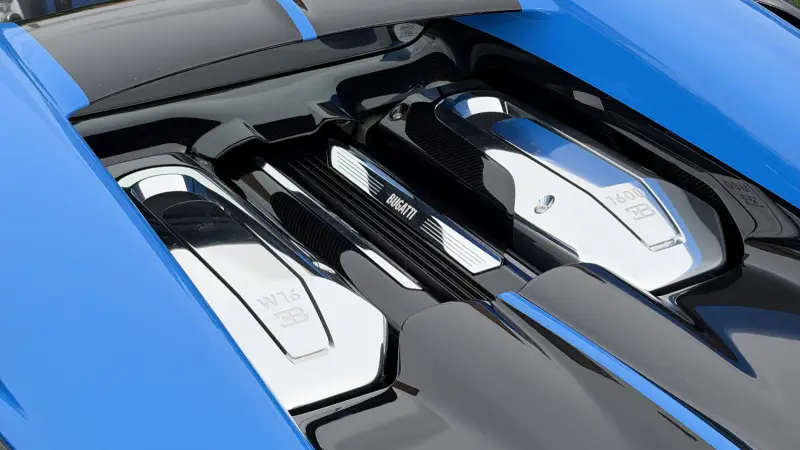
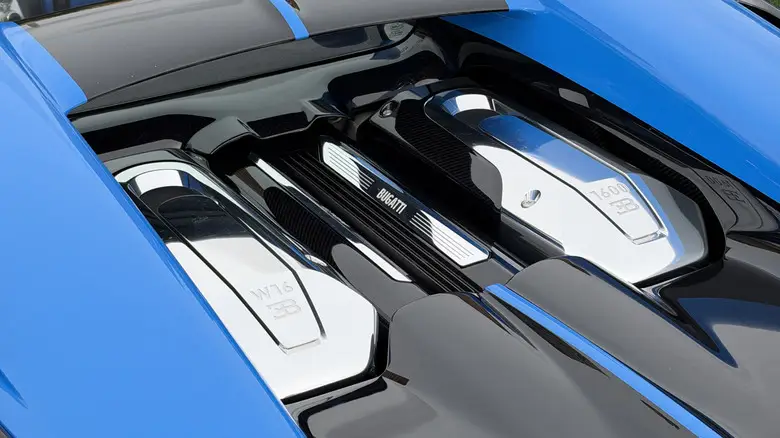
Polished aluminum engine covers are among the rarest choices on modern Bugattis: fewer than 5% of buyers select them. Their appeal is easy to see, but so is the reason many customers pass. The finish draws attention to the engine bay, where dirt and scratches can become part of the look. For a car built around individual specification, that visible wear can be a feature rather than a flaw.
Bugatti offers buyers a long list of ways to tailor a car before they reach its most bespoke details. Paint, upholstery, wheels and stitching set the overall character; on the Mistral, even the elephant sculpture in the shifter can be replaced. Two customers have chosen, respectively, a miniature Statue of Liberty and a screw from a century-old Bugatti. Against options like those, engine covers might seem like a small detail. They’re also a prominent one whenever the engine bay is on display.
A bright finish among more familiar choices
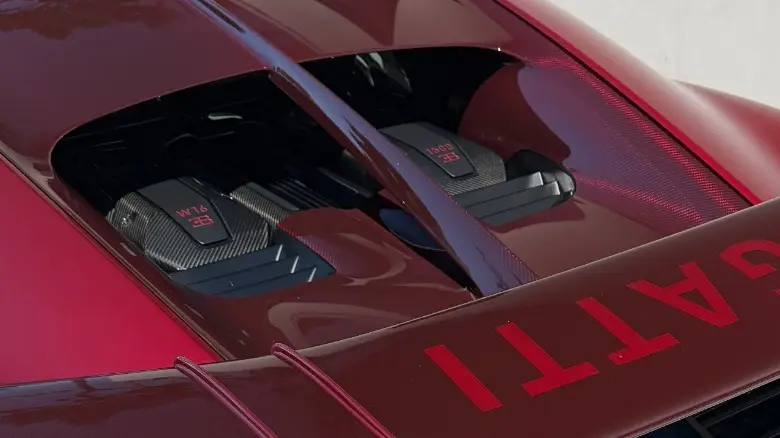
Since the Veyron, almost every modern Bugatti has had an exposed engine bay. Buyers can specify covers painted to match or contrast with the body, or choose from carbon-fiber finishes. Gunmetal is the standard appearance described for the covers; polished aluminum takes a different route, turning the engine bay into a bright focal point.
A black-and-blue W16 Mistral with polished covers showed how strongly that finish can change the impression of the rear of the car. It appeared among 20 modern Bugattis at the 2026 Las Vegas Concours. The car also had magnesium wheels, another uncommon choice. Even under cloudy skies, the metal covers stood out, including from a low viewing angle.
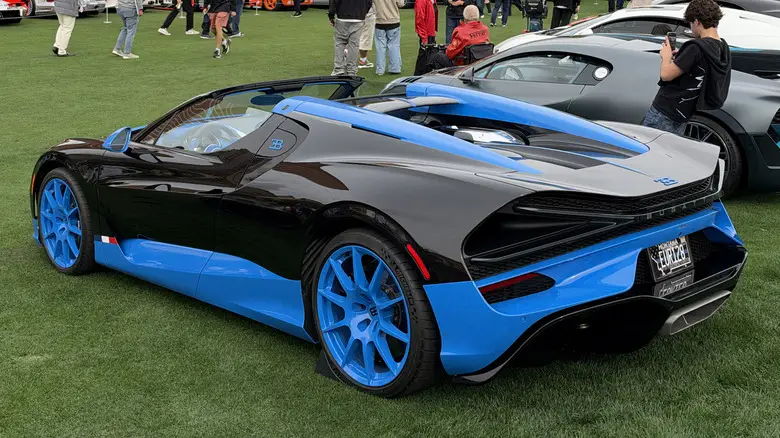
The contrast matters because a hypercar’s engine bay is more than a place to house mechanical parts. With the W16 on display, the covers frame a major piece of the car’s identity. A painted finish can tie that area into the bodywork, while carbon fiber keeps the materials language closer to the car’s performance image. Polished aluminum makes a more conspicuous statement, and its surface records use in a way that paint and carbon fiber don’t.
The price is steep, but so is the car’s options list
Bugatti option prices can be difficult to pin down. Window stickers from Chiron listings offer a useful point of comparison: on a 2022 Chiron Pur Sport, bright Tangerine-painted engine covers cost $8,800, while exposed carbon fiber cost $12,500. Polished covers were listed at $40,700.
That’s a substantial premium over the other finishes. It’s also one part of a much larger menu. The Chiron’s Sky View roof cost $62,000, and an exposed-carbon-fiber body could add at least $300,000. Those figures don’t make the polished covers inexpensive; they show where this option sits in the context of a car whose buyers already choose among exceptionally costly details.
For an owner, the practical tradeoff is straightforward: polished metal attracts attention, and the same finish makes scratches and grime easier to notice. The concern is real, according to Bugatti designers who have said buyers avoid the option because they don’t want the covers to get dirty or scratched. Owners who prefer a pristine appearance may find that a painted or carbon-fiber finish better suits how they want to keep the car.
Why wear can add to the appeal
There’s another way to look at those marks. A used car carries evidence of its life, and bright metal can show that history particularly clearly. Photos of a 2022 Chiron Super Sport sold on Bring a Trailer, for example, show polished covers with scuffs. To some buyers, that’s less a flaw than a record of use on an otherwise rare specification.
That perspective runs against the instinct to keep a high-end car looking untouched. Yet when an option is chosen precisely because it’s unusual and visually striking, preserving every surface indefinitely can seem like the less interesting goal. The polished finish invites owners to accept some wear as part of ownership. It puts a personal, visible trace in a place most buyers would rather keep immaculate.
Bugatti’s next model raises a natural question. The Tourbillon has a V16, and a carbon engine-bay option is known, but it’s not yet clear whether the car will offer a polished finish like the Mistral’s. Its planned production is 250 cars, making the eventual range of specifications worth watching. If polished covers are offered, the choice will again test whether buyers see wear as a drawback or part of the car’s character.
For now, the Mistral makes the case in metal: polished covers turn an exposed engine bay into a defining detail, while asking their owners to live with the marks that come with use. That combination may explain why so few buyers choose them—and why the rare examples are so memorable.