Toyota GR GT3 Nears Homologation After Motegi Race Debut
Electric Vehicles Jamie Klein 509 reads
Toyota says GR GT3 homologation is close after its Motegi test race, with Daytona testing and a wider racing program among the next targets.
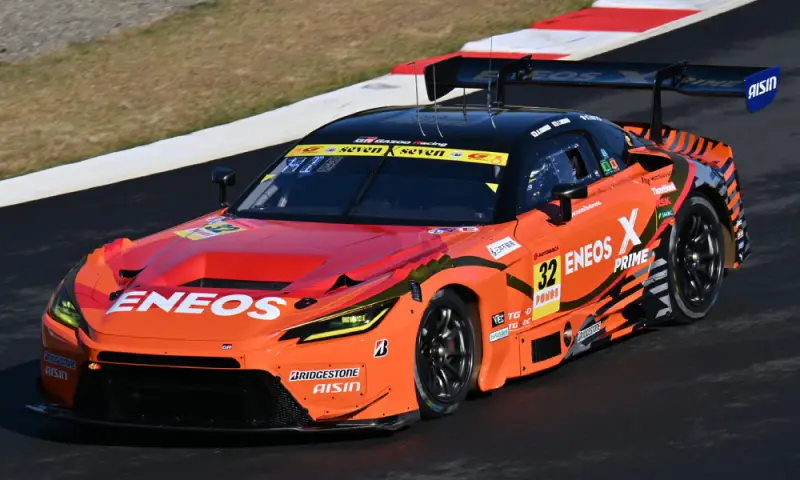
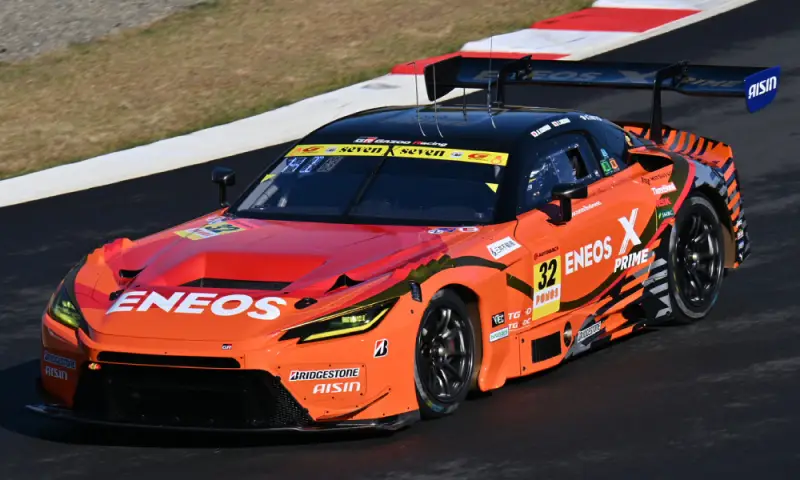
Photo: SUPER GT
Toyota’s GR GT3 has moved from development running to competition, and the Motegi outing gave the team a chance to check the car in race conditions before a broader rollout. Global motorsport director Masaya Kaji says homologation is expected in the “very near future,” a step that would clear the way for the next phase of the program.
Rookie Racing entered the concept-form car in SUPER GT’s GT300 class finale at Motegi, with Hiroaki Ishiura and Tokiya Suzuki sharing the drive. The team finished 19th in the first race and 24th in the second, where multiple penalties affected its result. The GR GT3 could not score points because it had not yet been homologated; it competed with special permission from series organizer GTA.
Motegi was a development exercise
Toyota’s priority was to identify issues, rather than chase a result. Kaji said the car lost top speed during Friday practice because a sensor had been incorrectly correlated. He described that kind of problem as exactly what the development team needs to uncover through testing.
The choice of Motegi reflected where the car was developed and Toyota’s confidence that Rookie Racing could run it properly. The team also completed a tire test on the Monday after the second race, adding another useful session around the competition weekend. Kaji said the car’s performance level was acceptable, while stressing that Toyota was not trying to push for maximum speed during a round with a championship battle underway.
That distinction matters when reading the finishing positions. The two results offer a record of the car’s first competitive outings, but they do not amount to a straightforward measure of its potential. Toyota used the races to expose the car and its systems to a live event, then followed up with tire work. The sensor issue also shows why a race debut can provide information that ordinary testing may not reveal: components and data systems need to work together under the pressures of an event.
Daytona is the next possible milestone
The program’s next target may be the IMSA-sanctioned test at Daytona International Speedway on Dec. 10-11. Participation depends on completing homologation in time. Kaji said the process is ongoing, appears to be progressing well and could be finished soon, but he did not give a specific date.
Homologation is the key gate between this development-stage appearance and wider competition use. Until that process is complete, the Motegi entry remains an exception granted for the event, and plans for other series depend on the car becoming eligible under their rules. Toyota has not confirmed how many cars will be built for the GR GT3’s first full racing season, so the scale of its initial deployment remains unclear.
A multi-series program is taking shape
Toyota has been testing the GR GT3 extensively on the Nordschleife this year, preparing for a possible Nürburgring 24 entry. The car has also run at Sebring in recent days, pointing toward a potential WeatherTech Championship program. Each venue gives the development team a different setting in which to assess the car, though Toyota has not announced a complete race calendar.
There is also interest from Europe. Akkodis ASP team boss Jerome Policand has reaffirmed the team’s goal of racing the GR GT3 in the FIA World Endurance Championship next year. That remains a team objective rather than a confirmed entry. Together, the reported testing and stated plans show how widely Toyota could deploy its new GT3 car once it is eligible to race.
Japanese teams may account for a larger share of the initial allocation than previously expected. After Rookie Racing, K-tunes Racing appears a likely candidate among Toyota-affiliated GT300 teams. The Okayama Toyopet-owned outfit has run the Lexus RC F GT3 since its first season in 2018 and has said it wants to switch to the GR GT3 as soon as possible.
Apr has also been linked with the possibility of running a GR GT3 in Super Taikyu. Its existing two-car GT300 program, using the LC500h and GR86 GT, is set to continue unchanged. In GT500, Toyota is expected to retain the GR Supra next season, even though production of the equivalent road car has ended.
The immediate measure of progress is therefore whether Toyota completes homologation in time for Daytona, followed by confirmation of where the car will race and how many teams will receive one. Motegi has provided an early check of the car and its support operation; the next rounds of testing and competition should show how quickly that development work translates into a full season across multiple series.
Akkodis ASP’s stated goal for the GR GT3 in the FIA World Endurance Championship